

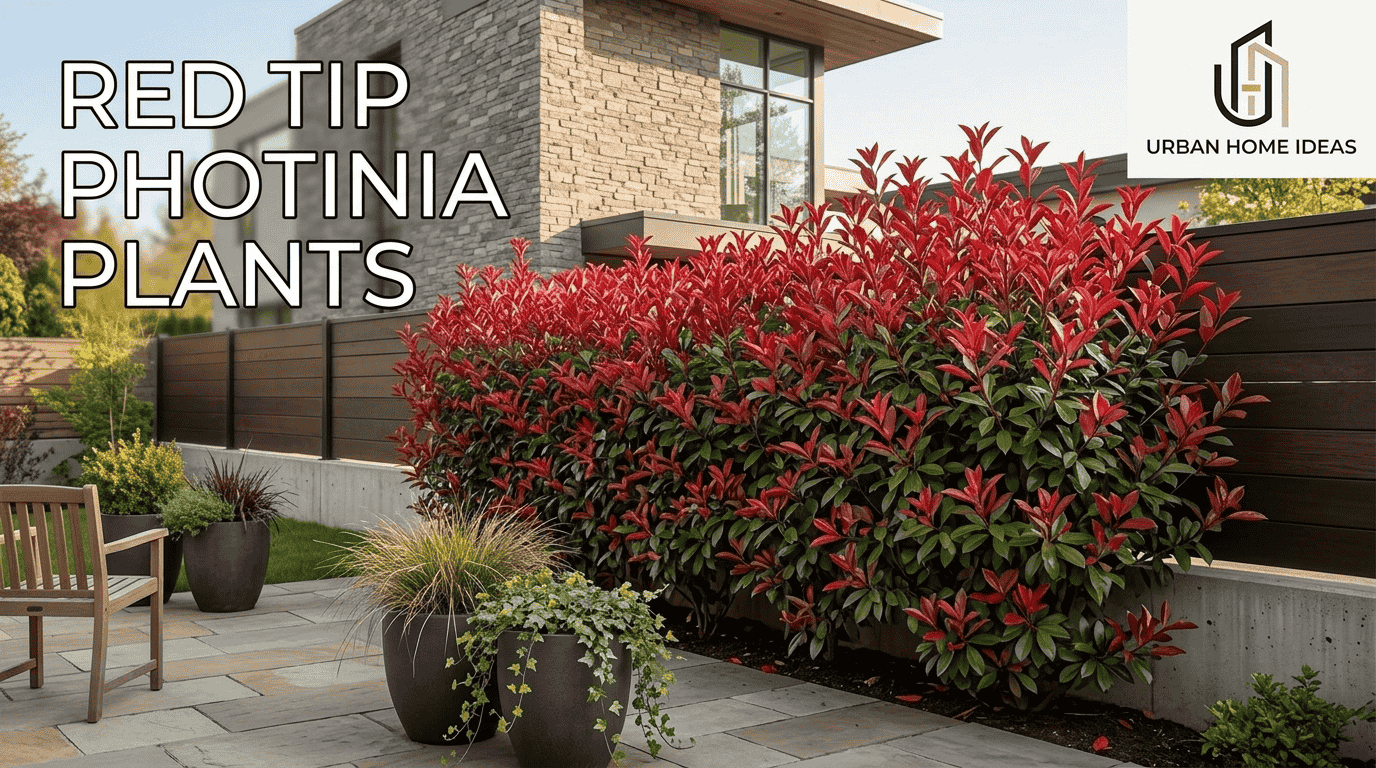
Red tip photinia plants are valued as evergreen shrub choices with colorful foliage, bright red new growth, and glossy green leaves that bring seasonal beauty to outdoor spaces. These landscape plants are commonly used as a privacy screen and hedge plant because of their dense foliage, fast-growing shrub nature, and ability to provide year-round structure with changing seasonal color.
- Red Tip Photinia Plants Overview
- Features Of Red Tip Photinia
- Bright Red New Growth
- Evergreen Foliage
- White Spring Flowers
- Dense Privacy Screening
- Red Tip Photinia Growing Requirements
- How To Plant Red Tip Photinia
- Red Tip Photinia Spacing For Hedges
- Fertilizing Red Tip Photinia
- Pruning Red Tip Photinia
- When To Prune
- Pruning For Privacy Hedges
- Red Tip Photinia Propagation
- Common Problems With Red Tip Photinia
- Leaf Spot Disease
- Landscape Uses Of Red Tip Photinia
- Frequently Asked Questions
The plant develops an upright growth habit that makes it suitable as a specimen plant, along fence borders, and around foundation plantings. Gardeners often select it when they need a decorative shrub that combines visual appeal with practical landscape functions.
Red Tip Photinia Plants Overview
Red tip photinia plants are a hybrid shrub species known as Photinia × fraseri. Their botanical name identifies their hybrid background, while their plant type is categorized as an evergreen shrub from the rose family (Rosaceae).
This shrub develops an upright shrub form with a naturally dense shrub structure and spreading shrub growth pattern. Its mature size varies depending on cultivation conditions, with the overall height and width influenced by available growing space and maintenance.
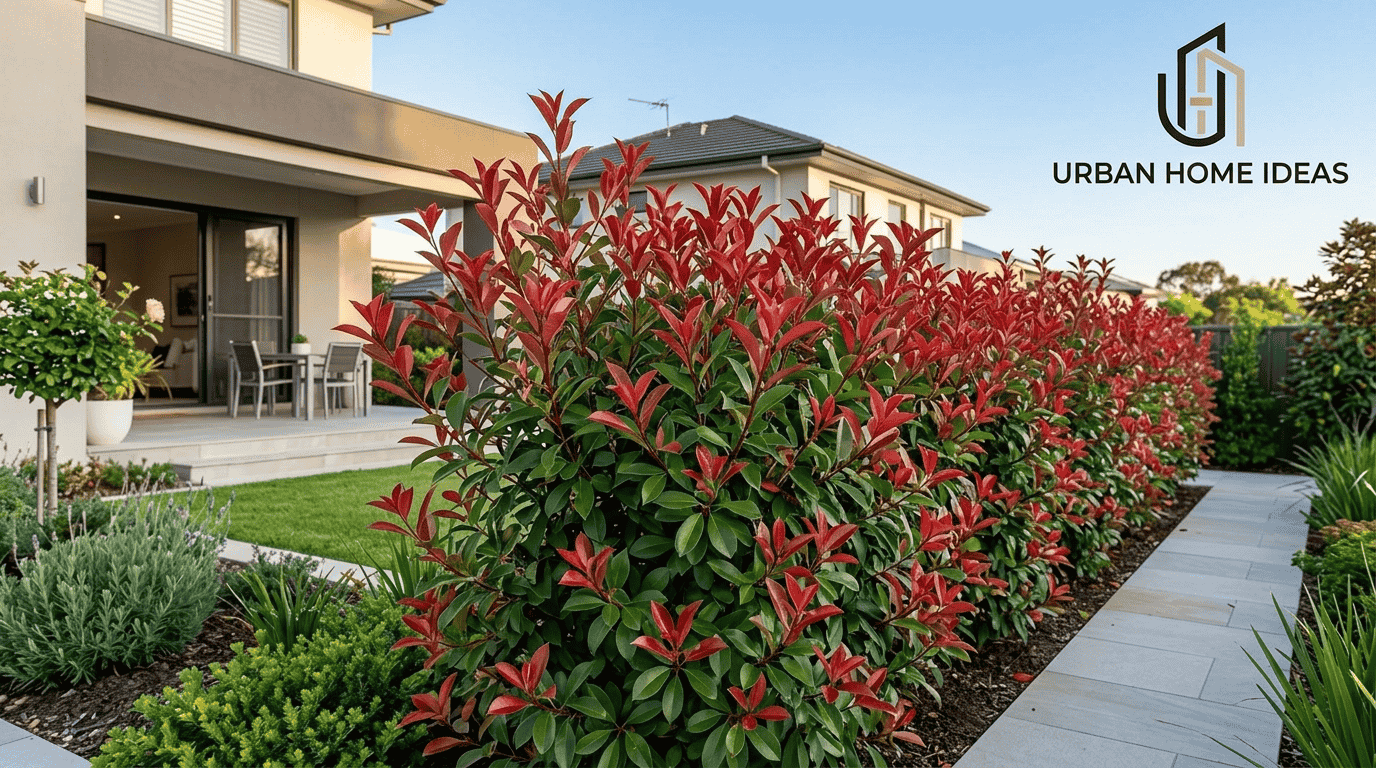
Red Tip Photinia grows within suitable USDA zones and hardiness zones, where its natural growth rate allows it to develop as a fast-growing evergreen shrub.
Features Of Red Tip Photinia
Red Tip Photinia is recognized for its attractive red foliage and red leaves that appear during new growth stages. The shrub produces new shoots with fresh growth, showing noticeable bronze-red leaves and bright red leaves before the foliage reaches maturity.
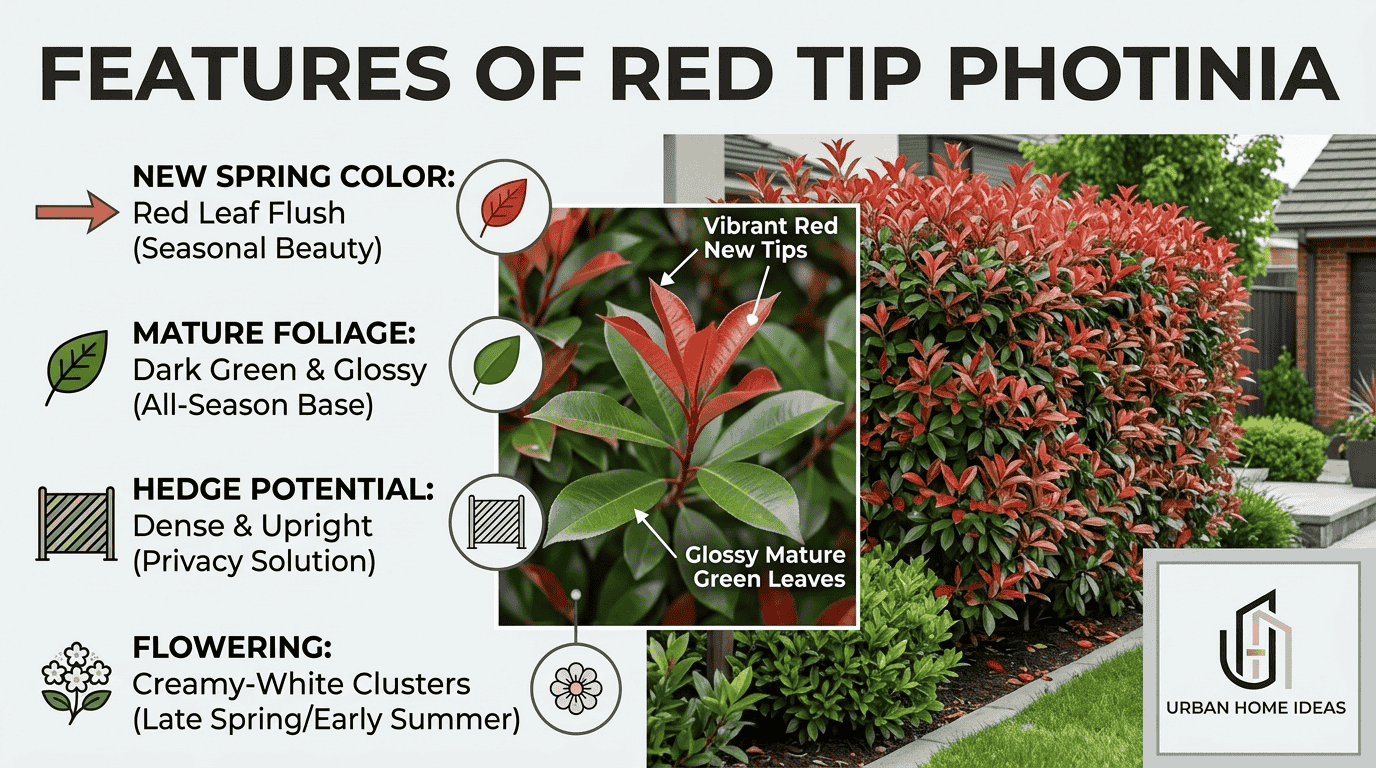
As the leaves develop, the plant forms mature foliage with glossy green foliage while maintaining evergreen leaves throughout the year. These visual characteristics create spring color, add seasonal interest, and increase the landscape value of this ornamental shrub.
Bright Red New Growth
Red Tip Photinia produces red new growth when the plant develops new foliage. This colorful foliage begins with fresh leaves that display a noticeable bronze-red color during the early stage of development.
The young growth appears as bright red shoots before changing into mature green leaves as the leaves continue to develop. These changing shades improve the plant’s foliage color and create an attractive appearance through repeated additional growth flushes.
Evergreen Foliage
Red Tip Photinia has evergreen foliage that remains throughout the year. Its year-round leaves maintain a consistent green appearance and provide winter structure during colder seasons.
The plant develops dense foliage that stays healthy in a suitable climate. This lasting leaf coverage creates permanent greenery and supports the plant’s overall landscape structure with its continuous leafy growth.
White Spring Flowers
Red Tip Photinia produces white flowers during the spring season. These spring flowers appear in groups known as flower clusters, adding a flowering feature to the shrub.
The plant develops small flowers as a flowering shrub, with flower buds forming before the blooming period. The pruning impact can influence flower production, while the blooms provide support for pollinators.
Dense Privacy Screening
Red Tip Photinia develops dense branches and thick foliage that create a filled and compact plant structure. This dense growth helps the shrub form a natural privacy screen with strong coverage.
The plant is suitable for creating a privacy hedge because of its fast growth and thick branch development. Proper hedge planting supports a balanced arrangement, while its structure can be used along property borders as a landscape backdrop and windbreak.
Red Tip Photinia Growing Requirements
Red Tip Photinia has specific growing requirements that include proper sunlight, suitable soil, and adequate water conditions. The right planting conditions help the shrub grow properly within its required environment.
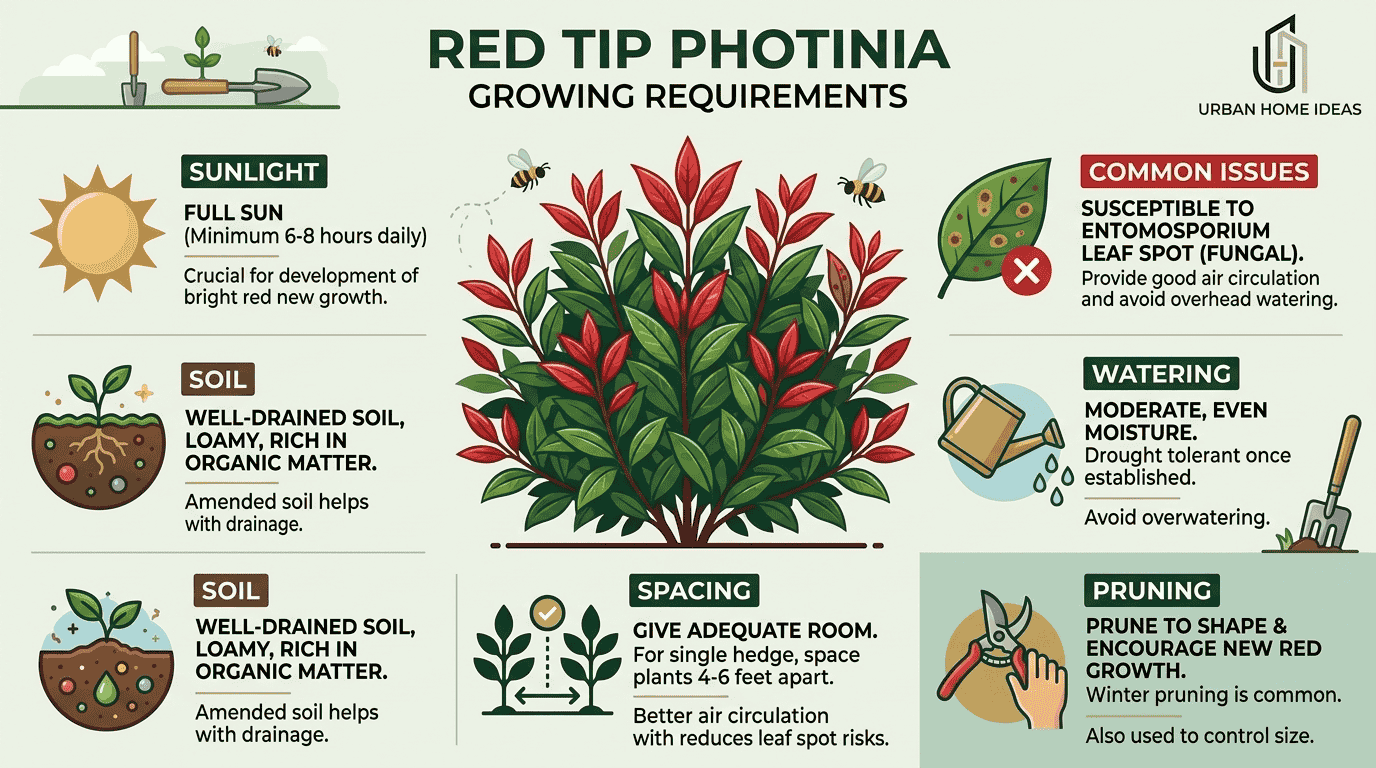
The plant can develop in areas with full sun or partial shade where suitable moisture levels and proper drainage are available. These growing factors support healthy growth and help maintain the natural foliage color.
Sunlight Requirements
Red Tip Photinia requires suitable sunlight exposure for proper development. The plant grows well in locations with full sun and can also adapt to areas with partial shade.
The amount of available light affects the plant’s red foliage color, growth speed, and overall healthy plant development.
Soil Requirements
Red Tip Photinia performs best in suitable soil conditions. The plant prefers well-drained soil that allows proper root conditions.
It can grow in moist soil but should not be placed in waterlogged conditions or areas with excessive standing water. Proper soil conditions support root health, soil adaptation, and a balanced growing environment.
Water Requirements
Red Tip Photinia requires proper water availability for maintaining suitable moisture conditions. Young plants need regular attention during the establishment period with consistent watering.
The plant benefits from deep watering during the first growing season to maintain adequate moisture levels. Good moisture retention helps support proper water conditions, while established plants can develop drought tolerance and continue with regular moisture requirements.
How To Plant Red Tip Photinia
Red Tip Photinia requires proper planting techniques to establish successfully in a suitable area. The first step involves careful location selection to choose the right planting space.
The root ball should be positioned correctly inside the planting hole, while maintaining the proper soil level with the surrounding ground. After placement, backfill is added around the plant, followed by deep watering to settle the soil.
Red Tip Photinia Spacing For Hedges
Proper hedge spacing is important for maintaining the correct distance between Red Tip Photinia plants. Suitable privacy screen spacing allows plants to develop into a balanced dense hedge structure.
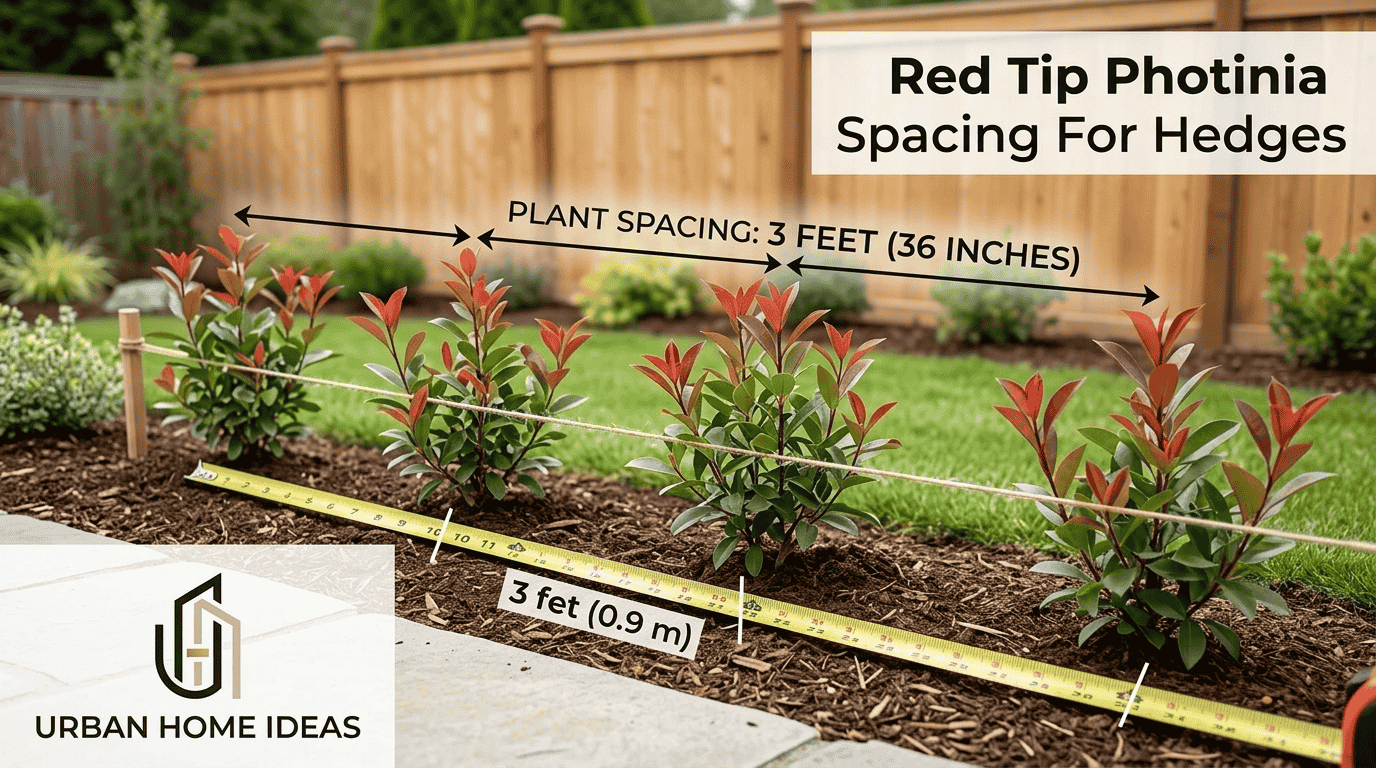
Spacing plants around four feet to six feet apart helps maintain proper airflow and reduces overcrowding. Correct spacing also supports disease prevention, encourages healthy foliage, and improves plant arrangement during regular hedge maintenance.
Fertilizing Red Tip Photinia
Red Tip Photinia requires proper fertilizer application for maintaining nutrient availability. A balanced fertilizer provides suitable nutrients, while a slow-release fertilizer supplies them gradually over time.
Applying fertilizer in early spring supports healthy growth and encourages foliage production. Avoiding excessive fertilization helps prevent soft growth and supports proper plant maintenance.
Pruning Red Tip Photinia
Red Tip Photinia requires regular pruning to maintain its desired form. Proper trimming and shaping help manage the shrub’s structure while supporting red foliage production.
Pruning involves branch removal to control unwanted growth and maintain better airflow within the plant. Winter pruning can encourage new growth flushes and support consistent hedge maintenance.
When To Prune
Red Tip Photinia pruning should be planned according to the correct pruning season. Late winter is a suitable period for pruning activities when the plant is prepared for new growth.
Light maintenance through light pruning can encourage the appearance of additional red leaves. Proper timing helps maintain dense foliage, improve ventilation, and support healthier healthy branches.
Pruning For Privacy Hedges
Red Tip Photinia requires privacy hedge pruning to maintain the proper structure of a hedge. Correct pruning helps create a balanced top shape while maintaining the desired hedge form.
A narrow top with a wider base helps maintain an even hedge structure. Removing crowded branches and managing interior branches encourages dense branching and improves airflow within the hedge.
Red Tip Photinia Propagation
Red Tip Photinia propagation is commonly done through stem cuttings because it is a hybrid plant. The process focuses on producing new plants through suitable propagation methods rather than seed reproduction.
Semi-hardwood cuttings taken from healthy stems are placed in a suitable rooting medium. Proper moisture and humidity conditions support successful root development during the propagation process.
Common Problems With Red Tip Photinia
Red Tip Photinia may face different red tip photinia problems that affect the plant’s appearance and condition. Common issues include leaf spot disease, fungus, and other fungal issues.
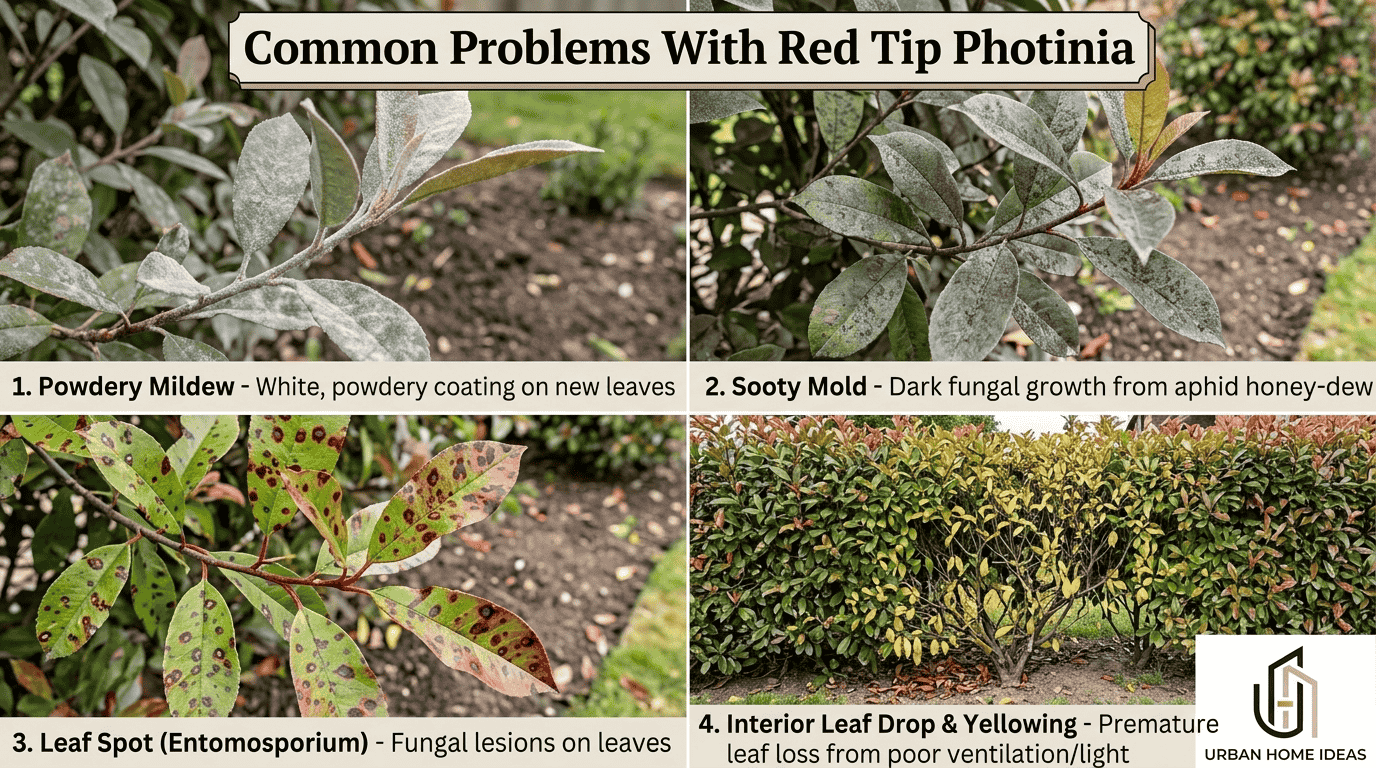
The plant can also experience plant disease, unhealthy leaves, overcrowding, wet foliage, and moisture problems under unsuitable conditions. These are common concerns associated with Red Tip Photinia.
Leaf Spot Disease
Red Tip Photinia can develop leaf spot issues caused by fungus and fungal disease. This condition affects the plant’s foliage and may appear on affected leaves.
The disease can be recognized through brown spots that develop on leaves. Wet leaves and overhead watering can be associated with leaf spot conditions, while poor circulation and improper plant spacing may influence its occurrence.
Disease prevention and pruning are related practices that are often considered when managing leaf spot issues.
Landscape Uses Of Red Tip Photinia
Red Tip Photinia is commonly used as a landscape plant in outdoor arrangements. It can serve as a privacy hedge or living fence to create defined planting areas.
The shrub is also suitable for foundation planting and placement along a property border. It can function as an evergreen screen, background planting, or specimen planting option within a planned garden design and enhance an outdoor space.
Frequently Asked Questions
How Fast Does Red Tip Photinia Grow?
Red tip photinia is recognized as a fast-growing shrub with a noticeable growth rate. The plant can add approximately 2 to 3 feet of growth per year, showing consistent rapid growth during suitable growing periods.
Its annual growth and yearly growth patterns contribute to overall shrub growth and influence the plant growth speed over time.
How Big Does Red Tip Photinia Get?
Red Tip Photinia reaches a noticeable mature size as it develops into a large shrub. The plant typically grows around 10 to 15 feet tall and spreads approximately 8 to 12 feet wide when allowed to remain unpruned.
The overall plant height and plant width contribute to its final shrub size and growth dimensions. This creates a tall shrub with a broad structure that requires suitable space for natural development.
Is Red Tip Photinia Evergreen?
Yes, red tip photinia is a broadleaf evergreen shrub that remains green throughout the year. Red Tip Photinia keeps its leaves during the entire year, providing consistent coverage through all seasons.
The plant maintains leaves throughout the year, creating reliable year-round foliage and lasting evergreen foliage. This continuous leaf presence contributes to its permanent greenery in suitable growing conditions.
Does Red Tip Photinia Attract Wildlife?
Yes, red tip photinia (Photinia × fraseri) can attract some wildlife through its natural plant features. The shrub provides a level of wildlife attraction, although its overall ecological value remains modest ecological value when compared with native plants.
Does Red Tip Photinia Need Pruning?
Yes, red tip photinia needs occasional pruning to help the plant stay healthy and maintain its structure. Regular pruning allows the shrub to maintain a thick shape while supporting its natural appearance.
Proper pruning can encourage the development of its signature bright red new growth, including the noticeable bright red new growth that makes this plant distinctive.
Other Post
How Do You Grow an Almond Tree? Our Easily Growing Secrets
What Is Hydroseeding? Mixture, Watering & Cost Guide
Frans Fontaine Hornbeam: A Powerful Landscape Tree
Delonix Regia Flamboyant Tree: Simple Growing Ideas
America’s Gardening Resource: Smart Ideas For Better Gardens