

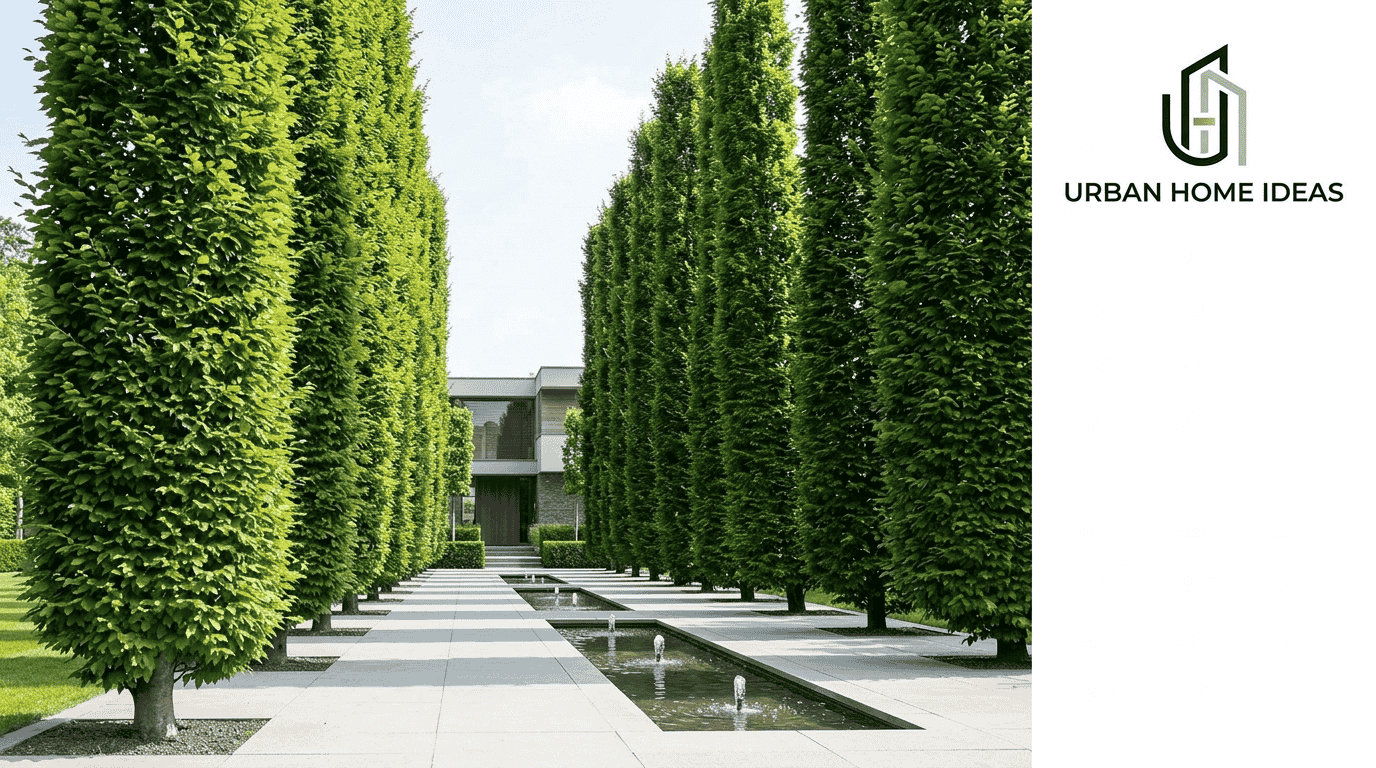
Frans Fontaine Hornbeam is a refined deciduous tree cultivar recognized for its dense foliage, upright appearance, and adaptability in carefully planned landscapes. This Carpinus betulus selection combines a structured growth pattern with seasonal character, offering green summer foliage, autumn color, and durable winter form. Landscape professionals often choose it for formal landscape designs, privacy planting, and organized garden compositions.
The Frans Fontaine Hornbeam represents a specialized approach to landscape design where space efficiency and visual structure matter. Unlike broader spreading trees, this selection provides a controlled silhouette while maintaining the natural qualities associated with the European hornbeam family. Its history connects with the wider native range of hornbeams across Western Asia, central Europe, eastern Europe, and southern Europe, including regions such as southern England.
Frans Fontaine Hornbeam
Carpinus betulus ‘Frans Fontaine’ is valued as a distinctive European hornbeam and English hornbeam cultivar with a naturally organized framework. Its botanical name identifies it within the Carpinus species, while its common name reflects its relationship with traditional hornbeam selections.
The tree develops a narrow upright growth habit rather than a wide canopy, making it useful where a compact tree form and vertical structure are preferred. Experienced growers often observe that its columnar growth habit creates a balanced appearance without requiring excessive intervention.
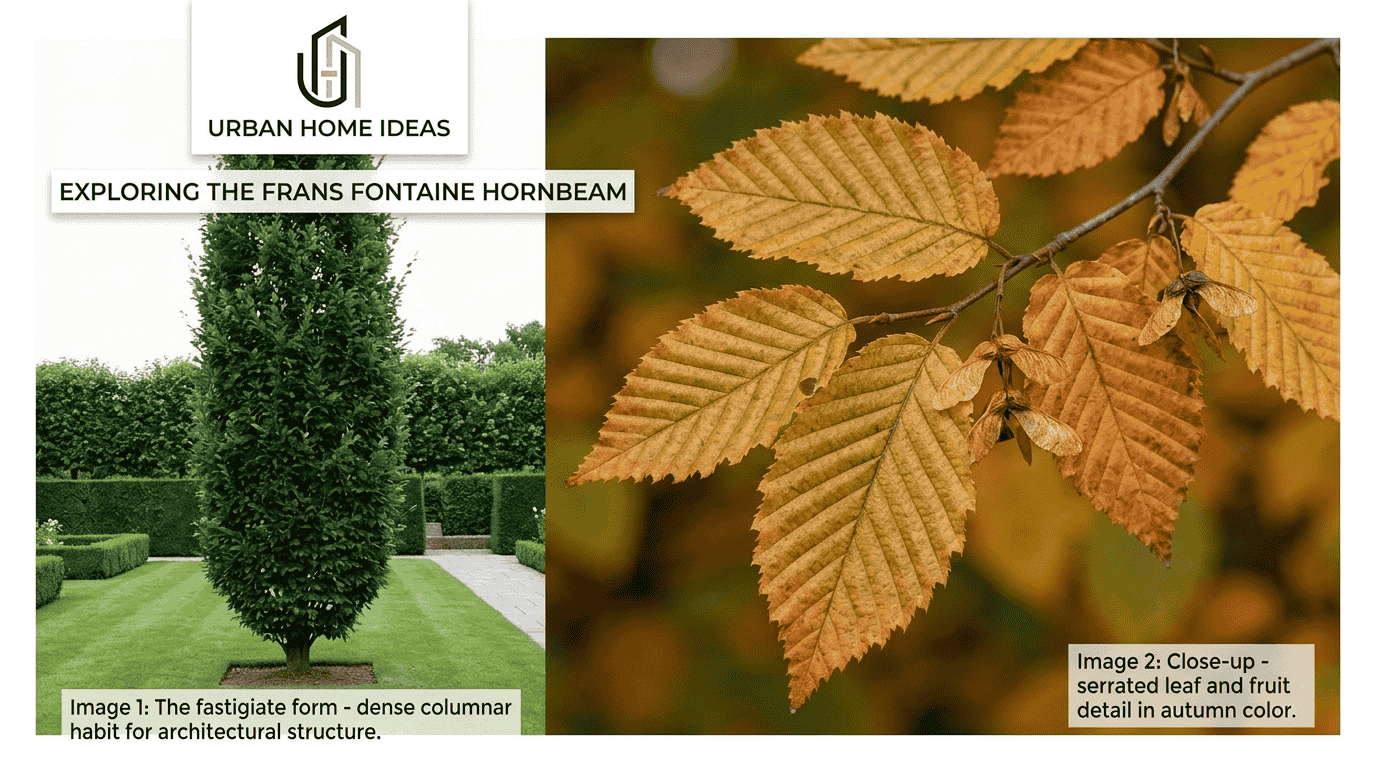
The plant maintains strong architectural value through different seasons. Fresh green foliage develops into green summer foliage, followed by golden-yellow autumn color and a refined winter outline with gray branches and leafless branches. This seasonal transition gives gardens interest even when surrounding plants become inactive.
Landscape Characteristics
- Suitable for formal landscapes, structured garden layouts, and organized planting schemes.
- Works well in privacy screens, hedges, and topiary designs.
- Shows strong tolerance toward shaping and can be cut back through regular pruning practices.
- Maintains dense foliage and controlled form without losing its natural tree character.
Frans Fontaine Hornbeam size
The Frans Fontaine Hornbeam size is mainly defined by its narrow upright tree structure and restrained width. The cultivar is selected for landscapes where a traditional hornbeam would be too expansive. Its columnar form, dense cultivar characteristics, and upright habit allow it to fit into smaller planting areas.
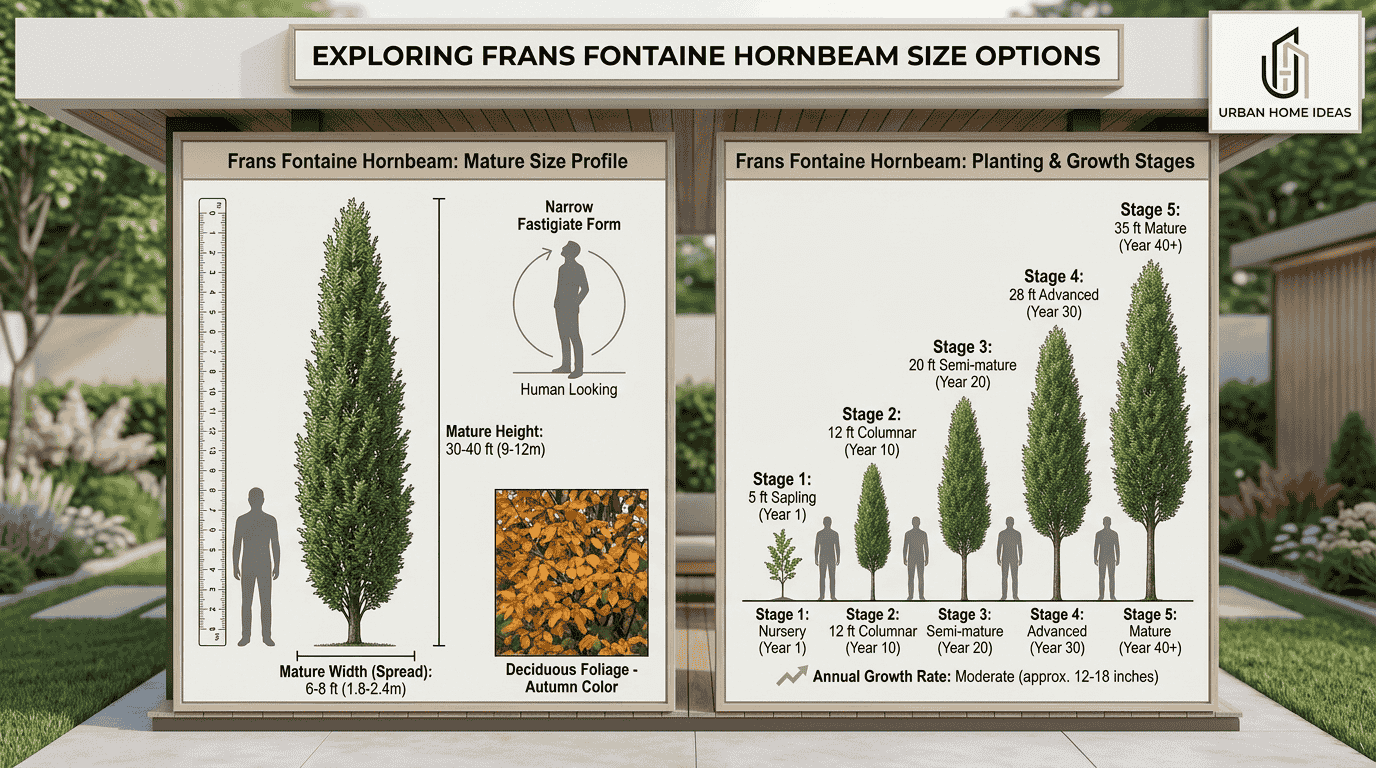
Garden planners often use this tree when they need a landscape tree with a tall form and limited horizontal spread. The mature appearance creates a strong vertical element while maintaining a manageable presence in formal garden spaces and limited areas.
Size Considerations
| Feature | Description |
| Growth shape | Narrow upright tree |
| Form | Columnar form |
| Space requirement | Limited areas |
| Landscape role | Vertical growth feature |
Frans Fontaine Hornbeam growth rate
The Frans Fontaine Hornbeam growth rate depends heavily on soil quality, climate, and care practices. Under suitable conditions, European hornbeam selections may achieve approximately four to five feet per year during active growth periods.
Its fast growth makes it practical for creating established hedges, landscape barriers, and long-term privacy planting solutions. However, growth performance varies depending on watering, soil preparation, and environmental factors.
A mature planting strategy considers both early rapid establishment and future garden structure. The tree’s ability to develop dense growth helps create reliable screening while maintaining the characteristic hornbeam appearance.
Frans Fontaine Hornbeam vs European Hornbeam
The comparison of Frans Fontaine Hornbeam vs European Hornbeam highlights the difference between a specialized cultivar and the broader species category. Both belong to Carpinus betulus, but the Frans Fontaine selection is recognized for its more controlled architecture.
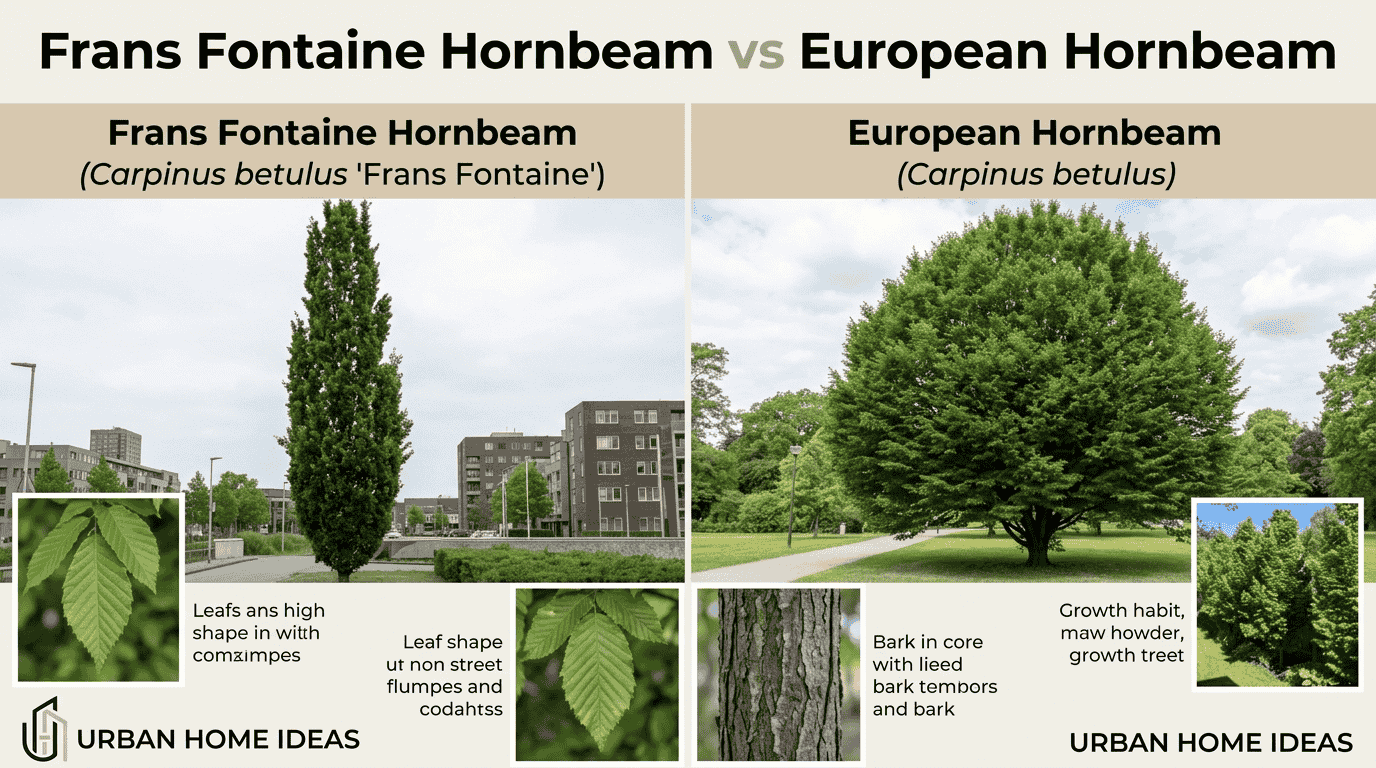
The standard European hornbeam generally develops a broader form, while Frans Fontaine emphasizes a narrow upright growth habit and columnar growth pattern. Both maintain dense foliage, seasonal interest, and the durability expected from a deciduous tree.
Key Differences
| Feature | Frans Fontaine Hornbeam | European Hornbeam |
| Growth pattern | Compact form | More variable species growth |
| Structure | Columnar growth | Traditional spreading habit |
| Use | Space-efficient landscapes | Wider landscape applications |
| Foliage | Dense foliage | Dense foliage |
Frans Fontaine hornbeam pros and cons
The Frans Fontaine hornbeam pros and cons depend on the intended landscape purpose. Many professionals appreciate its controlled growth, but every plant selection requires consideration of maintenance and placement.
Advantages
- Dense foliage creates privacy and strong visual structure.
- Attractive appearance supports year-round garden interest.
- Pruning tolerance allows shaping for formal hedges and topiary applications.
- Narrow upright habit works well in compact landscapes.
- Compact growth provides structure without excessive spread.
Considerations
- Requires regular pruning and trimming when maintained as a formal feature.
- The dense structure may need management to preserve airflow.
- The leafless winter appearance may not suit gardeners seeking evergreen screening.
Frans Fontaine Hornbeam zone
The Frans Fontaine Hornbeam zone suitability is connected with the natural adaptability of Carpinus betulus. The species has historically developed across varied regions, including Western Asia, central Europe, eastern Europe, southern Europe, and southern England.
Successful planting depends on local climate adaptation and growing conditions. Gardeners should evaluate temperature patterns, soil quality, and exposure before selecting locations.
Growing Environment Factors
- Suitable landscapes with compatible climate conditions.
- Healthy development depends on proper environmental matching.
- Performs best when planting conditions support a strong deciduous tree structure.
Frans Fontaine Hornbeam spacing
Proper Frans Fontaine Hornbeam spacing influences long-term appearance, airflow, and root competition. Because the tree develops a narrow upright growth pattern and columnar habit, spacing decisions differ from wider canopy trees.
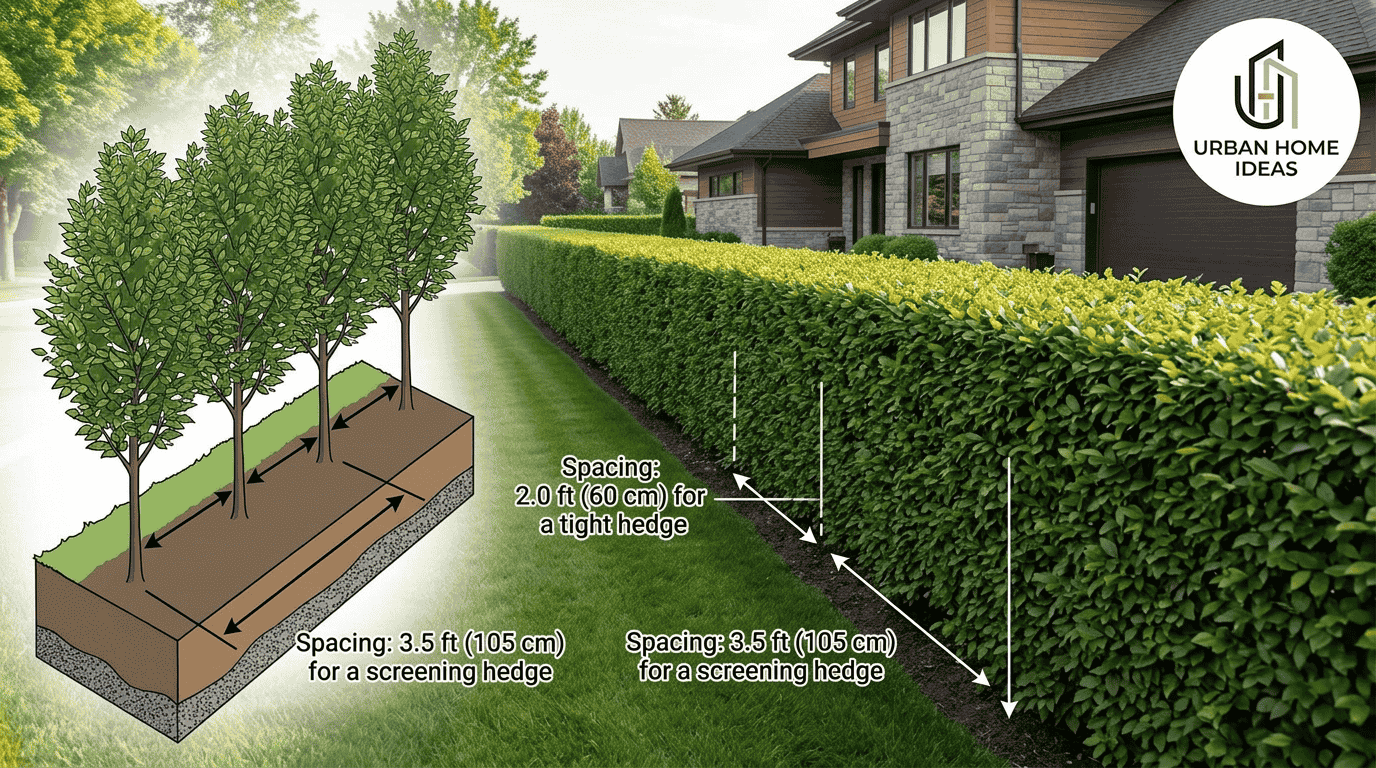
For privacy applications, hedge planting requires careful tree placement to create continuity while allowing healthy development. In structured designs, spacing should complement the compact tree form, vertical spacing, and overall landscape design.
Spacing Factors
- Consider mature growth before planting.
- Allow room for root development.
- Maintain balance between individual trees and structured garden layouts.
- Plan spacing according to the desired privacy screen effect.
Frans Fontaine Hornbeam root system
The Frans Fontaine Hornbeam root system develops best when planting techniques support healthy underground establishment. Correct positioning begins with maintaining the root flare at the appropriate level rather than burying it too deeply.
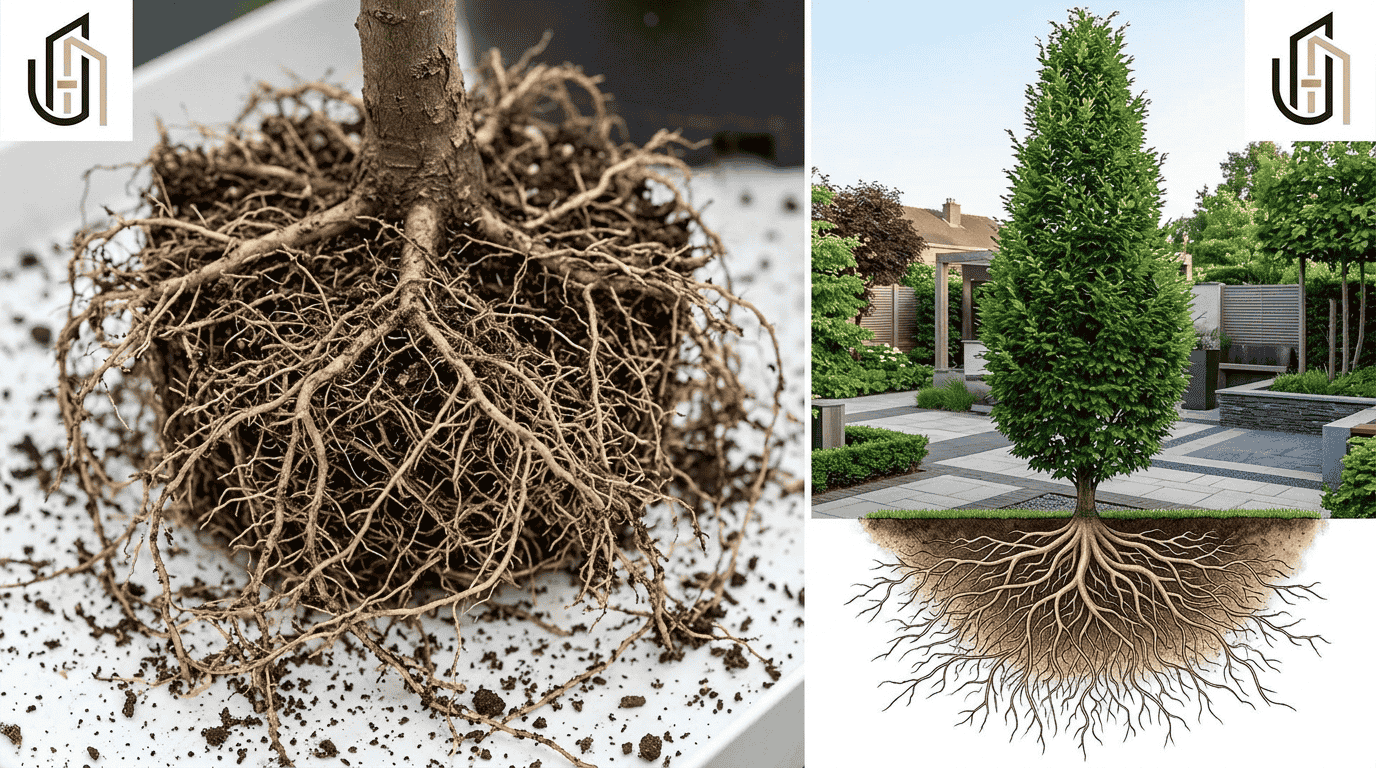
A visible root flare, proper planting depth, and suitable soil level help improve oxygen availability around the roots. During installation, soil preparation, nutrient-rich soil, and consistent watering contribute to successful establishment.
Root Installation Practices
- Check root flare visibility before backfilling.
- Use proper tree positioning during planting.
- Support root development through suitable soil conditions.
- Follow correct backfilling methods for long-term stability.
FAQs
How fast do Frans Fontaine hornbeams grow?
Frans Fontaine hornbeams grow at a slow to moderate rate, adding 12 to 24 inches and 30 to 60 cm of growth per year. Their development depends on care conditions and suitable conditions, which influence annual growth, tree development, and growth speed. With proper maintenance, the cultivar performance supports a balanced mature structure for landscapes requiring controlled expansion and reliable long-term establishment in garden spaces while maintaining its refined appearance.
What is a hornbeam tree good for?
Frans Fontaine Hornbeam is a versatile hornbeam tree from the Carpinus group, valued for its durable wood, landscape strength, and ecological role. While mainly grown as an ornamental selection, hornbeams are recognized for heavy-duty timber, high-heat firewood, and formal garden hedging. Their structured growth supports hedge planting, creates structured landscapes, and contributes to supporting local wildlife through habitat support and wider environmental benefits.
What happens to a hornbeam tree in winter?
Frans Fontaine Hornbeam experiences winter through deciduous growth and natural seasonal adaptation. During the winter season, hornbeam trees become dormant in winter and begin shedding leaves. They may retain dried golden-brown foliage, especially in managed hedges. This leaf retention during cold weather helps maintain hedge appearance and contributes to overall landscape structure while supporting the tree’s seasonal cycle.
How many hornbeam plants per metre?
Frans Fontaine Hornbeam planting requires careful planning with hornbeam plants, where 3 to 5 plants per metre is commonly used for a standard hedge. The final result depends on planting style, plant size, and desired hedge formation. Proper planting density and spacing support healthy hedge establishment, while accurate metre measurement helps achieve balanced landscape design. These factors create a structured hedge with consistent growth and long-term visual appeal.
When to plant hornbeam trees?
Frans Fontaine Hornbeam planting success depends on selecting the correct season and providing suitable planting conditions. Hornbeam trees establish well during the dormant season, especially in autumn from October to December or early spring from February to April. These periods support healthy root establishment and encourage steady tree growth.
Before planting, moist soil that is easy to dig helps with proper installation. Good soil preparation improves development, while effective seasonal planting practices create a stronger foundation for long-term landscape performance.
Other Post
America’s Gardening Resource: Smart Ideas For Better Gardens
What Is Hydroseeding? Mixture, Watering & Cost Guide