

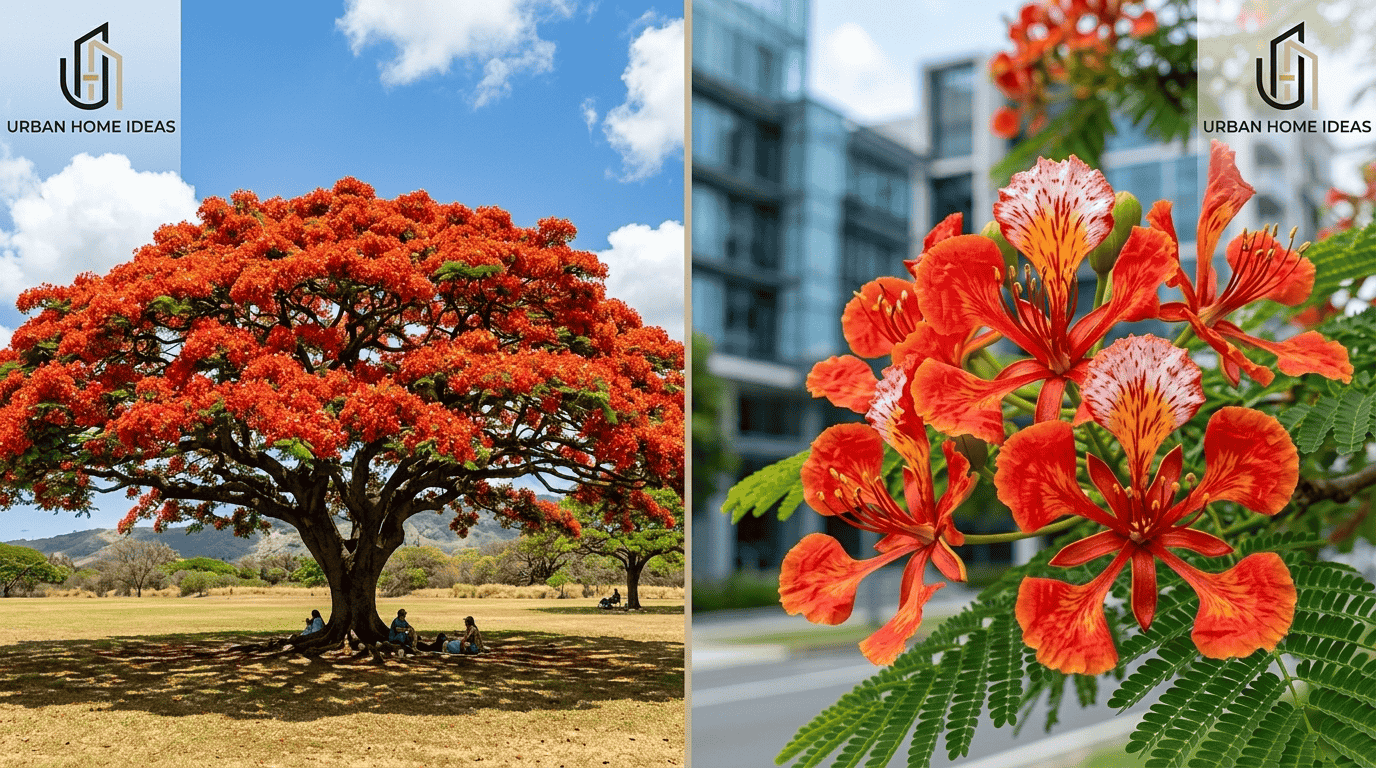
The delonix regia flamboyant tree is a tropical flowering tree known for its fiery red-orange blossoms, vibrant flowers, and delicate fern-like foliage. This ornamental tree originated from Madagascar and develops a broad canopy that provides natural shade. It is widely grown in tropical regions and subtropical regions because of its beauty, exotic color, and seasonal flowering display.
- Delonix Regia Flamboyant Tree Overview
- Native Range And Distribution
- Botanical Classification
- Scientific Classification
- Appearance And Characteristics
- Leaves
- Flowers
- Bark
- Seed Pods
- Growing Conditions For Delonix Regia
- How To Plant Delonix Regia
- Delonix Regia Care Guide
- Propagation Of Delonix Regia
- Problems, Pests And Diseases
- Benefits Of Delonix Regia
- Drawbacks Of Delonix Regia
- History And Naming
- Cultural Importance
The delonix regia flamboyant tree creates a remarkable presence in gardens, parks, and avenues with its orange-red blooms, green feathery leaves, and parasol-shaped canopy. Its combination of attractive structure and environmental value makes it one of the most recognized ornamental trees in warm climates.
The species belongs to the Fabaceae family, where it contributes to soil improvement through nitrogen fixation, supporting better soil fertility and creating a healthier growing environment. Its dense shade and colorful appearance make it valuable for both private gardens and public landscapes.
Delonix Regia Flamboyant Tree Overview
The delonix regia flamboyant tree is a scientific name used for a species commonly known by several names, including Flamboyant Tree, Flame Tree, Royal Poinciana, Peacock Flower, Fire Tree, and Gulmohar. This flowering ornamental tree belongs to the Fabaceae family and naturally develops a strong growth habit.
This fast-growing tree forms a spreading tree structure with an umbrella-shaped canopy that gives it a unique tropical appearance. A mature tree can reach around 30–40 feet in height and develop a spread of approximately 40–70 feet wide under suitable conditions.
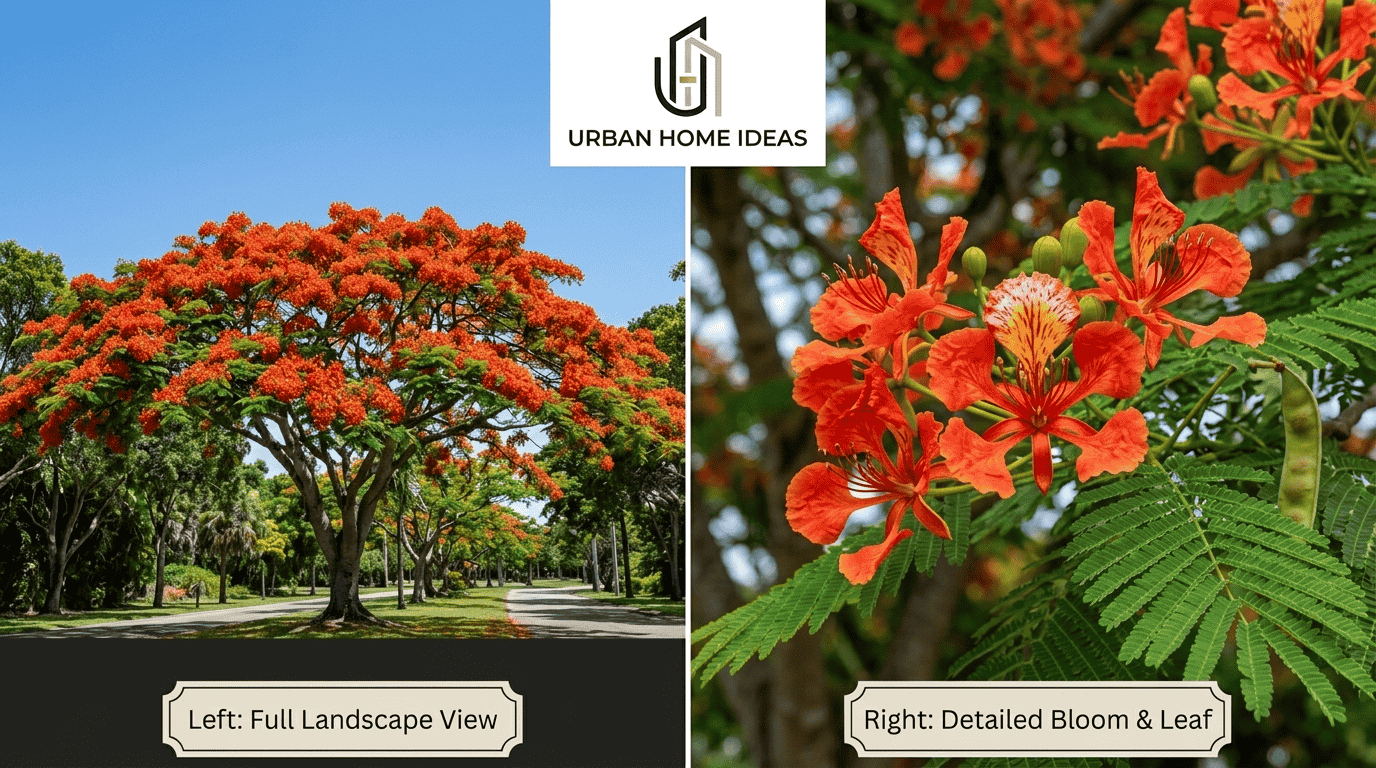
The tree performs best in USDA Hardiness Zones 10–12, where warm temperatures support healthy development. Its main bloom season occurs during spring and summer, when the canopy becomes covered with impressive flowers.
Plant Profile
- Scientific name: Delonix regia
- Common names: Flamboyant Tree, Flame Tree, Royal Poinciana, Peacock Flower, Fire Tree, Gulmohar
- Family: Fabaceae
- Native region: Madagascar
- Plant type: Flowering ornamental tree
- Growth habit: Fast-growing tree, spreading tree
- Height: 30–40 feet, 10–12 meters
- Spread: 40–70 feet wide
- Bloom season: Spring, summer
Native Range And Distribution
The delonix regia flamboyant tree has its original native range in Madagascar, where it naturally grows in dry deciduous forests with seasonal environmental conditions. Over time, this species expanded beyond its natural habitat because of its impressive flowering ability, attractive structure, and suitability for warm landscapes.
Today, this flowering tree is cultivated across many tropical regions and subtropical regions around the world. Its worldwide cultivation includes areas such as the Caribbean, Central America, South America, Africa, and Southeast Asia.
The tree has also become established in parts of the southern United States, including Florida, Texas, and California, where warm climates allow proper growth and seasonal flowering. It is commonly planted along streets, in parks, private gardens, and large landscapes because of its attractive appearance and value as an ornamental planting choice.
The ability of the tree to adapt to different warm environments has made it a popular species in landscape projects. Its spreading structure, colorful flowers, and shade-producing canopy allow it to transform open areas into visually appealing outdoor spaces.
Botanical Classification
The botanical identity of the delonix regia flamboyant tree places it within the kingdom Plantae and the Fabaceae family. This classification connects the tree with other leguminous plants that share similar biological features.
The scientific classification identifies the tree as part of the genus Delonix, with the species name Delonix regia. Its botanical structure includes important features such as compound leaves and pod-like fruits, which help distinguish it from other flowering species.
Scientific Classification
- Kingdom: Plantae
- Family: Fabaceae
- Genus: Delonix
- Species: Delonix regia
The relationship between Delonix regia and other plants in the bean family explains several of its characteristics, including seed production, leaf structure, and growth patterns.
Appearance And Characteristics
The visual appeal of the delonix regia flamboyant tree comes from its unique combination of size, structure, foliage, and flowers. It is recognized as a fast-growing species that develops into a large deciduous tree or semi-evergreen tree depending on local conditions.
A mature tree develops a spreading crown with a wide canopy and an attractive umbrella-like canopy shape. This structure creates dense shade and gives the tree its famous tropical appearance.
The overall appearance and characteristics of this species make it valuable for large gardens and open landscapes. Its combination of colorful flowering, broad structure, and decorative features creates a strong ornamental appearance.
Leaves
The leaves of this tree are one of its most distinctive features. The delicate leaves create a soft tropical effect through their fern-like leaves and bipinnately compound leaves structure.
The bright green foliage produces a gentle soft feathery appearance, which creates an attractive contrast against the bright flowers. This combination enhances the tree’s overall flowering display.
Depending on environmental conditions, the tree may experience seasonal changes. During the dry season or cooler winters, seasonal leaves may fall temporarily, resulting in leaf drop before fresh foliage develops again.
Flowers
The flowers are the most recognized feature of the tree and represent its main attraction. The large flowers appear in impressive displays with scarlet blooms, orange-red flowers, and sometimes yellow flowers.
These flowers develop in flower clusters across the canopy, creating strong canopy coverage during spring flowering and summer flowering periods.
Each flower contains four spreading petals and a distinctive fifth petal that includes yellow markings and white markings. These details contribute to the appearance of the tree’s vibrant blossoms.
Bark
The trunk and branches provide the supporting structure of the tree. Young branches develop smooth bark, while mature specimens develop grayish-brown bark with a more noticeable texture.
As the tree ages, the bark may develop a rough texture and fissured bark patterns. This woody structure supports the expanding canopy and large branches.
Seed Pods
After the flowering period, the tree develops reproductive structures known as seed pods. These include long pods, flat pods, and bean-like pods that mature over time.
The mature pods develop a dark brown color with a woody texture. They often remain attached to branches for extended periods before releasing seeds for future reproduction.
Growing Conditions For Delonix Regia
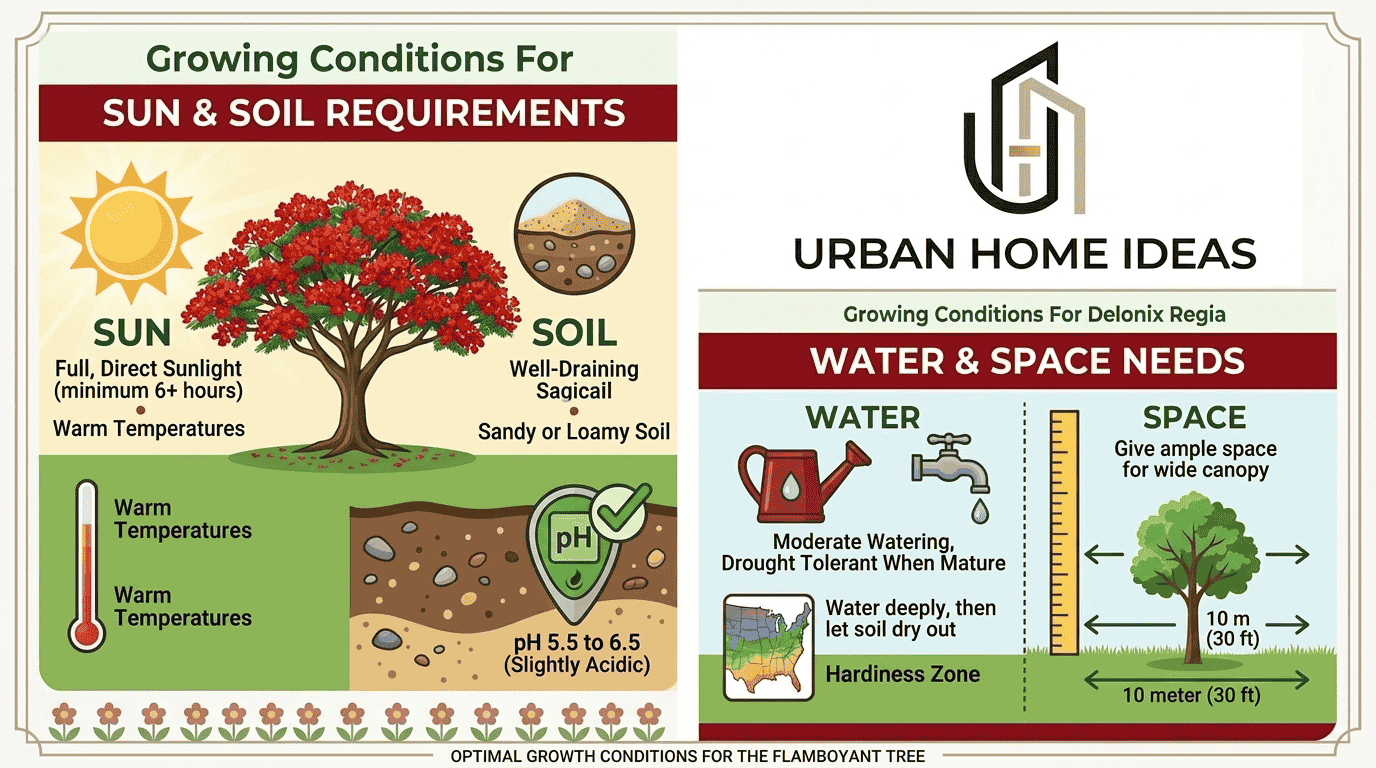
The delonix regia flamboyant tree performs best when its natural growing requirements are properly maintained. The tree requires suitable growing conditions, including adequate sunlight, balanced soil requirements, and a warm climate that supports healthy development.
This species naturally prefers environments similar to its original habitat, where tropical climate and subtropical climate conditions encourage strong growth and reliable flowering performance. Selecting the correct planting environment helps the tree develop stronger roots, better foliage, and more attractive seasonal blooms.
Understanding these conditions allows gardeners and landscape professionals to create a suitable environment where the tree can reach its full potential.
Sunlight Requirements
The delonix regia flamboyant tree requires full sunlight to maintain healthy development and produce abundant flowers. Direct exposure to sunlight for around 6 hours daily supports strong energy production and encourages better flowering.
Areas with proper daily sunlight availability allow the tree to develop stronger branches, improved foliage, and consistent seasonal blooms. Good light exposure is especially important during active growth periods when the tree requires sufficient energy.
The species performs best in warm conditions, where sunlight and temperature work together to support healthy growth and impressive flowering displays.
Important sunlight factors include:
- Full sunlight
- Direct sunlight
- 6 hours
- Daily sunlight
- Healthy growth
- Abundant flowering
- Light exposure
- Warm conditions
Soil Requirements
The delonix regia flamboyant tree grows successfully in soil that provides proper drainage and balanced nutrition. Well-drained soil helps prevent excess moisture around the roots and supports long-term tree health.
The species can adapt to different soil environments, including sandy soil and loamy soil conditions. It can tolerate slightly acidic soil as well as neutral soil, making it suitable for various landscape settings.
Adding organic matter improves soil quality and provides better support for root development. Proper soil drainage and suitable soil conditions are essential because they directly influence root health and overall plant performance.
Important soil factors include:
- Well-drained soil
- Sandy soil
- Loamy soil
- Acidic soil
- Neutral soil
- Organic matter
- Soil drainage
- Different soil types
- Suitable soil conditions
- Root health
Temperature And Climate
The delonix regia flamboyant tree prefers consistently warm environments and performs naturally in regions with a tropical climate or subtropical climate. These areas provide the warmth required for active growth and seasonal flowering.
The tree is commonly found in warm regions where temperatures remain favorable throughout the year. However, it has cold sensitivity and may experience stress when exposed to freezing conditions.
Low temperatures can cause frost damage, while prolonged cold exposure may affect foliage, branches, and flowering ability. During colder winter conditions, protection may be necessary in borderline growing areas.
Important climate factors include:
- Tropical climate
- Subtropical climate
- Warm regions
- Ideal temperature
- Cold sensitivity
- Frost damage
- Prolonged cold exposure
- Winter conditions
How To Plant Delonix Regia
Planting the delonix regia flamboyant tree successfully requires careful planning because of its mature size and spreading structure. The planting process should consider location selection, available space, sunlight, drainage, and future growth.
A suitable planting area allows proper canopy expansion and prevents conflicts with nearby structures. Since mature trees develop mature roots, spreading roots, and large branches, the location should be selected carefully.

The tree should not be planted too close to buildings, sidewalks, or underground utilities because its mature structure requires significant space.
A successful planting approach includes:
- Proper location selection
- Adequate planting space
- Full sunlight
- Wind protection
- Good soil drainage
- Consideration of mature roots
- Space for spreading roots
- Room for large branches
Choosing The Location
Choosing the correct location is one of the most important steps before planting. The area should provide full sun and enough space for future canopy growth.
Because this is a large tree, it requires a location where its mature size can develop naturally without damaging nearby structures or utilities.
Protection from strong winds helps reduce branch damage, while proper drainage improves long-term stability. Good landscape planning ensures the tree remains healthy and attractive.
Important location factors include:
- Location selection
- Full sun
- Enough space
- Canopy growth
- Strong winds
- Protection
- Drainage
- Large tree
- Mature size
- Structures
- Utilities
- Landscape planning
Planting Process
The planting process begins by preparing a suitable area for root development. A wide planting hole provides enough room for early root growth and allows better establishment.
The tree should be placed at the correct soil level before the hole is filled with suitable soil. After planting, it should be watered thoroughly to support early development.
Maintaining moisture during the first stage encourages root establishment and helps the young tree adapt to its new environment.
Important planting steps include:
- Prepare hole
- Wide planting hole
- Correct soil level
- Fill soil
- Suitable soil
- Water thoroughly
- Maintain moisture
- Young tree
- Root establishment
Delonix Regia Care Guide
Proper maintenance helps the delonix regia flamboyant tree maintain its attractive structure, strong growth, and seasonal flowering. A consistent care guide focuses on essential practices such as watering, fertilizing, and pruning to support healthy development.
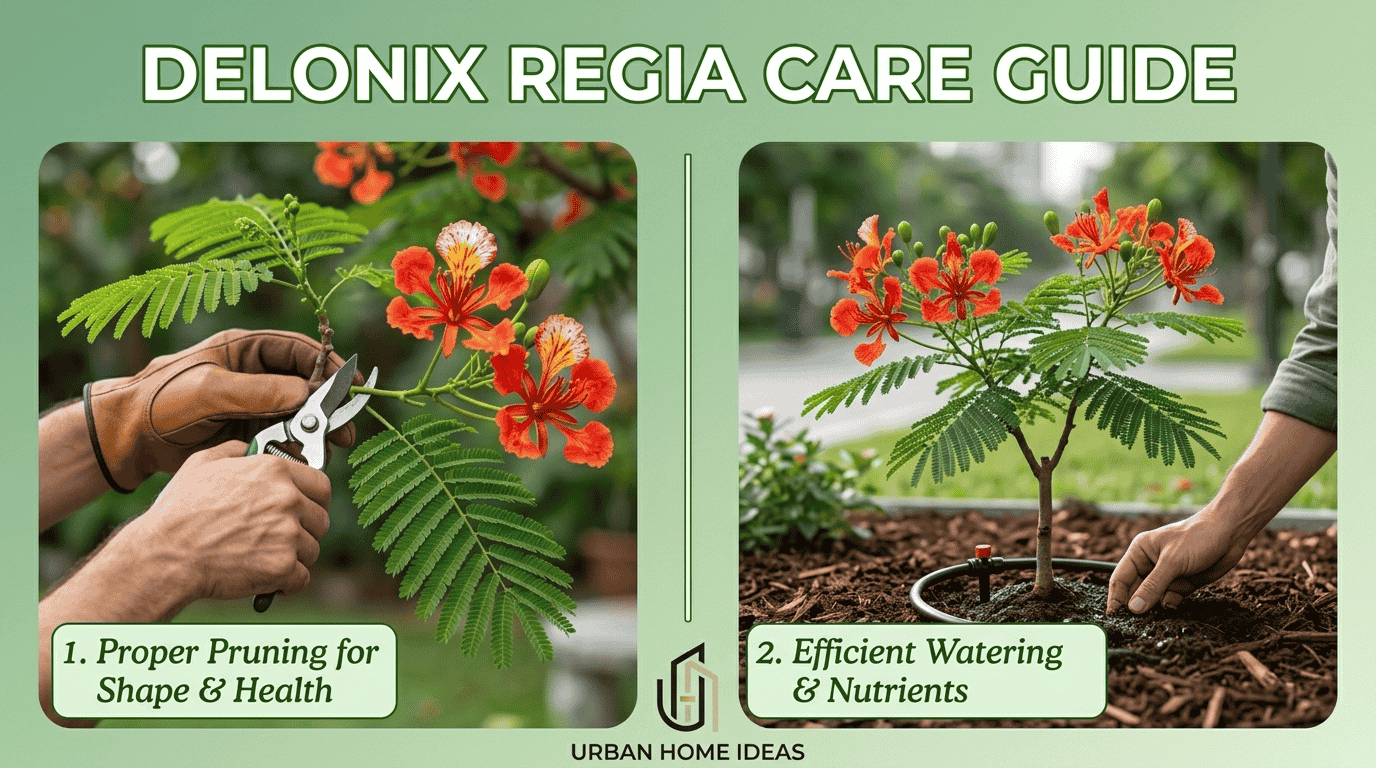
Young trees require more attention because their root systems are still developing, while mature trees become more adaptable after establishment. Good care encourages stronger root development, improved flowering, healthier foliage, and better overall plant maintenance.
Regular observation allows gardeners to identify problems early and maintain the tree’s natural beauty throughout different growth stages.
Watering
Proper watering is important, especially during the early stages of growth. Regular watering helps young trees develop stronger roots and supports root establishment after planting.
Once established, a mature tree develops better drought tolerance and can survive shorter dry periods. However, additional water may still be beneficial during extended dry periods when natural rainfall is limited.
Excess water should be avoided because overwatering can create root problems and reduce the tree’s ability to absorb nutrients properly. Maintaining the correct moisture balance supports healthy roots and steady growth.
Important watering factors include:
- Regular watering
- Young trees
- Root establishment
- Mature tree
- Drought tolerance
- Dry periods
- Additional water
- Overwatering
- Root problems
- Moisture balance
Fertilizing
Fertilizing provides essential nutrients that improve tree performance during active growth periods. A balanced fertilizer applied during the growing season helps encourage healthy foliage growth and stronger development.
Proper nutrients can also support better flower production, especially when the tree receives enough potassium. A potassium-rich fertilizer may improve blooming performance while maintaining good soil conditions.
Maintaining proper nutrient levels contributes to long-term soil fertility and helps the tree produce healthier leaves and flowers.
Important fertilizing factors include:
- Balanced fertilizer
- Growing season
- Healthy foliage growth
- Flower production
- Potassium-rich fertilizer
- Nutrients
- Soil fertility
Pruning
Pruning is an important part of maintaining the structure and safety of the tree. Regular pruning helps improve the tree structure by removing unhealthy growth and improving branch arrangement.
Removing dead branches, damaged branches, and crossing branches allows better airflow and reduces potential structural problems.
Young trees benefit from early structural pruning because proper training helps prevent weak branches and creates a stronger framework. Good tree training during early development supports better long-term growth.
Important pruning practices include:
- Pruning
- Tree structure
- Dead branches
- Damaged branches
- Crossing branches
- Young trees
- Structural pruning
- Weak branches
- Tree training
Propagation Of Delonix Regia
The delonix regia flamboyant tree is commonly propagated through seeds. This method allows growers to produce new plants while maintaining the natural characteristics of the species.
Successful propagation begins with proper seed preparation. Techniques such as soaking and scarification help improve the chances of successful germination because the seed coat can be hard.
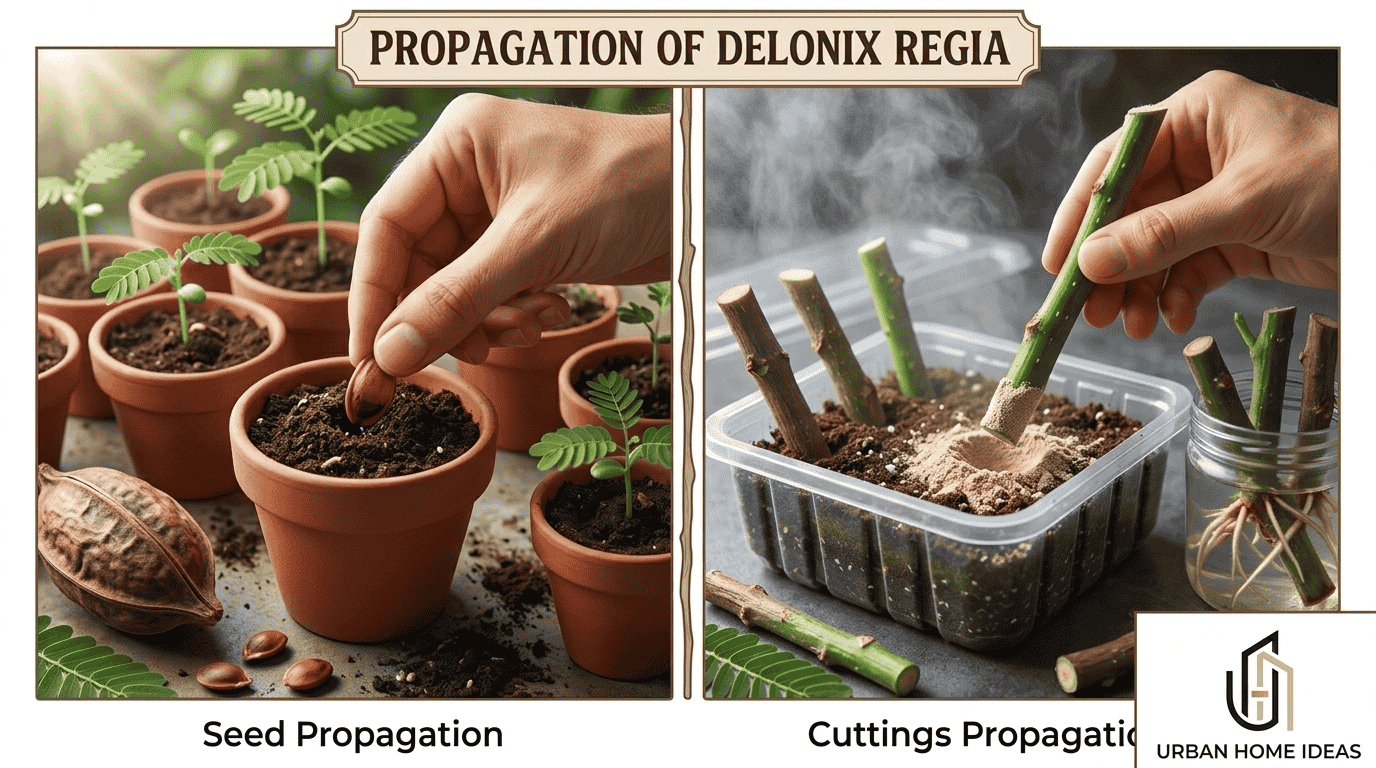
After germination, young plants require suitable moisture, warmth, and care for healthy seed growth. Trees grown from seeds may require several years before reaching flowering time and producing their first blooms.
Important propagation factors include:
- Propagation
- Seeds
- Seed preparation
- Soaking
- Scarification
- Germination
- Seed growth
- Flowering time
- Young trees
Uses Of Flamboyant Tree
The delonix regia flamboyant tree is widely appreciated because it provides both decorative and practical benefits in outdoor environments. Its combination of colorful flowers, large canopy, and tropical appearance makes it suitable for different landscape applications.
The tree is mainly valued as an ornamental tree and shade tree, but it also plays an important role in improving the appearance of gardens, public areas, and residential spaces. Its impressive structure allows it to become a central feature in large landscape projects.
Common uses of the tree include:
- Ornamental tree
- Shade tree
- Landscape design
- Tropical gardens
- Public parks
- Streetscapes
- Residential landscapes
- Spectacular flowers
- Canopy
- Outdoor areas
Ornamental Tree
As an ornamental tree, Delonix regia is recognized for its exceptional beauty and decorative qualities. The species is often planted because of its ornamental value, attractive shape, and seasonal flowering performance.
The flowering tree produces vibrant flowers and colorful blooms that create a strong visual impact. Its unique structure makes it more than just a decorative plant because it adds character and identity to outdoor spaces.
The tree’s garden beauty and tropical appearance make it a preferred choice for landscape projects where designers want a bold flowering feature. Its ability to become a landscape attraction increases its popularity among gardeners and landscape professionals.
Important ornamental features include:
- Ornamental value
- Flowering tree
- Decorative plant
- Vibrant flowers
- Colorful blooms
- Garden beauty
- Landscape attraction
- Tropical appearance
Shade Tree
The large structure of the delonix regia flamboyant tree allows it to function effectively as a natural shade provider. Its wide canopy and umbrella shape create comfortable areas beneath the branches.
The dense leaves contribute to shade production by reducing direct sunlight exposure. This makes the tree useful in gardens, parks, streets, and other outdoor spaces where cooling and comfort are important.
The dense foliage creates a cooler environment while maintaining the attractive appearance of the surrounding landscape.
Important shade features include:
- Shade production
- Wide canopy
- Umbrella shape
- Cooling effect
- Gardens
- Parks
- Streets
- Outdoor spaces
- Dense foliage
Landscape Design
In landscape design, the tree is used to create tropical themes and improve visual appeal. Its combination of flowers, canopy structure, and seasonal changes makes it suitable for different planting styles.
Landscape professionals often include this species in tropical gardens, public spaces, and residential landscapes where enough room is available for its mature growth.
The tree contributes to the beauty of large areas through careful decorative planting and enhances the overall aesthetic appeal of outdoor environments.
Common landscape applications include:
- Landscape design
- Tropical gardens
- Public spaces
- Residential landscapes
- Streetscapes
- Aesthetic appeal
- Large areas
- Decorative planting
Problems, Pests And Diseases
Although the delonix regia flamboyant tree is admired for its strength and beauty, it can experience certain challenges related to environmental conditions, structural growth, and pest activity.
Understanding these problems helps maintain better tree health and prevents damage caused by unsuitable planting conditions or insect infestations.
The most common concerns include weak branches, drainage problems, root issues, and damage caused by extreme weather conditions.
Common problems include:
- Problems
- Pests
- Diseases
- Weak branches
- Rapid growth
- Root problems
- Poor drainage
- Frost damage
- Storm damage
- Tree health
Common Issues
One major concern with the tree is that rapid growth can sometimes create weak branches, especially when proper maintenance is ignored. Structural problems may become more noticeable as the tree increases in size.
Poor soil conditions and excessive moisture can lead to root problems, while colder environments may increase frost sensitivity and cause damage.
Because of its large size, the tree may create challenges near sidewalks and buildings if planted without proper planning. Strong storms can also affect branches and overall stability.
Common issues include:
- Weak branches
- Rapid growth
- Poor drainage
- Root problems
- Frost sensitivity
- Structural damage
- Sidewalks
- Buildings
- Storm conditions
Spider Mites
Spider mites are small pests that may affect the foliage of the tree. These insects can cause leaf discoloration and reduce the overall strength of the plant.
Heavy infestations may result in noticeable foliage damage and general plant weakening because these pests act as sap feeding insects.
Important concerns include:
- Spider mites
- Leaf discoloration
- Foliage damage
- Plant weakening
- Sap feeding insects
Scale Insects
Scale insects can impact tree health by feeding on plant sap. Their presence may create visible issues such as sticky leaves and encourage fungal growth.
Early detection of insect infestation helps reduce potential damage and supports better plant maintenance.
Important concerns include:
- Scale insects
- Plant sap
- Sticky leaves
- Fungal growth
- Insect infestation
Aphids
Aphids commonly affect new growth by feeding on plant tissues. These pests target young growth and may cause weakness through sap sucking activity.
If not managed properly, they can contribute to plant damage and create visible foliage problems.
Important concerns include:
- Aphids
- Young growth
- Sap sucking
- Plant damage
- Foliage problems
Caterpillars
Caterpillars may damage the tree by consuming leaves and reducing the quality of foliage. Their feeding activity can lead to noticeable leaf damage and foliage loss.
Proper observation and suitable insect control methods help protect the tree from severe damage.
Important concerns include:
- Caterpillars
- Leaf damage
- Feeding activity
- Foliage loss
- Insect control
Benefits Of Delonix Regia
The delonix regia flamboyant tree provides several benefits that make it valuable in tropical and subtropical landscapes. Its combination of attractive flowers, large structure, and environmental contribution allows it to serve both decorative and practical purposes.
The tree is especially appreciated for producing spectacular flowers, offering natural shade, and improving the visual quality of outdoor spaces. Its presence can enhance gardens, parks, and large landscapes while supporting a healthier environment.
The main benefits of this tree include:
- Spectacular flowers
- Red-orange flowers
- Shade
- Landscape beauty
- Tropical appearance
- Biodiversity support
- Garden aesthetics
- Warm climates
- Environmental value
The colorful blooms make the tree an excellent choice for locations where seasonal beauty is important. Its large canopy provides shade and improves comfort in outdoor areas, while its flowering display attracts attention from visitors and landscape enthusiasts.
Because it grows well in warm climates, the tree can become a long-lasting feature in suitable regions. Its contribution to landscape improvement and ecological balance makes it more than just a decorative plant.
Drawbacks Of Delonix Regia
Although the delonix regia flamboyant tree is admired for its beauty, there are several factors that should be considered before planting. The tree requires careful planning because of its size, root development, and environmental preferences.
One of the main challenges is that it needs large planting space to grow properly. Small gardens may not provide enough room for its expanding canopy and root system.
Important drawbacks include:
- Drawbacks
- Large planting space
- Frost sensitivity
- Invasive roots
- Sidewalk damage
- Structural impact
- Brittle branches
- Storm damage
- Small gardens
- Maintenance requirements
The tree has frost sensitivity, meaning colder regions may experience growth problems or damage during freezing conditions. Its invasive roots can sometimes affect nearby structures, especially sidewalks and underground areas.
Large branches may become brittle branches during storms, creating maintenance concerns. Because of these characteristics, proper location selection is important before adding the tree to a landscape.
History And Naming
The history of the delonix regia flamboyant tree is connected with its botanical identity and unique appearance. The name reflects characteristics of the plant’s flowers and its impressive visual qualities.
The term Delonix meaning comes from Greek origins and relates to the structure of the flower. The species name regia meaning represents the idea of royalty, which connects with the common name Royal Poinciana.
Important naming elements include:
- History
- Naming
- Delonix meaning
- Greek origin
- Flower structure
- Regia meaning
- Royal
- Royal Poinciana
- Botanical naming
- Species name
The botanical naming system helps identify the species accurately and highlights the unique characteristics that separate it from other flowering trees.
Cultural Importance
The delonix regia flamboyant tree holds strong cultural importance in many tropical countries because of its recognizable flowers and seasonal transformation of landscapes.
The tree is often considered a symbolic tree because its colorful flowering periods become connected with local environments, public spaces, and community identity. Its appearance during blooming seasons creates memorable scenery and enhances the character of tropical locations.
Important cultural elements include:
- Cultural importance
- Symbolic tree
- Flowering tree
- Colorful blooms
- Seasonal transformation
- Landscape identity
- Tropical countries
- Visual beauty
In many regions, the tree represents tropical beauty and natural elegance. Its presence in gardens, streets, and public areas contributes to the visual identity of landscapes and creates a strong connection between nature and local surroundings.
Other Post
America’s Gardening Resource: Smart Ideas For Better Gardens