

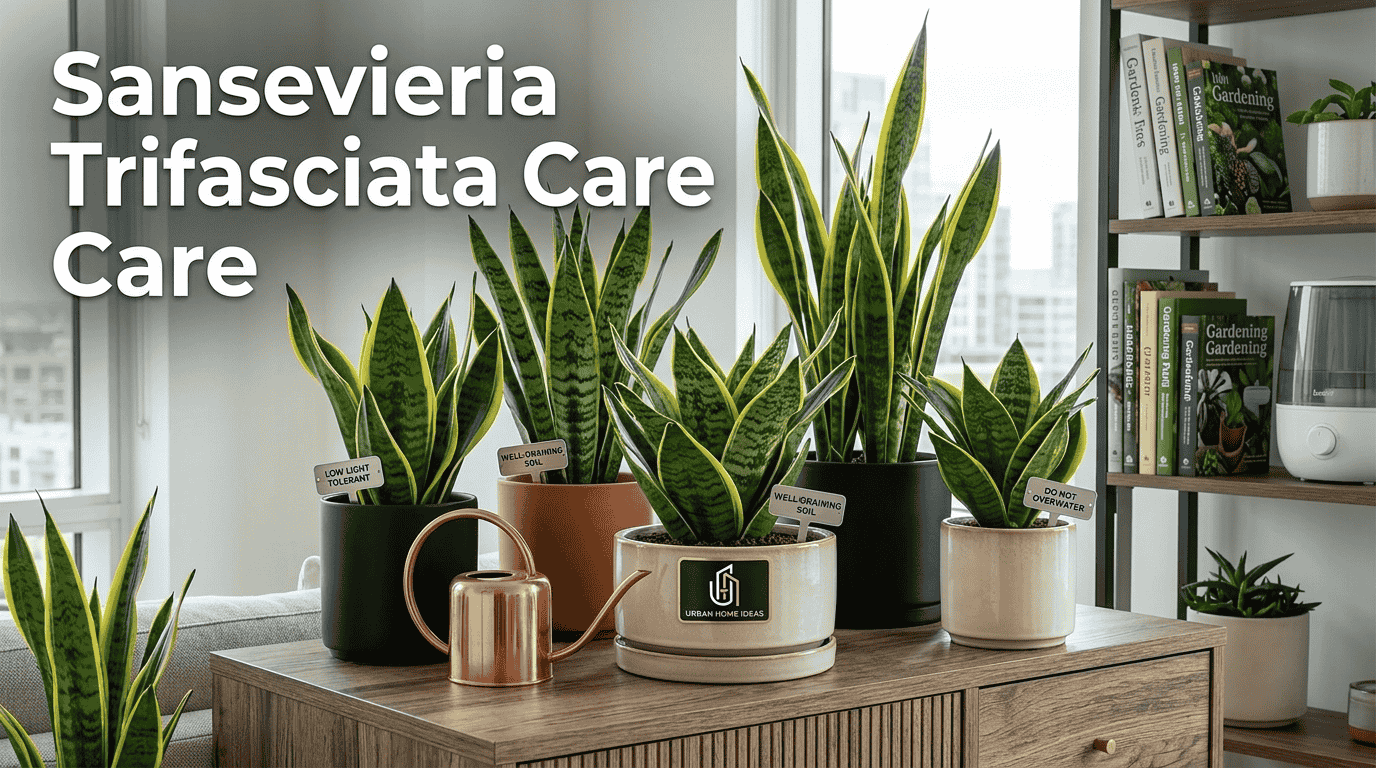
Sansevieria trifasciata care is simple because this easy-care houseplant is drought-tolerant and low-maintenance. For reliable indoor plant care, it can handle low light, medium light, and bright indirect light, while its upright leaves and attractive foliage remain healthy when the plant is allowed to experience dry conditions between watering. The snake plant, also known as mother-in-law’s tongue, is therefore well suited to basic indoor care.
- Sansevieria Trifasciata Care:Light, Watering And Soil
- Sansevieria Trifasciata Basic Information
- Light Requirements
- Watering Requirements
- Best Soil For Sansevieria Trifasciata
- Temperature And Humidity
- Fertilizing Sansevieria Trifasciata
- Propagating Sansevieria Trifasciata
- Potting And Repotting
- Pruning And Leaf Cleaning
- Common Pests
- Common Sansevieria Trifasciata Problems
- Root Rot / Bad-Smelling Soil
- Yellow Or Brown Leaves
- Curling Leaves
- Drooping Or Falling Leaves
- Wrinkled Leaves
- Getting Sansevieria Trifasciata To Bloom
- Overwintering
- Types / Varieties Of Sansevieria
- Snake Plant Benefits
- Feng Shui Placement
- Outdoor Growing
- Pollinators And Snake Plant Flowers
- Snake Plant Lifespan / Growth Rate
- Where To Buy Snake Plants
- FAQ
- Is Sansevieria Trifasciata Care Difficult?
- How Often Should A Snake Plant Be Watered?
- Can A Snake Plant Grow Indoors?
- Can It Grow Outdoors?
- What Soil Does It Need?
- Does It Need High Humidity?
- Can It Be Propagated?
- Why Are Leaves Yellow Or Brown?
- Why Are Leaves Curling?
- Does Sansevieria Trifasciata Laurentii Need Different Care?
Sansevieria Trifasciata Care:Light, Watering And Soil
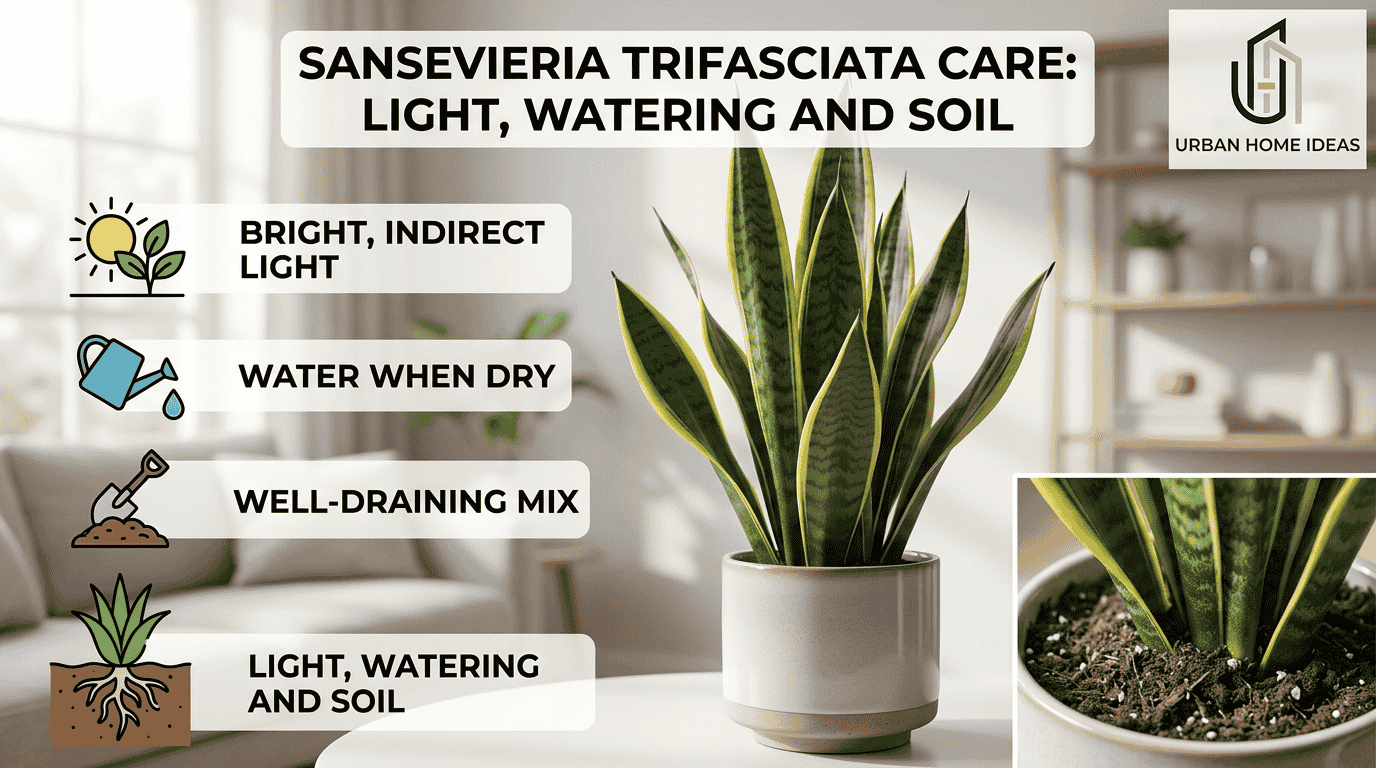
Sansevieria trifasciata care depends mainly on suitable light, careful watering, and well-draining soil. Bright indirect light supports healthy growth, while low light and medium light are tolerated when stronger sunlight is unavailable. The soil should become completely dry before deep watering, particularly because its thick leaves provide water storage and strong drought tolerance. Using fast-draining soil, perlite, or a succulent mix helps prevent waterlogging, excess moisture, and root rot, while drainage holes allow excess water to escape.
Sansevieria Trifasciata Basic Information
Sansevieria trifasciata, also known as Dracaena trifasciata, snake plant, Mother-in-Law’s Tongue, Viper’s Bowstring Hemp, and Saint George’s Sword, belongs to the Asparagaceae family. It is an evergreen perennial native to tropical West Africa, including Nigeria and the Congo. The plant has upright, rigid, sword-shaped leaves and thick leaves that store water. A mature plant can produce white flowers with tubular and fragrant flowers, usually during spring, and may reach around 2–5 feet in height. It is commonly associated with USDA hardiness zones 9–11.
Light Requirements
Snake plants tolerate a surprisingly broad range of light conditions, but tolerance does not mean that every location produces the same result. Bright light, preferably indirect light or bright indirect light, generally supports stronger growth, better vibrant foliage, and clearer foliage coloration.
A plant can survive low light or medium light, although slow growth is more likely. Sunlight becomes more complicated outdoors because direct sunlight, intense sunlight, and harsh sunlight can scorch foliage when the plant has not acclimated.
An east-facing window is usually a gentle option. A south-facing window or west-facing window can provide stronger exposure and may require distance from the glass, especially during hot periods.
Around 8–10 hours of useful ambient or filtered light can support good indoor performance, although the exact result depends on the intensity of the indoor lighting.
Full sun can work outdoors when exposure is introduced gradually. Partial shade and filtered light are safer in climates where afternoon exposure becomes severe.
Signs of excessive exposure include leaf scorch, browning, drying, and damaged leaf edges, particularly during hot conditions.
Sansevieria Trifasciata Care Indoors
For Sansevieria trifasciata care indoors, a bright location with bright indirect light is a strong starting point. The indoor plant can also tolerate low light and medium light, making a window or suitable indoor lighting useful when natural exposure is limited.
An east-facing window can provide softer morning sunlight, while a south-facing window or west-facing window can provide stronger exposure. Indirect sunlight is generally easier to manage than prolonged direct sunlight.

Good indoor conditions encourage healthier foliage, gradual growth, and more consistent leaf coloration. In low-light conditions, the plant may remain healthy but grow slowly and show less vigorous vibrant foliage.
Sansevieria Trifasciata Care Outdoor
Sansevieria trifasciata care outdoor requires more attention to exposure than indoor cultivation. An outdoor plant can grow in full sun, partial shade, or filtered light, but the transition should be gradual.
In a hot climate, the plant benefits from protection during the strongest part of the day. Hot conditions combined with abrupt exposure to intense sunlight can cause leaf stress, leaf scorch, browning, and drying.

A frost-free climate and generally warm climate are preferable for outdoor growing. Where cold weather is expected, the plant should be protected rather than left exposed.
Watering Requirements
Sansevieria trifasciata care watering is largely about resisting the urge to water too soon. The plant is drought tolerant because its thick leaves provide significant water storage. Therefore, the soil should be allowed to become completely dry before another substantial watering.
A useful approach is deep watering followed by a period of substantial drying. During spring and summer, a routine of roughly every 2–3 weeks can work as a starting point, but the soil condition matters more than the calendar. During fall and winter, watering may be reduced to once a month or less if the soil remains dry more slowly.
The principal risk is overwatering. Persistent wet soil, waterlogged soil, and excess water restrict the roots and can cause root rot. Symptoms may include yellow leaves, mushy leaves, brown spots, and declining vigor.
Conversely, prolonged underwatering can produce dry leaves, brittle leaves, curling leaves, and brown leaf edges. The plant generally tolerates dryness better than saturated roots, but extreme neglect can still reduce plant health.
Drainage holes and well-draining soil are therefore fundamental.
Sansevieria Trifasciata Care Watering
For Sansevieria trifasciata care watering, the simplest test is the condition of the completely dry soil. The plant should receive water thoroughly enough to moisten the root zone, followed by sufficient drying.
Its drought tolerance, thick leaves, and water storage explain why watering every few days is usually unnecessary. In spring and summer, every 2–3 weeks may be reasonable under many indoor conditions. In fall and winter, once a month can be sufficient where evaporation is slow.

Both overwatering and underwatering can produce stress, but root rot associated with wet soil and waterlogged soil is usually more damaging. Yellow leaves, mushy leaves, brown spots, and brown edges should therefore be interpreted alongside soil moisture and drainage.
Best Soil For Sansevieria Trifasciata
The ideal soil is well-draining soil that does not remain wet for long. A fast-draining soil, loose soil, or sandy soil gives the roots better access to air.
Commercial cactus soil, succulent mix, or cactus potting soil can work well. A suitable potting mix should produce a well-drained potting mix rather than a dense medium that holds excessive moisture.
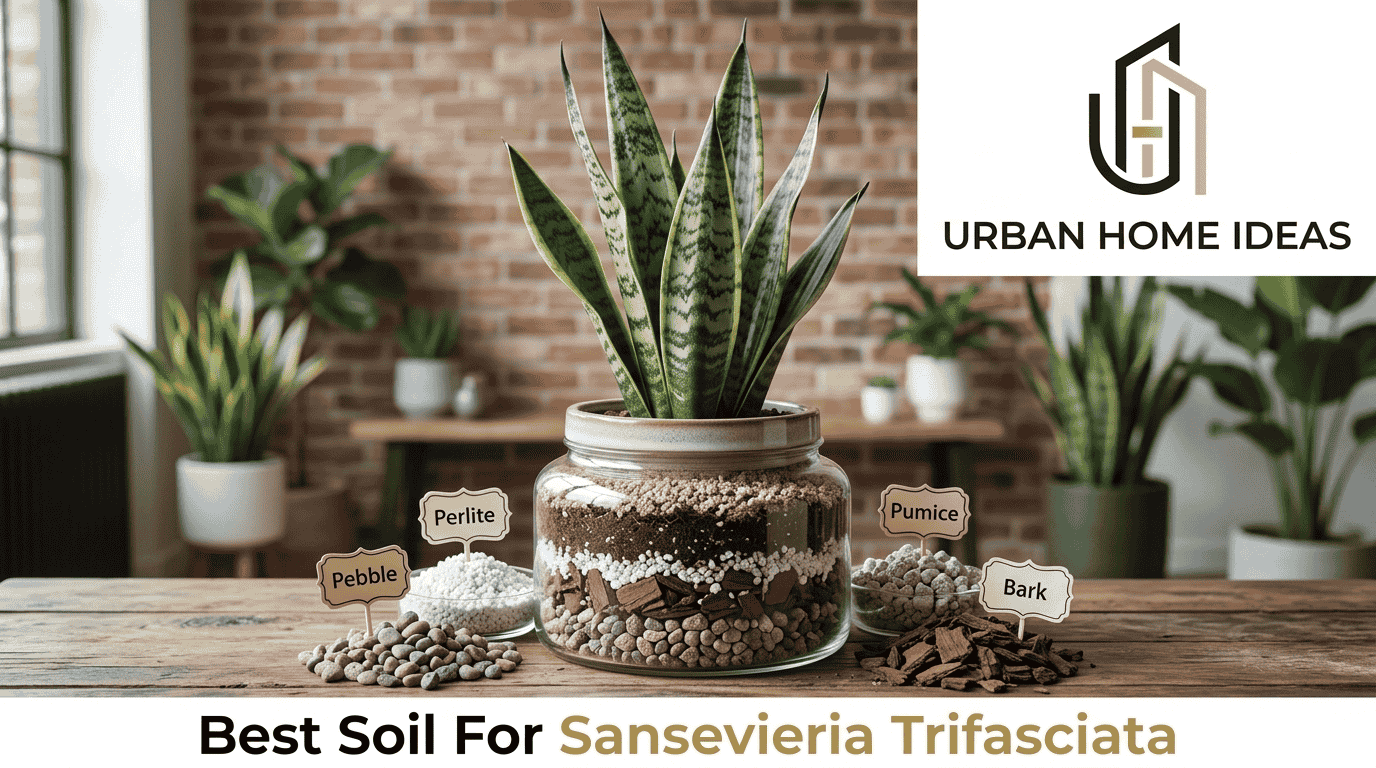
A slightly acidic, neutral soil, or mildly alkaline soil can be tolerated. A practical pH range is approximately 5.5–7.5.
Perlite and coarse sand can improve drainage when added to quality potting soil. Using equal parts of appropriate components can produce a loose medium, but the exact ratio should be adjusted according to how quickly the mixture dries.
The objective is not maximum water retention or moisture retention. Excessive retention can encourage waterlogging and excess moisture, while effective drainage keeps the root environment more stable.
Temperature And Humidity
A comfortable temperature range is approximately 15°C–29°C, with many household environments falling comfortably within it. References may also describe favorable conditions around 70–90°F or 60–80°F, depending on the intended range and growing situation.
Ordinary household temperature is usually adequate. The plant also handles low humidity, average humidity, and typical household humidity well. Around 30–50% humidity is generally comfortable without requiring special equipment.
Good air circulation and good airflow are useful, particularly where several plants are grouped together. The plant should be protected from cold drafts, sudden cold temperatures, and frost.
Although it has some frost tolerance, it should not be considered a frost-proof plant. Frost-free conditions, especially during prolonged exposure, are preferable. Temperatures below 50°F can become increasingly stressful, particularly when combined with wet soil.
These distinctions matter for both tropical conditions, indoor conditions, and outdoor conditions.
Fertilizing Sansevieria Trifasciata
Snake plants generally need modest feeding. A balanced fertilizer, liquid fertilizer, or slow-release fertilizer can be used during active growth. A 10-10-10 fertilizer is one possible balanced formulation.
A diluted fertilizer applied at half strength reduces the risk of excessive nutrient concentration. During active growth, especially spring and summer, light feeding is generally more appropriate than frequent heavy applications.
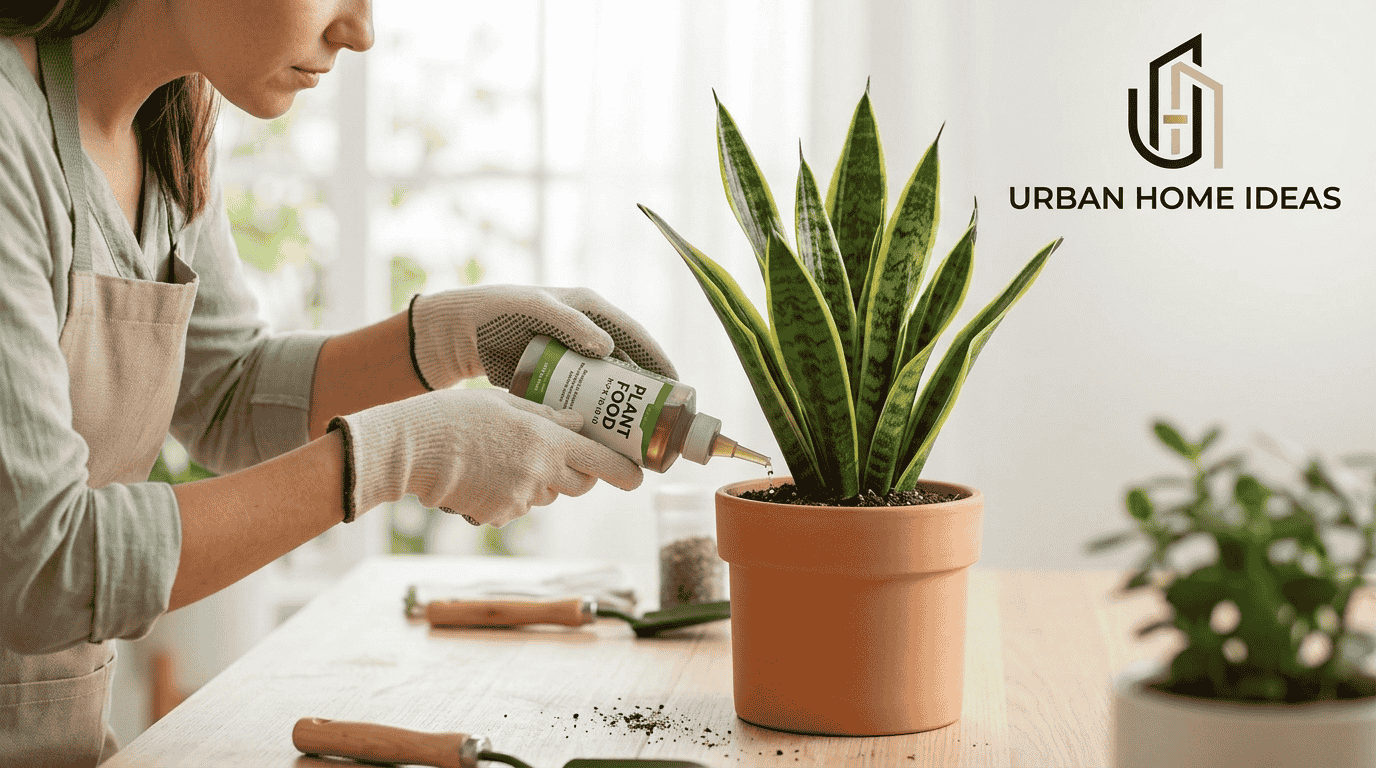
Some growers feed around mid-summer or approximately every two months. This is best viewed as light feeding, not a requirement for rapid growth.
Excessive fertilizer and over-fertilization can contribute to weak growth or root damage. Feeding should be reduced during fall and winter, when the plant enters a relatively dormant period and has less need for feeding.
Propagating Sansevieria Trifasciata
Propagation can be performed through leaf cuttings, leaf cutting, or division. The most suitable method depends on the plant’s structure and whether the grower wants to preserve particular foliage characteristics.
A mature plant with an established root ball, rhizomes, roots, and healthy leaves is an excellent candidate for division. For leaf propagation, leaf sections of approximately 3–4-inch sections can be prepared.
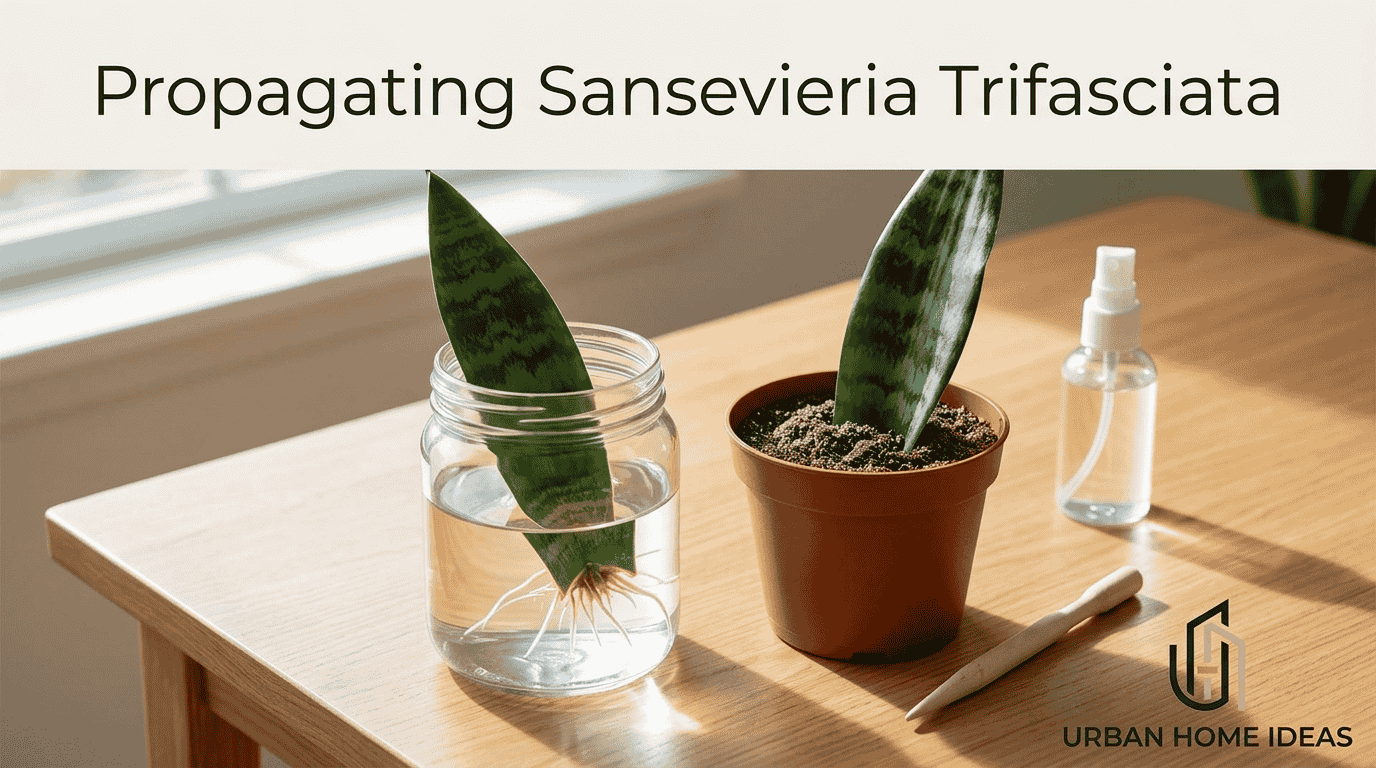
The cut ends should develop a callus, a process known as callusing, before planting. Allowing the pieces to dry for one to two days can help prepare them for propagation.
The sections can then be placed in moist soil or another well-draining soil medium. After planting, the material should not remain saturated. New shoots and root development can take one to four months.
Spring and summer, when the plant is experiencing active growth, are usually practical propagation periods. Bright bright indirect light and controlled watering support establishment.
Division
Division works especially well when a mature plant has developed multiple clusters. The plant can be removed carefully, exposing the root ball, rhizomes, and roots.
Sections containing healthy roots and sufficient foliage can be separated into individual plant sections. Each section should retain enough roots to establish itself.
After replanting in well-draining soil, the divisions can receive bright indirect light and restrained watering. Excessive watering during this stage can undermine otherwise healthy divisions.
Leaf Cuttings
With leaf cuttings, a grower can select healthy mature leaves and divide them into leaf sections of approximately 3–4-inch sections.
The cut ends should be allowed to callus, or undergo callusing, for one to two days before planting. The sections can then be inserted into moist soil and well-draining soil, generally with upright planting.
Moderate water and suitable light encourage the development of roots and shoots. Root development may take one to four months, so propagation requires patience rather than frequent disturbance.
Leaf propagation is most conveniently attempted during spring and summer, when the plant is naturally more active. This is a straightforward form of propagation when healthy source material is available.
Potting And Repotting
Potting and repotting should prioritize stability and drainage. A suitable container or pot needs reliable drainage holes and enough structural weight to support the foliage.
A well-draining container made from ceramic, terracotta, or clay can be suitable. A sturdy container, particularly a wide container or shallow container, can help stabilize larger specimens.
Repotting becomes useful when offshoots crowd the container, root growth becomes restricted, or the plant is clearly rootbound. The roots should have enough room to support continued development without placing the plant in an unnecessarily large container.
Water drainage remains more important than decorative container choice. A mature specimen may require repotting roughly every 3–5 years, often during spring or the main growing season.
A large plant needs a container capable of supporting its root system and overall plant stability.
Pruning And Leaf Cleaning
Pruning is primarily corrective rather than routine. During the pruning season, damaged leaves, discolored leaves, crowded leaves, old leaves, and excessively tall leaves can be removed.
Healthy leaves should generally remain intact because unnecessary leaf removal reduces the plant’s usable foliage. Cuts can be made close to the soil line with clean scissors, sharp scissors, a sterile cutting tool, or another clean cutting tool.
Pruning can assist with new growth, height control, and appearance. Regular leaf cleaning is also useful because dust can accumulate on the foliage.
A microfiber cloth or damp cloth can gently wipe the leaves. A small amount of water is normally sufficient; harsh cleaning products are unnecessary.
Common Pests
Although snake plants have considerable pest resistance, infestations can still occur. Common pests include spider mites, mealybugs, scale, fungus gnats, aphids, whiteflies, and thrips.
Pest infestation is more likely to become troublesome when conditions are favorable to pests, including persistent wet soil, damp soil, or stressful hot conditions and dry conditions. Excessive high nitrogen feeding can also contribute to lush growth that may attract certain pests.
An affected plant should be placed in isolation when practical. Early pest control can involve manual removal, a water spray, insecticidal soap, or neem oil, depending on the pest and the severity of the problem.
The affected plant should be monitored alongside soil moisture, since correcting the growing environment can be as important as treating visible pests.
Common Sansevieria Trifasciata Problems
Typical common problems include root rot, yellow leaves, brown leaves, curling leaves, drooping leaves, falling leaves, and wrinkled leaves.
Overwatering, underwatering, poor drainage, and insufficient light are frequent environmental causes. Pests, especially thrips, can also alter foliage appearance.
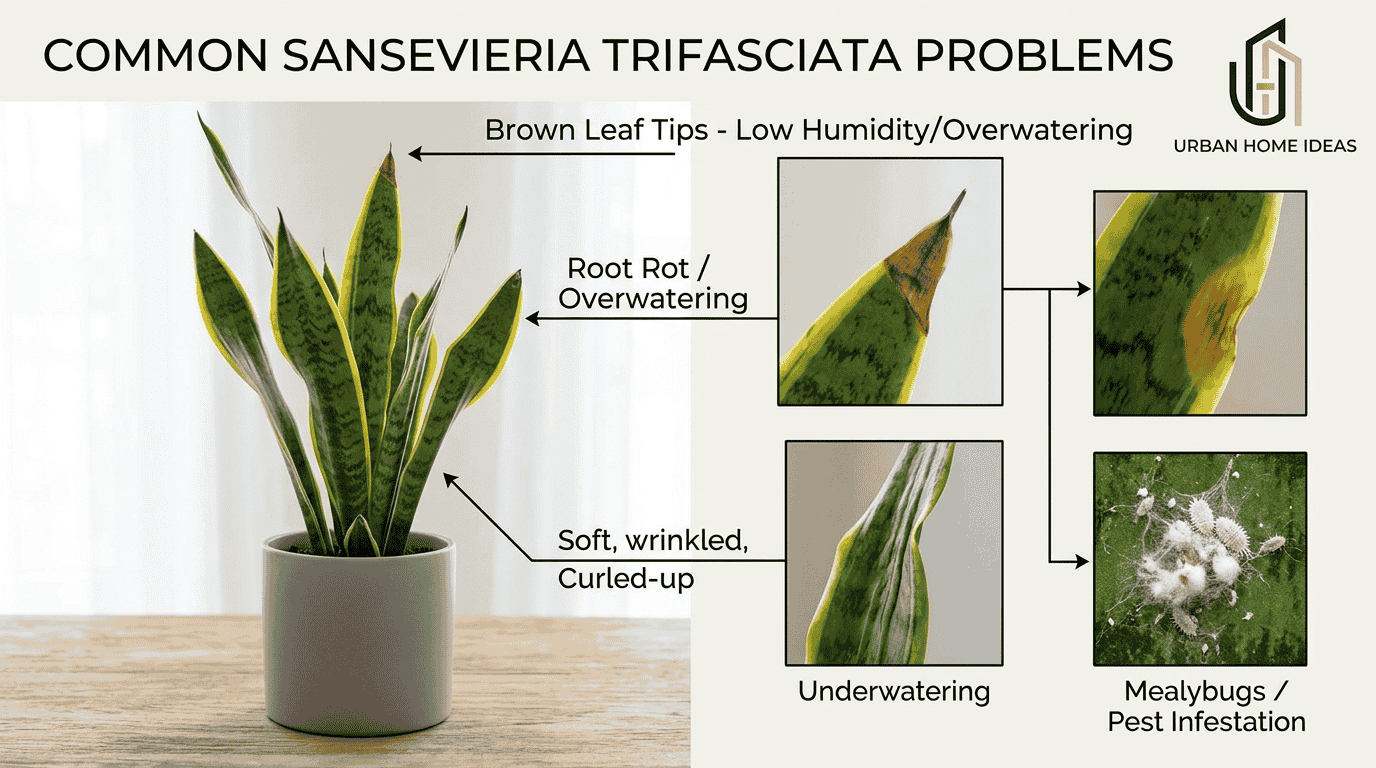
Wet soil suggests a different problem from dry soil. Brown or mushy roots, foul-smelling soil, and visible root damage point toward excessive moisture, while dry soil accompanied by wrinkling can indicate insufficient water.
A useful diagnosis considers soil moisture, drainage, watering, sunlight, and overall light conditions rather than relying on leaf color alone.
Root Rot / Bad-Smelling Soil
Root rot and bad-smelling soil are strong warnings that the root environment is staying too wet. Foul-smelling soil, excessive watering, overwatering, poorly draining soil, and waterlogged soil commonly occur together.
Affected roots may become brown roots or mushy roots, leading to root damage and declining plant health. The plant should be removed from the container and the affected roots inspected.
Damaged tissue should be removed before the plant is placed in fresh soil and well-draining soil. Repotting is often necessary when the original medium has remained saturated.
Yellow Or Brown Leaves
Yellow leaves and brown leaves can have several causes. Leaf discoloration may accompany overwatering, pests, or root problems, but older leaves can also change color through natural aging.
When foliage begins wrinkling, leaf drop may follow. If the plant is producing new growth normally, an isolated old leaf may simply be completing its life cycle.
The grower should evaluate plant energy, water, and soil moisture before changing the routine. A single aging leaf should not automatically trigger aggressive watering.
Curling Leaves
Curling leaves or leaf curling may occur when thrips or other pests affect foliage. Severe dryness can create a similar appearance, particularly when the plant remains in dry conditions for an extended period.
Underwatering can therefore cause leaf stress, but pests should not be overlooked. Examining the foliage closely helps distinguish environmental stress from an active infestation.
Drooping Or Falling Leaves
Drooping leaves and falling leaves can result from overwatering, insufficient light, poor soil, or poor drainage. Persistently wet soil can damage the roots and eventually affect foliage support.
The grower should inspect the root problems, watering pattern, and available light. A well-draining soil and appropriate potting mix are especially important where drainage has been poor.
Wrinkled Leaves
Wrinkled leaves most often suggest prolonged underwatering or dry soil, although natural aging can affect individual leaves as well.
A period of dryness can be corrected with deep watering when the medium is genuinely dry. Older leaves may eventually show leaf drop regardless of watering because the plant reallocates resources.
The condition of the water, soil moisture, and overall foliage provides better diagnostic information than wrinkles alone.
Getting Sansevieria Trifasciata To Bloom
Blooming is not the primary reason most people grow a snake plant, and flowering indoors can be relatively uncommon. When conditions align, a mature plant may produce flowers during spring.
The flowers can be fragrant, tubular flowers, or creamy white flowers, often described simply as white flowers. Their scent may become more noticeable at nighttime.
Flowering indoors may occur when a mature houseplant experiences sufficient sunlight and other favorable conditions. A mildly rootbound plant can sometimes flower, although root restriction should not be deliberately created as a universal flowering technique.
Different cultivars and variety selections vary in flower production. Therefore, lack of flowers does not necessarily indicate poor care.
Overwintering
Overwintering becomes important when a snake plant is cultivated outdoors in a winter climate that can produce frost or prolonged cold temperatures.
An outdoor plant should be moved to a suitable indoor location before severe weather. Frost protection is preferable to exposing the plant to freezing conditions.
Once indoors, the plant can remain in frost-free conditions with reduced watering. During winter dormancy and the dormant period, growth may slow considerably.
A longer interval between watering allows the dry soil or completely dry soil to remain dry until the plant actually requires moisture. The watering schedule should therefore become less frequent during winter rather than following the summer routine automatically.
Types / Varieties Of Sansevieria
Commonly encountered names include Sansevieria trifasciata, Sansevieria laurentii, Dracaena trifasciata, Dracaena angolensis, Dracaena pearsonii, Laurentii, Hahnii, Bird’s Nest, Bird’s Nest Green, Bird’s Nest Gold, Cylindrical Snake Plant, Fernwood, Starfish, francisii, Twisted Sister, Bantel’s Sensation, and Rhino Grass.
These snake plant varieties and cultivars differ in structure and foliage. Some produce green leaves, others show yellow leaves or cream leaves, while certain selections have striped leaves, upright leaves, or cylindrical leaves.
Their watering and light requirements remain broadly similar, although individual cultivars can respond differently to exposure and growth conditions.
Sansevieria Trifasciata Laurentii
Sansevieria trifasciata Laurentii is widely recognized as Sansevieria laurentii, Laurentii, and a form of Dracaena trifasciata. As a snake plant cultivar or variety, it is especially recognizable for its yellow foliage, green foliage, and variegated foliage.
Its upright leaves have a characteristic sword-shaped appearance, making it a popular houseplant and indoor plant. Care remains centered on good drainage, controlled watering, and adequate light rather than special treatment.
Snake Plant Benefits
The snake plant is valued for low maintenance, drought resistance, drought tolerance, and its ability to remain adaptable across different household environments.
Its tolerance of low light alongside preference for bright indirect light makes it useful as an indoor plant. Attractive foliage, decorative value, and architectural growth contribute to its appeal, while compact growth in certain varieties makes it suitable for limited spaces.
The plant can be long-lasting and beginner-friendly, with substantial pest resistance. Its space-saving growth can suit offices, bedrooms, living areas, and other interior settings.
Snake plants are also commonly discussed in relation to air purification, air quality, humidity, oxygen production, and nighttime oxygen. These benefits are often presented as reasons for indoor placement, although practical household value still comes primarily from the plant’s durability and decorative characteristics.
Cultural interpretations also associate snake plants with Feng Shui, wellness, prosperity, abundance, and harmony.
Feng Shui Placement
In Feng Shui, the snake plant is sometimes used according to the intended energy of a room. The southeast corner is traditionally associated with prosperity and abundance, while the east area may be connected with wellness and harmony.
Regardless of the symbolic placement, the plant remains an indoor plant and houseplant with practical requirements for light, drainage, and watering. A location chosen for Feng Shui purposes should still provide conditions that support healthy growth.
Outdoor Growing
Outdoor growing is most successful in a warm climate or frost-free climate. An outdoor plant can tolerate full sun, partial shade, filtered light, and indirect light, but harsh sunlight during the strongest part of the day can damage foliage.
Outdoor cultivation is commonly associated with USDA zones 9–12, while the plant is also often listed for USDA zones 9–11. Local winter conditions matter more than a zone number alone where frost and cold temperatures are possible.
Frost protection, well-draining soil, drought tolerance, appropriate water, and gradual adjustment to sunlight are central to outdoor success.
Pollinators And Snake Plant Flowers
Snake plant flowers can appear under favorable circumstances. The flowers are generally tubular flowers and fragrant flowers, with spring being a common flowering period.
Their fragrance may become more noticeable at nighttime. Although the plant is not primarily grown as a pollinator plant, its flowers can participate in local interactions with pollinators when flowering occurs.
Flower production is comparatively uncommon indoors, so flowering itself can be viewed as a special stage of maturity rather than a routine expectation.
Snake Plant Lifespan / Growth Rate
The snake plant is known for a potentially long lifespan, although its exact longevity depends on cultivation. Its growth rate is generally moderate to slow, with slow growth particularly common under low light.
More favorable bright indirect light can support stronger active growth and encourage new growth. Mature specimens can produce offshoots, while their roots and rhizomes gradually expand.
Because growth is not rapid, a plant can remain in the same container for an extended period. Its eventual mature size depends on the particular cultivar, growing environment, and available resources.
Where To Buy Snake Plants
When selecting a snake plant, buyers may encounter Sansevieria trifasciata, Sansevieria laurentii, various snake plant varieties, and named cultivars.
A healthy houseplant or indoor plant should have firm foliage, an appropriate root environment, and no obvious signs of severe pest damage or rot. A mature plant can provide an established appearance immediately, while smaller plants offer more room to observe growth.
The most useful visual indicators are healthy foliage, firm leaves, and a container with suitable drainage.
FAQ
Is Sansevieria Trifasciata Care Difficult?
Sansevieria trifasciata care is not difficult because the snake plant is one of the hardiest and most low-maintenance houseplants. Caring for mother-in-law’s tongue requires little attention, which makes its care especially manageable for beginners and busy people.
How Often Should A Snake Plant Be Watered?
Sansevieria trifasciata care does not require frequent watering. A snake plant generally needs water only after the soil has completely dried out from top to bottom. For many indoor plants, this means watering every 2 to 6 weeks, depending on how quickly the growing medium loses moisture.
Can A Snake Plant Grow Indoors?
Sansevieria trifasciata care works particularly well indoors, as the snake plant can grow indoors with relatively little attention. It is considered one of the practical house plants for beginners because it is tough and easy to keep alive, making indoor care manageable even for less experienced growers.
Can It Grow Outdoors?
Yes, an outdoor plant can perform well in warm, frost-free environments. Full sun, partial shade, and filtered light may all work depending on climate and acclimation.
What Soil Does It Need?
A loose, well-draining soil or cactus/succulent-oriented potting mix is preferable. Poor drainage increases the risk of root problems.
Does It Need High Humidity?
No. Snake plants tolerate average household humidity and relatively low humidity. Good airflow is more useful than artificially increasing humidity.
Can It Be Propagated?
Yes. Propagation can be performed through division or leaf cuttings. Division is especially practical when a mature plant has multiple clusters and established rhizomes.
Why Are Leaves Yellow Or Brown?
Sansevieria trifasciata care can be affected when leaves become yellow or brown. This change may indicate stress, sickness, or natural aging, especially when green chlorophyll breaks down. In practice, watering mistakes, bad light, or a lack of food in the soil are common factors worth checking.
A careful review of the plant usually helps identify the cause. If several leaves change color together, the growing conditions deserve attention; if only an older leaf changes gradually, natural aging may be responsible.
Why Are Leaves Curling?
Curling leaves can indicate severe dryness, underwatering, or pests such as thrips. Close inspection of the foliage can help distinguish the causes.
Does Sansevieria Trifasciata Laurentii Need Different Care?
Sansevieria trifasciata ‘Laurentii’ does not require different care from standard snake plants. Its core care remains much the same, although its striking yellow edges can benefit from slightly brighter light. Adequate light helps preserve the bold color and reduces the chance of the variegated edges fading.
Other Post
Delonix Regia Flamboyant Tree: Simple Growing Ideas
Frans Fontaine Hornbeam: A Powerful Landscape Tree
America’s Gardening Resource: Smart Ideas For Better Gardens