

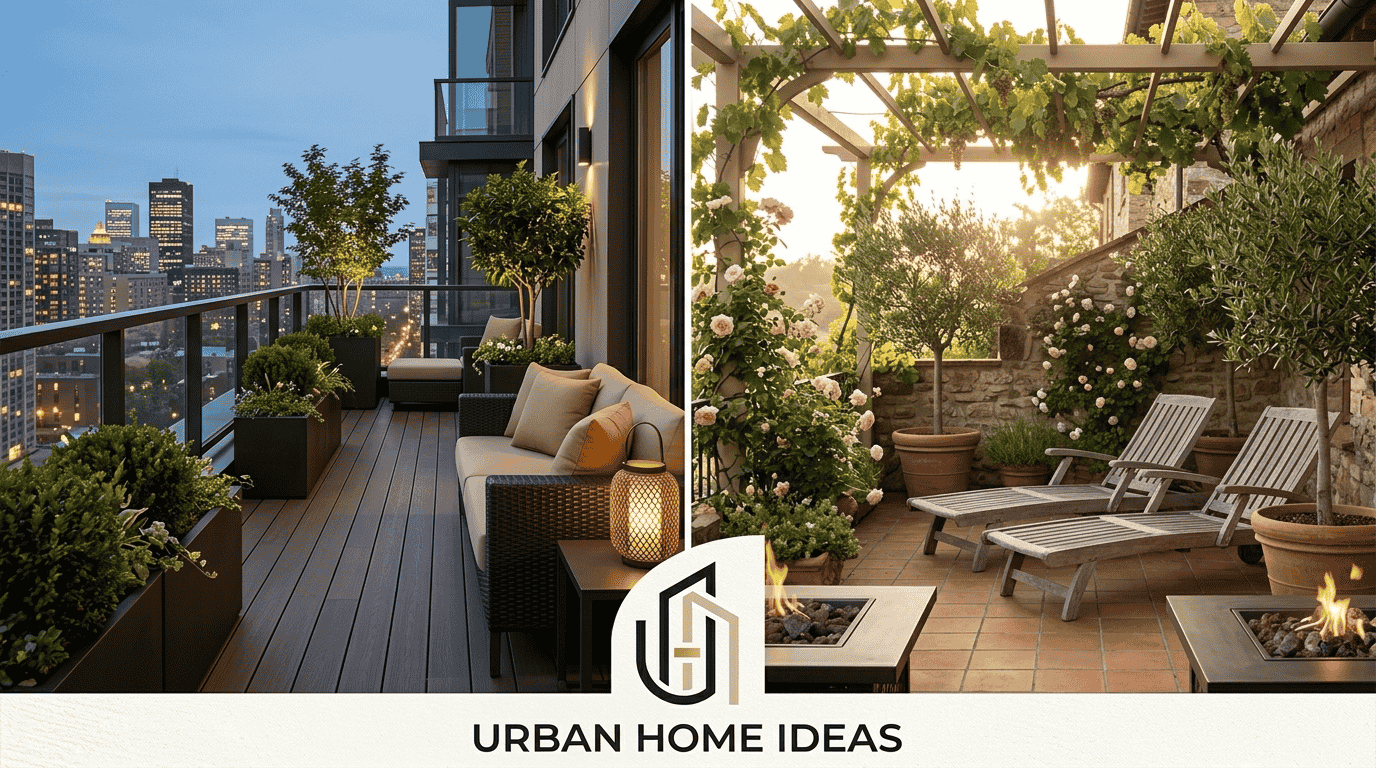
What is a terrace refers to an open area or raised outdoor space connected to a building that creates additional living space. It works as an outdoor extension of residential living, providing fresh air, relaxation, and entertainment through different designs. Terraces can include balconies, gardens, patios, and decks as useful outdoor spaces for homeowners and residents.
- What Is A Terrace?
- Terrace Definition
- Types Of Terraces
- Rooftop Terrace
- Ground-Level Terrace
- Private Terrace
- Shared Terrace
- Terrace Vs Balcony: Main Differences
- Size Difference
- Location Difference
- Construction Difference
- Access Difference
- Terrace Vs Patio
- How Are Terraces Used?
- Terrace Furniture And Design
- Benefits Of Having A Terrace
- Terrace FAQs
- What Is A Terrace?
What Is A Terrace?
A terrace is a designed open or raised outdoor space that can be attached to a building or created as a detached structure. It may exist on the ground, beside a structure, or on a rooftop as an external area that improves outdoor usability.
Unlike a simple yard, a terrace usually contains a prepared flat surface made from materials such as stone, pavement, tiles, or wood. This construction creates a comfortable place for furniture, plants, and different activities while improving the connection between indoor and outdoor environments.
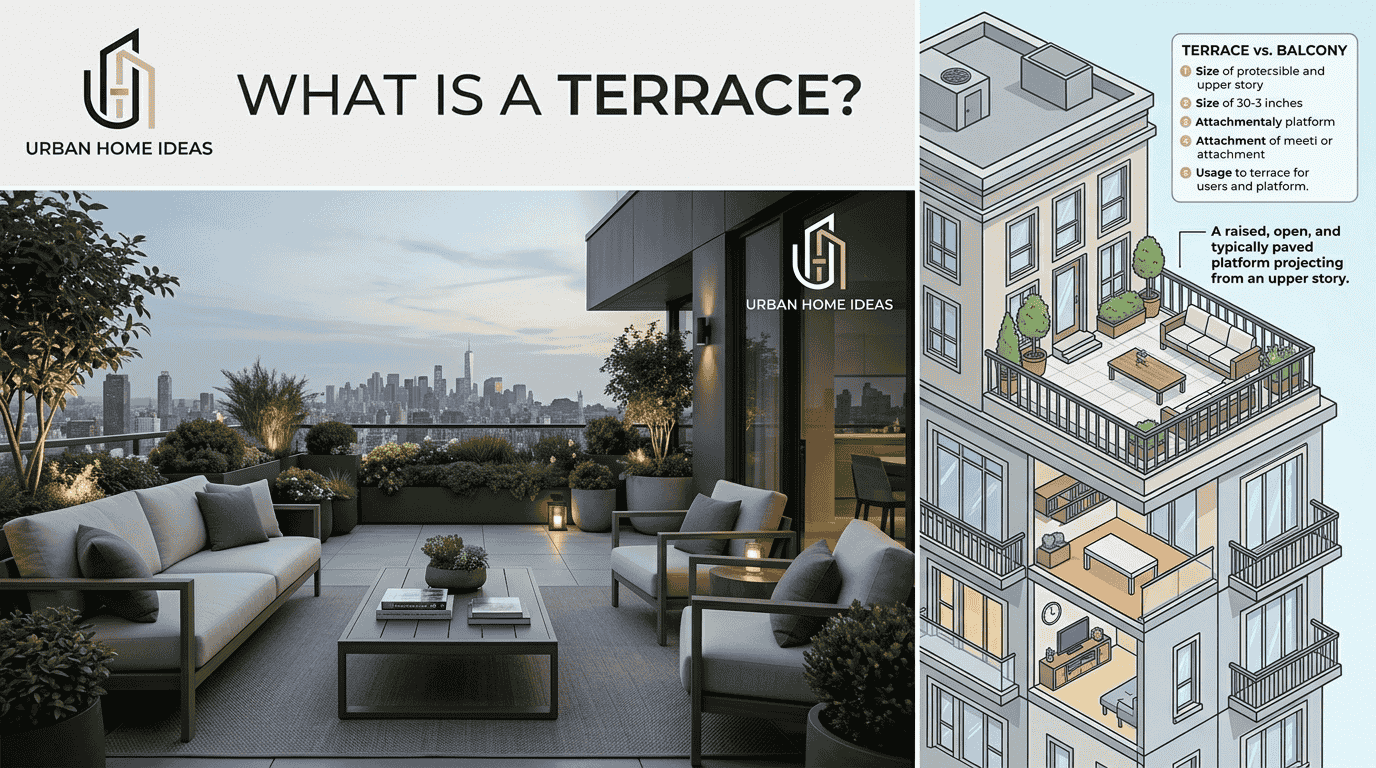
The meaning of a terrace comes from the Latin word terra, which means Earth, because early designs were linked with natural land surfaces. Today, a terrace can become a versatile outdoor living area used for relaxation, dining, gardening, entertainment, and other outdoor activities.
Terrace Definition
A terrace definition describes a paved outdoor space placed near a building, on a rooftop, or as a separate external area. It usually has a flat surface made with stone or pavement and provides space for outdoor activities, furniture, relaxation, and entertainment in homes or apartments.
Types Of Terraces
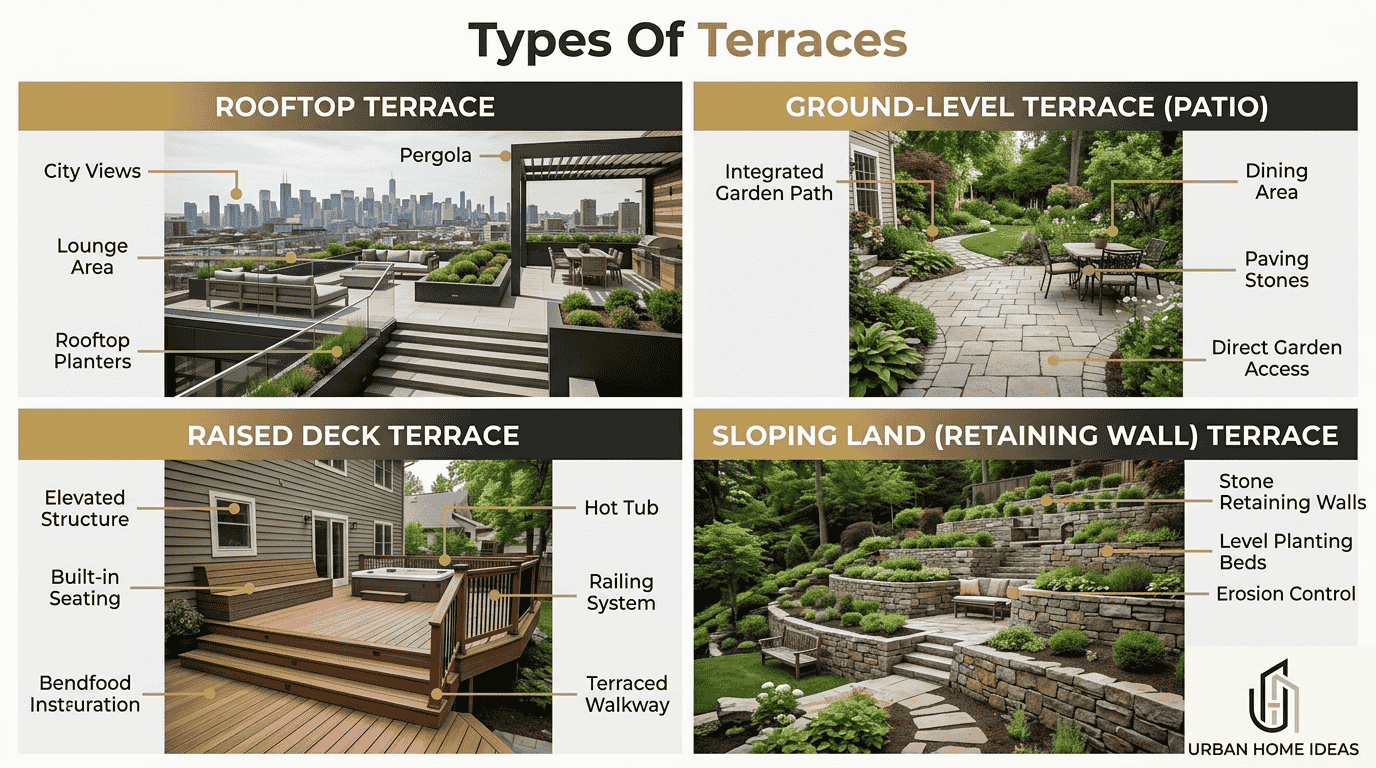
Different types of terraces are designed according to their location, structure, and purpose. Common examples include rooftop terrace, ground-level terrace, private terrace, and shared terrace. These spaces provide an outdoor area for seating, gardening, dining, and social gatherings while improving residential buildings with functional and attractive outdoor features.
Rooftop Terrace
A rooftop terrace is an outdoor area created on the roof of a building to provide an elevated space for comfortable use. It often includes seating areas, gardening, and dining arrangements. Modern buildings use rooftop terraces as a premium outdoor feature for outdoor living, entertainment, relaxation, and social gatherings.
Ground-Level Terrace
A ground-level terrace is an outdoor space positioned near the ground and connected with the surrounding landscape. It may include an elevated platform or designed surface that blends with gardens, hillsides, and residential areas. This terrace creates a functional living space by combining outdoor design with nature.
Private Terrace
A private terrace is an outdoor space designed for a specific home, apartment, or individual unit. It provides residents with individual access to a personal outdoor area where they can enjoy relaxation and comfortable outdoor living. This property feature creates a private environment for personal activities.
Shared Terrace
A shared terrace is a communal outdoor area designed for apartment buildings and residential communities where multiple residents can use the space. It often includes seating areas, landscaping, and recreational features. A rooftop terrace can also serve as a shared space for social activities and relaxation.
Terrace Vs Balcony: Main Differences
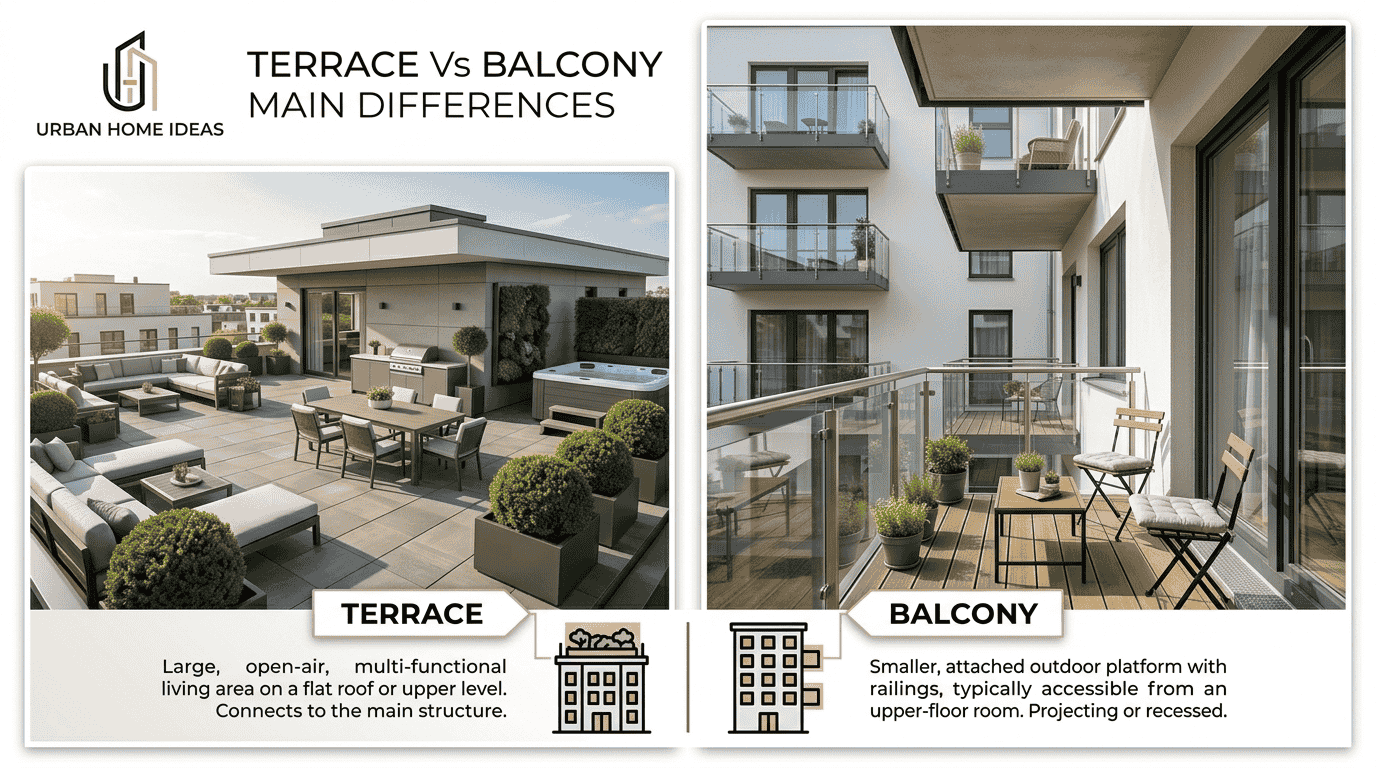
A terrace and a balcony differ in size, location, and construction. A terrace is usually a larger raised area with space for furniture, gardens, and gatherings, while a balcony is a smaller attached structure connected to the exterior wall of a building.
Size Difference
The main size difference between a terrace and a balcony is the available space. A terrace usually has a larger and more spacious design that allows outdoor furniture, gardens, dining areas, and gatherings, while a balcony supports smaller activities and limited outdoor experiences.
Location Difference
The location difference between a terrace and a balcony depends on placement and design. A terrace can be on the ground, rooftop, or beside building as an attached or detached structure, while a balcony is usually elevated and connected to the exterior wall of a building.
Construction Difference
The construction difference between a terrace and a balcony depends on their structural design. A terrace can be a standalone structure or a connected building area, while a balcony is an attached building feature supported by brackets, columns, or other structural connections.
Access Difference
The access difference between a terrace and a balcony depends on how people enter the space. A terrace may have multiple access points based on its design, while a balcony usually has a single entrance connected to a room. This affects accessibility and outdoor usage.
Terrace Vs Patio
A terrace and a patio are both outdoor living spaces, but they differ in structure and placement. A terrace is often a raised area such as a rooftop or hillside elevated platform, while a patio is usually a flat outdoor area built at ground level with direct connection to the surrounding landscape.
How Are Terraces Used?
What is a terrace can also be understood through its practical uses in land management. Terraces create flat and step-like planting areas on sloped terrain and hilly terrain to improve farming conditions. These structures support planting, help conserve soil, and promote water conservation.
In agricultural areas, terraces are designed as agricultural terraces that reduce water runoff and support soil erosion control. Through effective land management, these areas improve productivity while protecting natural resources.
Beyond farming, terraces are also used in landscape design and outdoor planning. Outdoor areas with terraced layouts, including hillside farming systems, create organized spaces that make better use of uneven land.
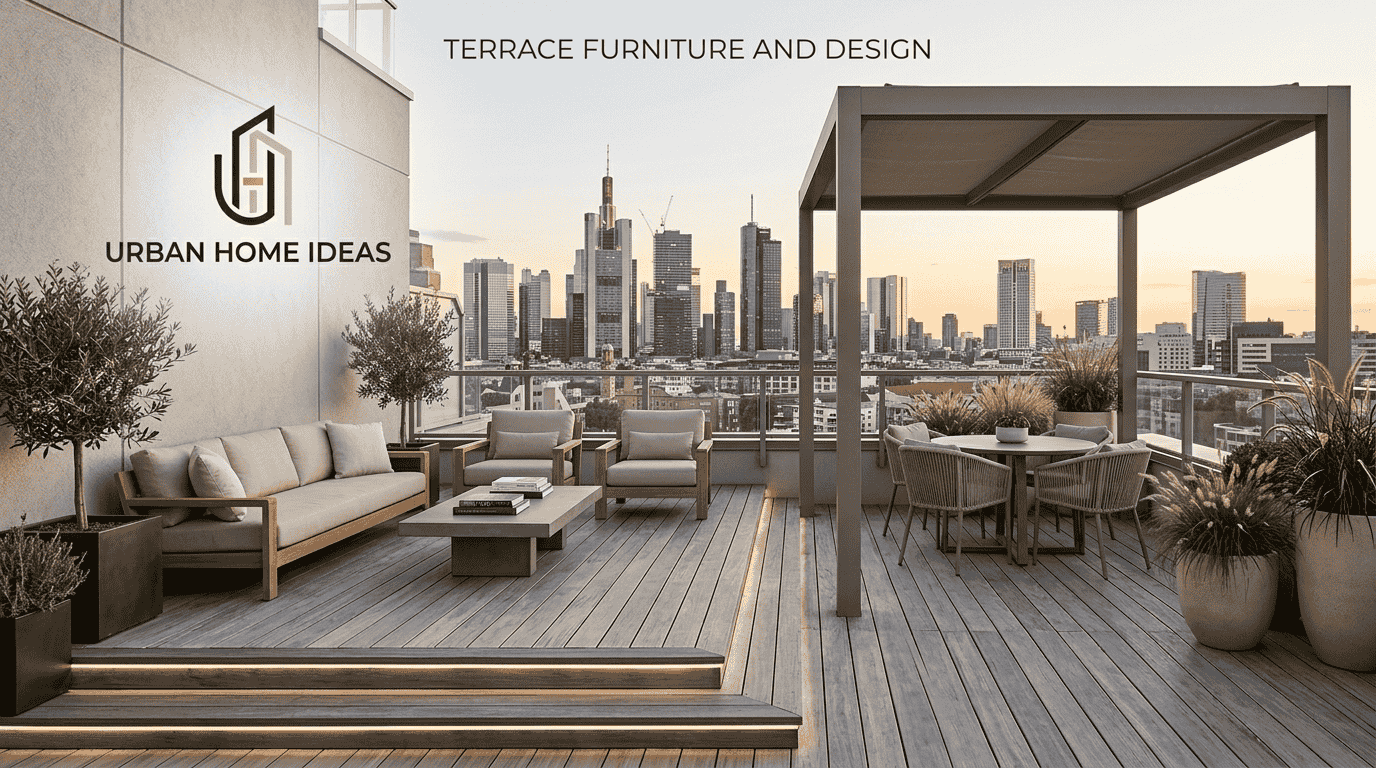
Terrace Furniture And Design
Terrace furniture and design depend on the available space, intended purpose, and preferred layout. Outdoor sofas, dining tables, and lounge chairs can create a comfortable setting with plants, garden features, and outdoor lighting. Proper measurement helps develop a functional outdoor area with a balanced layout.
Benefits Of Having A Terrace
A terrace provides extra outdoor living space that improves relaxation, entertainment, and overall property appeal. It allows homeowners to enjoy gardening, outdoor experiences, and activities, especially in urban areas with limited outdoor areas or private yards. Adding suitable furniture can increase comfort and residential value.
Terrace FAQs
A terrace is an outdoor space or raised area designed for residential and recreational use. It can be a rooftop, private, or shared area connected with a property or building. Terraces improve outdoor living through flexible design, different usage options, and multiple benefits.
What Is A Terrace?
What is a terrace describes a flat and raised outdoor area connected with a building or created as an outdoor structure. It may include a flat roof used as a platform, an elevated space, or a landscaped area that improves residential and outdoor design.
Is A Rooftop Terrace Still A Terrace?
Yes, a rooftop terrace is a valid type of terrace because it is an open, flat, and usable outdoor space created on the roof of a building. This elevated location provides an additional outdoor area with practical design, accessibility, and features for relaxation and entertainment.
Are Terraces Private?
Terraces can be private or communal depending on the building design, property rules, and ownership structure. A private terrace provides individual access for specific residents, while a shared terrace works as a shared space used by multiple users in apartment buildings or other residential property settings.
The level of privacy depends on terrace usage, access permissions, and how the outdoor space is arranged. Some properties create a personal outdoor area for individual relaxation, while others develop communal areas where residents can gather and enjoy common facilities.
Which Is Better, A Terrace Or Balcony?
Choosing between a terrace and a balcony depends on the right choice for the property, available space, budget, and lifestyle needs. Neither option is universally better because each provides different benefits. A terrace offers expanded outdoor living, while a balcony suits smaller outdoor area requirements focused on convenience and relaxation.
Related Post
What Is A Plunge Pool? Size, Cost, Benefits, Types & More
Ultimate Electronics Upgrade For The Living Room Ideas
Whole Home Remodeling: Complete Transformation, Smart Planning & Modern Design Ideas