

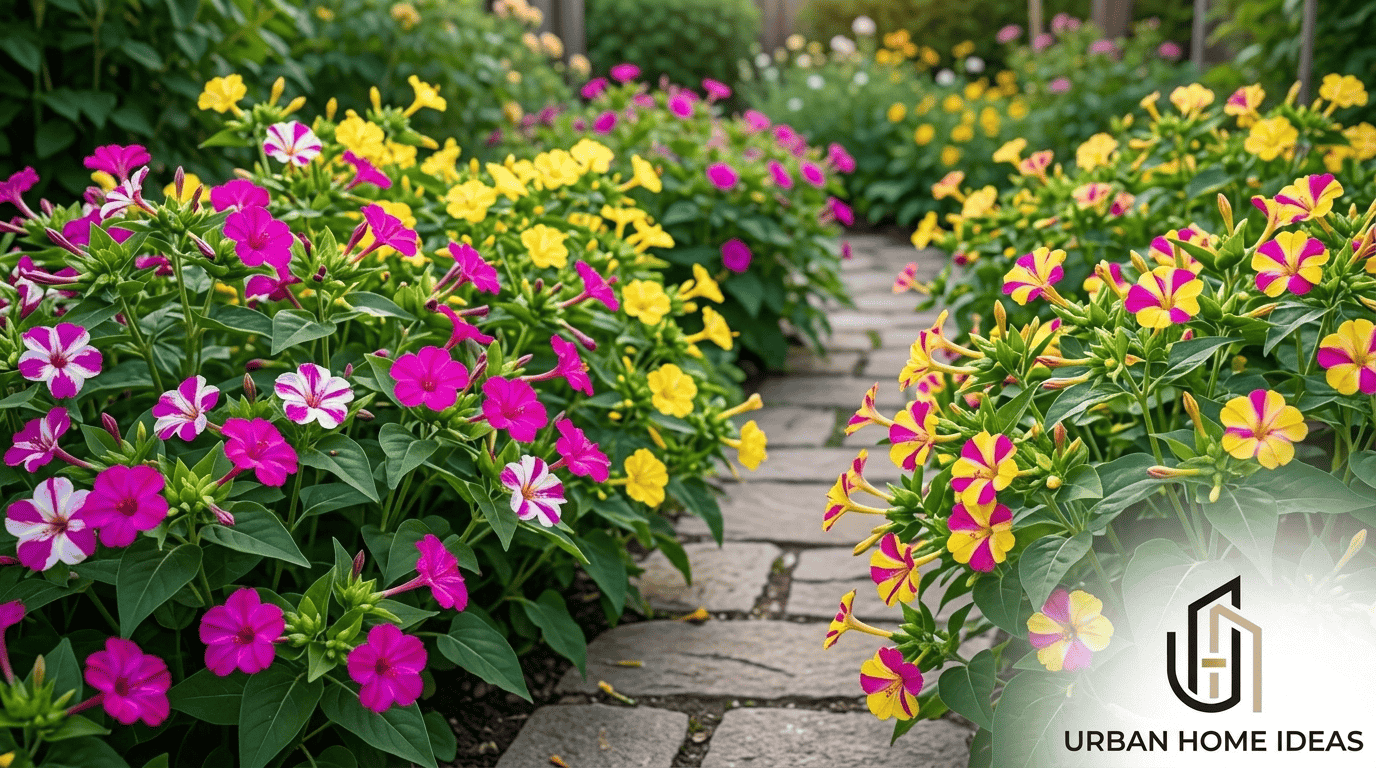
Mirabilis jalapa marvel of peru is a colourful herbaceous plant from the Nyctaginaceae family admired for its fragrant flowers, evening blooming habit, and unusual ability to display different shades on the same plant. Also known as Marvel of Peru, this flowering species is a tuberous perennial that originated from tropical South America and later became popular throughout America, Spain, and France.
- Mirabilis Jalapa Marvel Of Peru
- Common Names Of Mirabilis Jalapa
- Description And Appearance
- Growing Conditions: Sun, Soil And Water
- Fertilizing Mirabilis Jalapa
- Pruning Mirabilis Jalapa
- Pests And Diseases
- Propagation Of Marvel Of Peru
- Uses In The Garden
- Toxicity Of Marvel Of Peru
- Native Range Of Mirabilis Jalapa
- Plant Requirements / Quick-Reference Data
- History, Etymology And Folklore Of Mirabilis Jalapa
- Meaning Behind The Name Mirabilis Jalapa
- Traditional Garden Associations
- Folklore And Cultural References
- Personal And Regional Growing Notes
- Self-Seeding Behaviour
- Regional Growing Experiences
- Special Variety Notes
The plant is often recognised by its historical names, including Beauty of the Night, Four O’Clock plant, Four O’Clock Flower, and Don Diego de Noche. In older botanical writings, it appeared as Don Diego at Night, while French gardeners referred to it as Belle de Nuit.
Unlike many summer flowers that open during daylight, Mirabilis jalapa follows an afternoon schedule. Its blooms usually appear around Five-Thirty or late afternoon and continue showing their colours into the evening. This behaviour explains why gardeners have long considered it a Marvel of the World and Marvell of the World.
The plant belongs to the genus Mirabilis, which contains around 60 species. Related species include Mirabilis longiflora, Mirabilis multiflora, and Mirabilis laevis, each showing different flower structures and growing patterns.
Historical botanical references mention the plant in works such as Letters on the Elements of Botany, while writers including Rousseau discussed its beauty and unusual flowering behaviour. The plant was formally described in botanical classification around 1785.
Mirabilis Jalapa Marvel Of Peru
Mirabilis jalapa marvel of peru is a warm-climate flowering plant from the Nyctaginaceae family that has been cultivated for centuries because of its colourful flowers, sweet fragrance, and adaptability.
Plant Overview
- Scientific name: Mirabilis jalapa
- Common name: Marvel of Peru, Four O’Clock Plant, Beauty of the Night
- Plant type: Tuberous perennial, often grown as an annual in colder regions
- Native range: Tropical South America and Central America
- Bloom period: Summer to fall
- Flower colours: Pink, white, yellow, red, magenta, and bicolored varieties
- Height: Around 60–90 cm (2–3 ft)
The plant belongs to a group of approximately 60 species within the genus Mirabilis. Its unusual blooming habit earned names such as Four O’Clock Flower because flowers often open around late afternoon.
Why Gardeners Grow Marvel Of Peru
Mirabilis jalapa marvel of peru benefits are mainly connected with its decorative value and low-maintenance nature.
- Produces fragrant flowers with a sweet evening scent.
- Attracts hummingbirds and butterflies.
- Creates colourful borders and informal garden areas.
- Performs well in containers and flower beds.
- Can return each year in suitable climates through tuberous roots.
Common Names Of Mirabilis Jalapa
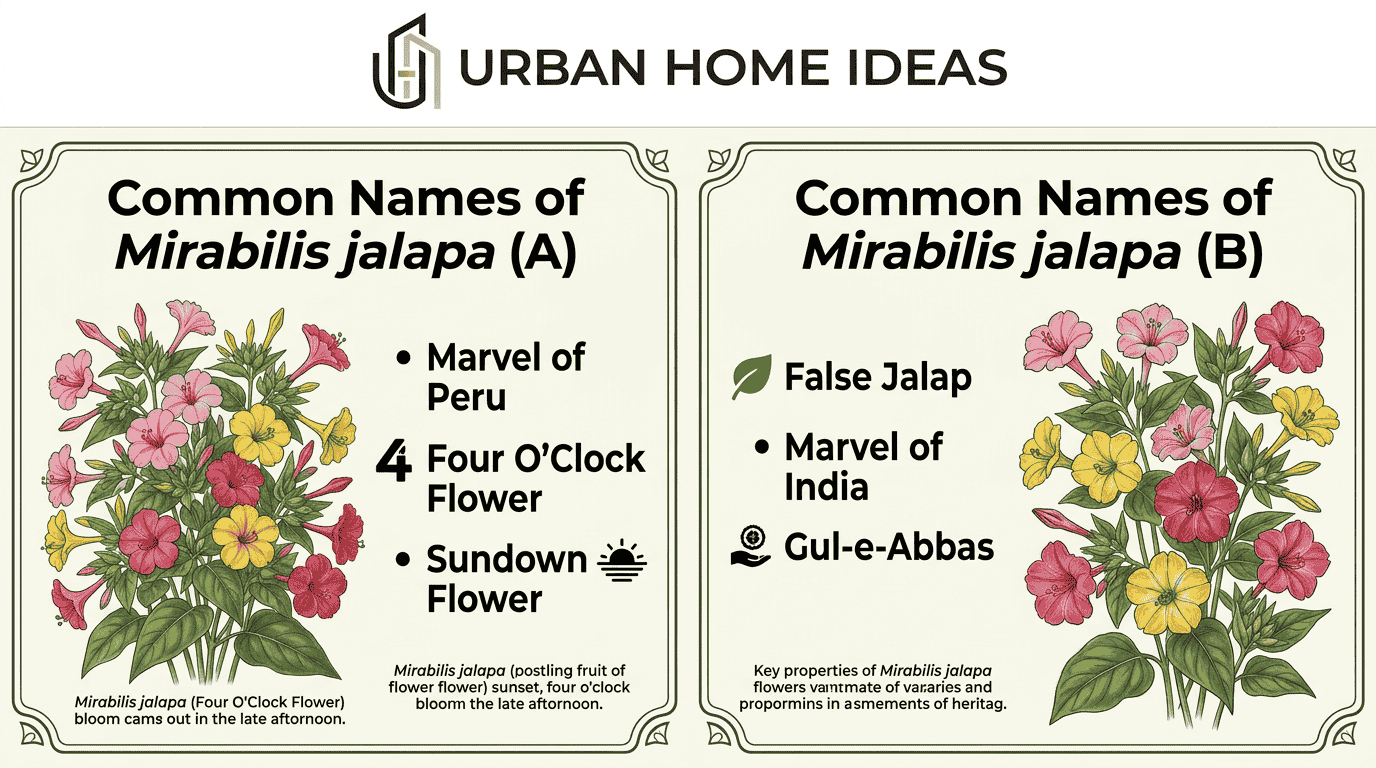
Mirabilis jalapa has collected many regional names because of its evening flowering pattern and attractive appearance.
Traditional Names
- Pretty-By-Night
- Marvel of the World
- Jalap Plant
- Four O’Clock Flower
- Miracle Flower of Peru
- Garden Jalap
- False Jalap
- Marvel of Peru
- Japanese Wonder Flower
- Four O’Clock Plant
- Pearl of Egypt
The name Jalap Plant connects with historical references to jalap, while names like Pretty-By-Night and Beauty of the Night describe its evening flowering nature.
Description And Appearance
Mirabilis jalapa creates a changing display throughout the day. The flowers are not only colourful but also show different opening and closing patterns depending on light and temperature.
Flower Characteristics
The flowers:
- Open at sunset and usually close at dawn.
- Develop in terminal clusters and axillary clusters.
- Have tube-shaped flowers with a trumpet-like appearance.
- Usually measure around 5 cm, with some blooms reaching approximately 2 inches.
- Produce shades including pink flowers, white flowers, yellow flowers, red flowers, and magenta flowers.
One interesting feature is that no two flowers alike can appear on the same plant. Some varieties produce bicolored flowers, while others show multiple colors on one plant. The petals may display striped flowers, and their appearance can change gradually because of color changes over time.
Leaves And Plant Structure
The plant develops:
- Bright green leaves
- Glossy green foliage
- Ovate leaves
- Ovate-lanceolate leaves
- Pale green underside
- Erect stems
- Branching stems
A mature plant generally reaches:
- 60–90 cm
- Around 2–3 ft tall
- Up to 35.43 inches in ideal conditions
The leaves support the plant’s long flowering period, while the underground tuberous roots help it survive difficult seasons.
Fruit And Seasonal Growth
After flowering, the plant produces a dark fruit with a leathery fruit covering that contains seeds for future growth.
The plant behaves as a tender perennial in warmer climates. In colder areas, it may experience frost damage, but healthy roots can often resprout when temperatures improve.
The main blooming period includes:
- Summer bloom
- Early fall bloom
- Fall flowering period
During this period, the flowers attract wildlife including hummingbirds and butterflies.
Growing Conditions: Sun, Soil And Water
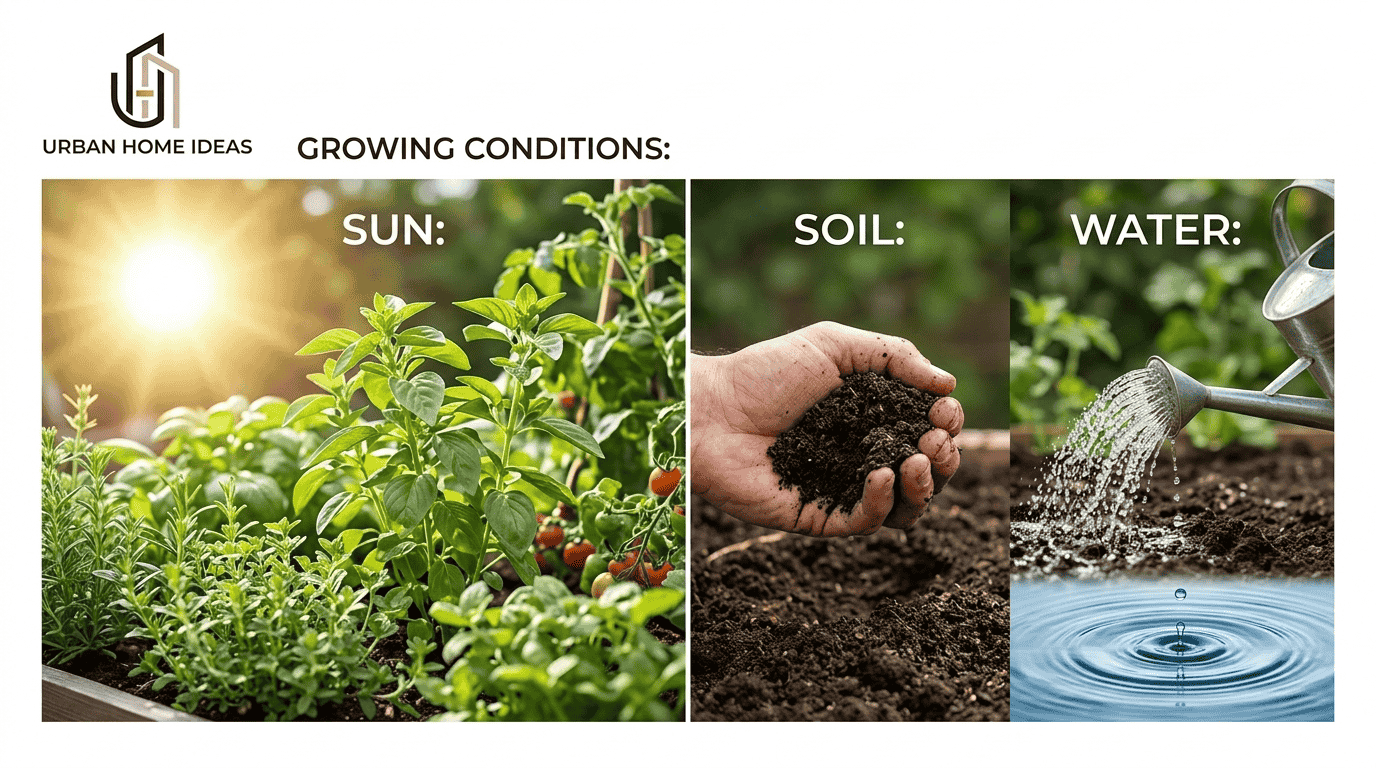
Mirabilis jalapa performs best when planted in warm areas with sunlight, balanced moisture, and suitable soil conditions.
Light Requirements
The plant prefers:
- Full sun
- Warm growing conditions
- Protection from drying winds
- Shelter from cold wind
It can handle some difficult conditions because of its natural adaptability, including light frost tolerance and occasional temperature drops.
Temperature Protection
For successful growth:
- Protect plants below 46.4°F.
- Avoid prolonged exposure below 8°C.
- Provide winter protection in colder regions.
- Protect roots from occasional frost.
Gardeners in colder climates often use mulch to reduce winter damage and preserve underground tubers.
Soil Requirements
The ideal soil includes:
- Humus-rich soil
- Well-draining soil
- Well-drained soil
- Moderately fertile soil
It adapts well to:
- Sandy soil
- Loam soil
- Chalk soil
Water Requirements
Mirabilis jalapa has good drought tolerance after establishment.
Recommended care:
- Provide moderate watering during normal growth.
- Increase water during hot periods.
- Continue summer watering during flowering.
- Avoid excessive moisture around roots.
- Use dry mulch to maintain soil balance.
A stable moisture routine helps maintain flowering without weakening the tuberous root system.
Fertilizing Mirabilis Jalapa
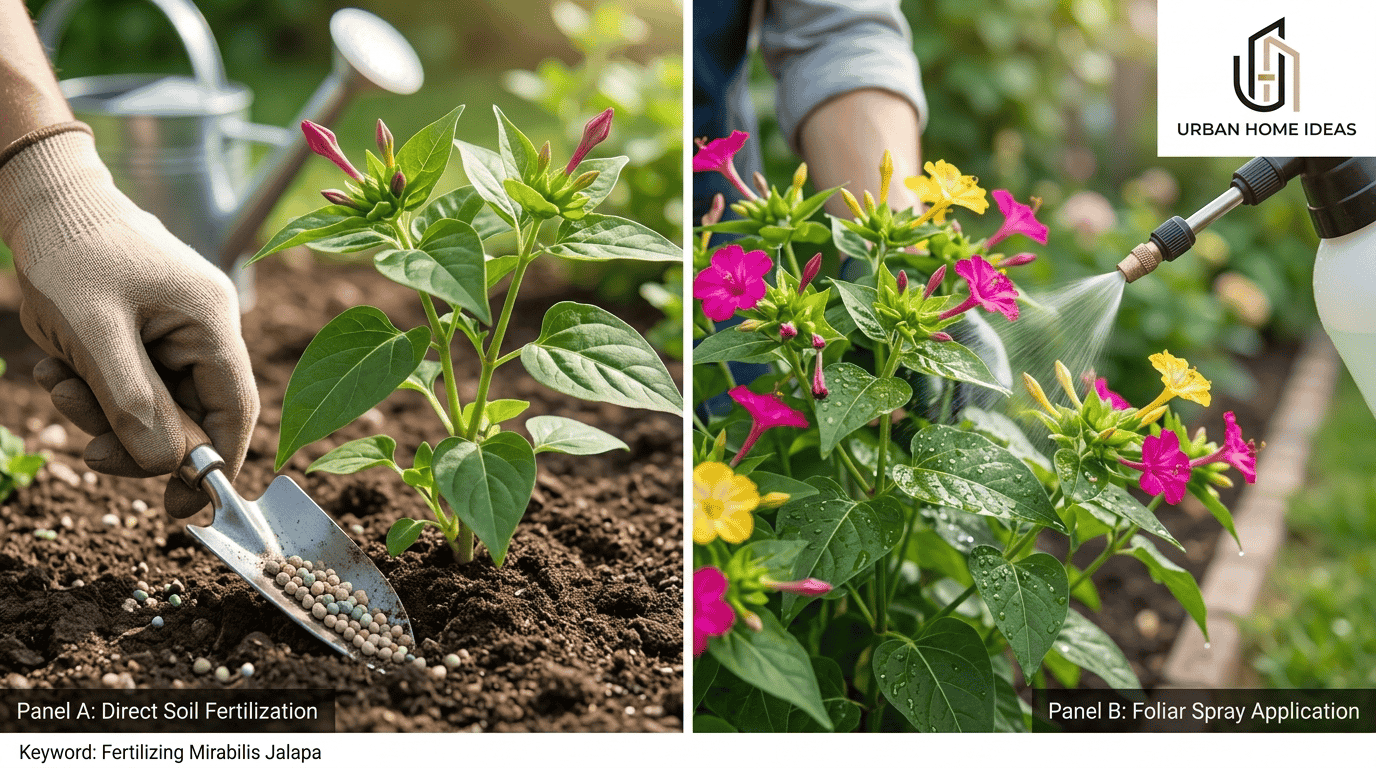
Mirabilis jalapa does not require heavy feeding, but balanced nutrition supports stronger growth and a longer flowering period.
Feeding Schedule
Recommended fertilizing routine:
- Apply spring feeding when new growth begins.
- Use mineral fertilizer for steady nutrient supply.
- Add composted manure to improve soil quality.
- Fertilize approximately every 15 days during active blooming.
Too much fertilizer can encourage excessive foliage growth instead of producing more flowers.
Pruning Mirabilis Jalapa
Mirabilis jalapa is naturally easy to manage and is considered a low maintenance flowering plant.
Pruning Requirements
- No pruning required for normal healthy growth.
- Remove damaged stems when needed.
- Cut back old growth after the flowering season.
- Remove unwanted seedlings if the plant spreads beyond its space.
Because the plant naturally develops branching stems and flowers freely, gardeners usually allow it to grow with minimal interference.
Pests And Diseases
Mirabilis jalapa is valued because it has strong natural resistance compared with many ornamental flowers.
Common Garden Problems
| Problem | Effect | Management |
| Aphids | May affect young shoots and leaves | Remove manually or use suitable garden methods |
| Slugs | Can damage soft foliage | Reduce excess moisture and clear hiding areas |
| Drought stress | Causes temporary leaf drooping | Provide proper summer watering |
The plant is generally:
- Pest resistance
- Disease resistant
- Resistant to most common garden problems
There are usually no serious diseases and no serious pests when plants receive suitable sunlight, drainage, and moisture.
Propagation Of Marvel Of Peru
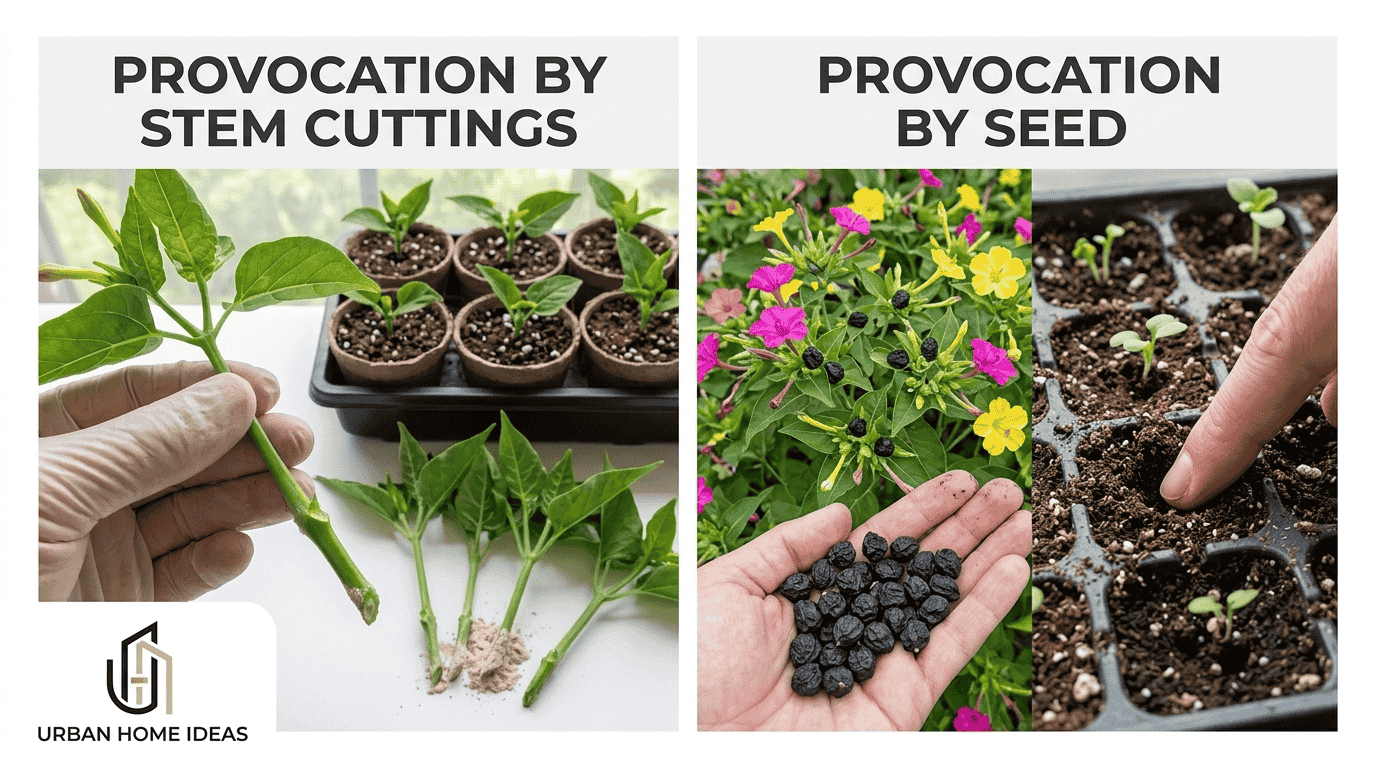
Propagation is one of the easiest parts of growing Mirabilis jalapa. The plant can be started through seeds or preserved through its underground roots.
Growing From Seeds
Seeds are the most common method because Mirabilis jalapa grows quickly in suitable conditions.
Indoor Seed Starting
For areas with colder winters:
- Begin indoor seed starting around 6–8 weeks before the last frost date.
- Maintain a germination temperature around 20°C.
- Use small pots with a light growing medium.
- Transplant seedlings after they develop several leaves.
The young plants can then be moved to their final location once temperatures become warm.
Direct Sowing
In warmer regions:
- Sow seed directly into prepared soil.
- Use a sunny seedbed.
- Plant during spring propagation.
- Allow enough space for mature plants.
Mirabilis jalapa is known as easy from seed, making it suitable for beginner gardeners.
Growing From Tubers
The underground tuberous roots allow the plant to survive in favourable climates.
Winter Storage Method
In colder areas:
- Tubers dug in fall before the first frost.
- Lift roots carefully from the soil.
- Store them in dry storage.
- Keep them in cool storage during winter.
- Replant after the cold season.
Recommended conditions:
- Storage temperature: around 55–65°F
- Indoor growth temperature: around 68°F
- Germination range: approximately 13–18°C
Planting Timeline
For the best flowering results:
- Start seeds 4–6 weeks before last frost.
- Follow the local last frost date.
- Plant outdoors after frost danger passes.
- Expect flowering around mid-July blooming in suitable climates.
A shorter growing season may require an indoor start because the plant needs enough warm weather to establish before flowering.
Propagation By Division
Another option is:
- Division of tubers
- Separating healthy underground roots
- Replanting sections during spring
This method helps preserve favourite varieties and mature plants.
Uses In The Garden
The decorative value of Mirabilis jalapa makes it useful in different landscape designs.
Garden Placement Ideas
The plant works well in:
- Pots
- Containers
- Patios
- Terraces
- Balconies
- Flower beds
- Cottage gardens
- Mediterranean gardens
- Mediterranean coastal gardens
It can also be planted as:
- Annual hedge
- Standalone specimens
- Clusters against wall
- Light underplanting
Its evening fragrance makes it especially suitable near outdoor living spaces where flowers can be enjoyed after sunset.
Toxicity Of Marvel Of Peru
The question “Is Marvel of Peru poisonous?” is commonly searched by gardeners.
Safety Information
Mirabilis jalapa should be treated as an ornamental plant because some parts may cause unwanted reactions.
Important points:
- The plant can be poisonous if consumed.
- Eating plant material may create toxic effects.
- Ingestion can result in severe discomfort.
Children and pets should avoid chewing seeds, roots, or other plant parts.
Native Range Of Mirabilis Jalapa
Mirabilis jalapa has its natural history connected with warm regions of the Americas.
Origin
The plant is native to:
- South America
- Tropical America
- Central America
After cultivation spread beyond its original environment, it became established as a popular ornamental flower in many parts of the world.
Plant Requirements / Quick-Reference Data
Mirabilis jalapa fits many garden situations because it combines fragrance, colour, and adaptability.
| Category | Details |
| Plant Family | Nyctaginaceae |
| Height | 2–3 feet |
| Spread | 2–3 feet |
| Exposure | Full Sun exposure |
| Soil Type | Loam soil, Sand soil, Chalk soil |
| Soil Drainage | Well-drained soil |
| Soil pH | Acid soil pH, Neutral soil pH, Alkaline soil pH |
| Water | Average water needs |
| Hardiness | Zones 9–11 |
| Heat Range | Heat zones 1–11 |
| Spacing | 36 inches |
| Season Interest | Summer season of interest, Fall season of interest |
| Maintenance | Low maintenance |
| Garden Style | Informal and cottage garden, Mediterranean garden |
| Wildlife Value | Attracts hummingbirds, Attracts butterflies, Attracts birds |
| Special Features | Showy characteristic, Fragrant characteristic |
| Uses | Beds and borders, Patio and containers, Hedges and screens |
| Wildlife Gardens | Butterfly garden, Pollinator garden |
| Animal Resistance | Deer tolerance, Rabbit tolerance |
| Soil Tolerance | Wet soil tolerance |
History, Etymology And Folklore Of Mirabilis Jalapa
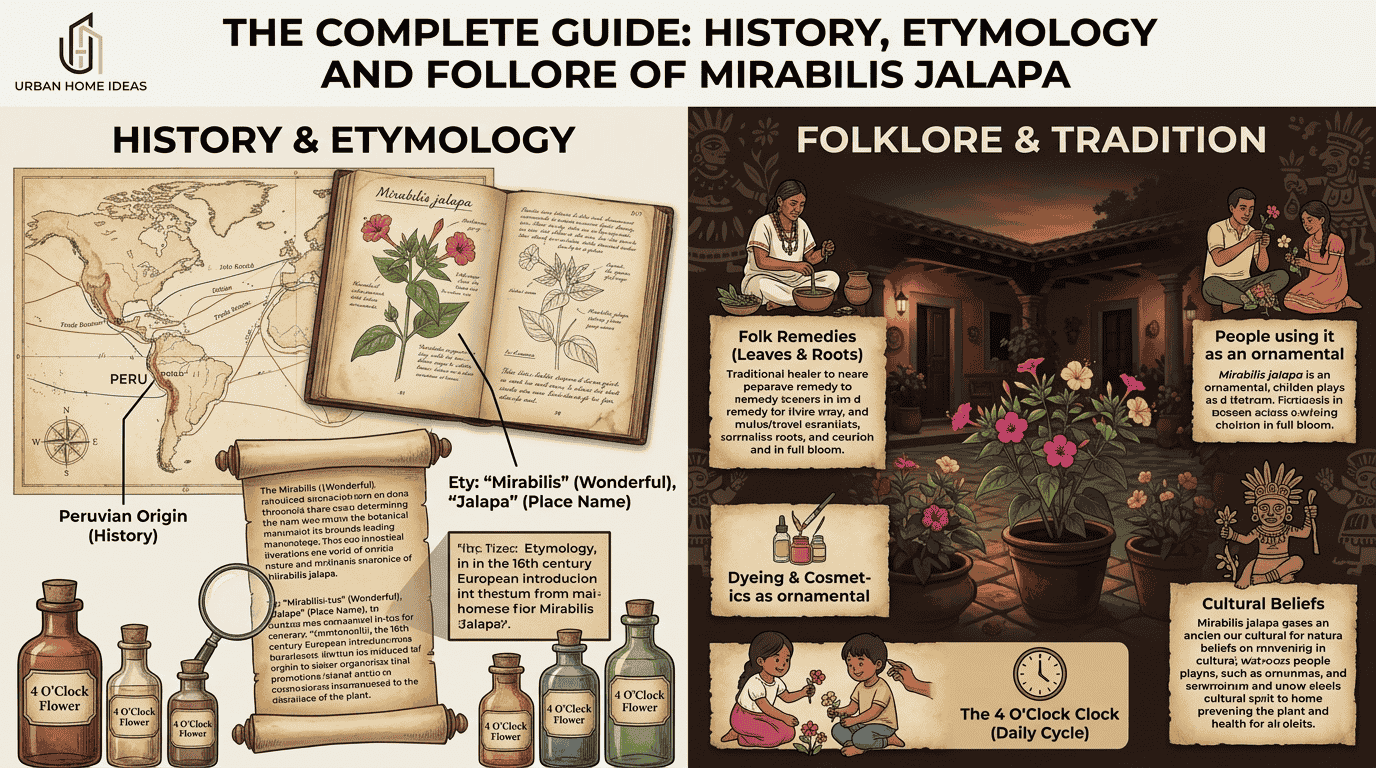
Mirabilis jalapa has a long relationship with gardeners, botanists, and traditional plant collections. Its unusual evening flowering habit made it a memorable species in historical gardens across continents.
Historical Background
The plant travelled from the Americas into European gardens during the 16th century, especially after its introduction from Mexico and other regions of Central America.
Historical botanical records mention Mirabilis jalapa in the work of several important figures:
- Gerard 1596 documented the plant in early European botanical writing.
- Carolus Clusius contributed to the study and spread of unusual plants in Europe.
- Linnaeus later included the species within scientific classification.
- Wilfrid Blunt discussed historical plant traditions and botanical culture.
The plant became popular in Europe because of its unusual blooming schedule, bright colours, and nostalgic connection with older gardens.
Meaning Behind The Name Mirabilis Jalapa
The scientific name reflects the plant’s appearance and historical associations.
Mirabilis Meaning
The word Mirabilis means wonderful or remarkable, which inspired names such as:
- Marvel of Peru
- Marvel of the World
- Miracle Flower of Peru
The plant was considered a botanical curiosity because flowers could appear in different colours on the same specimen.
Jalapa Connection
The name jalapa became connected with historical references to the plant’s roots and traditional uses. In older writings, jalap was discussed alongside medicinal plants, including references to:
- Cathartic drug preparations
- Purge-related uses
- Waterish humours in traditional medical thinking
Modern gardeners mainly grow the plant for ornamental value rather than medicinal purposes.
Traditional Garden Associations
Mirabilis jalapa became part of many old-fashioned garden collections because it complemented other classic flowers.
Historical garden companions included:
- Hollyhocks
- Phlox
- Asters
- Forget-me-nots
- Pinks
The plant appeared in gardens alongside common ornamental species such as:
- Pear tree landscapes
- Floral arrangements
- Informal cottage-style planting
Its evening opening behaviour contributed to its connection with the idea of a natural floral clock, where flowers represented different times of the day.
Folklore And Cultural References
The plant has appeared in stories, poetry, and botanical traditions.
Examples include:
- References in the language of flowers.
- Stories connected with an uncle’s garden.
- A father anecdote describing garden memories.
- Mentions in works such as The Compleat Naturalist.
- A Harriet Emma George poem involving floral themes.
The plant became associated with:
- Beauty
- Sweetness
- Nostalgia
- Rarity
Some historical writers connected Mirabilis jalapa with emotional meanings because the flowers appeared suddenly in the evening and disappeared by morning.
Personal And Regional Growing Notes
Mirabilis jalapa behaves differently depending on climate, soil, and local growing conditions.
Warm Climate Observations
In warm regions, gardeners often notice:
- Strong growth during long summers.
- Continuous flowering.
- Natural reseeding.
- Healthy tuber survival.
Areas with suitable conditions may experience:
- Long growing season.
- Strong summer performance.
- Minimal winter damage.
In places such as south Texas, the plant can establish easily because warm temperatures support active growth.
Cool Climate Observations
In colder regions, growers often need additional care.
Challenges include:
- Cold northern climate.
- Shorter flowering periods.
- Frost damage.
- Reduced seed production.
Gardeners may protect plants by:
- Lifting tubers before winter.
- Using indoor storage.
- Replanting during spring.
Self-Seeding Behaviour
One of the most discussed characteristics of Mirabilis jalapa is its ability to reproduce naturally.
Depending on location:
- Some varieties self-sows aggressively.
- Some gardeners consider it close to an invasive weed.
- Other gardeners experience no self-sowing because of climate or maintenance practices.
The difference depends on:
- Local temperatures.
- Growing season length.
- Variety selection.
Regional Growing Experiences
Different growers report different flowering patterns:
Oklahoma
Gardeners may notice:
- Strong summer growth.
- Seasonal changes in flowering.
- Different self-seeding behaviour.
Cloudy Days And Cooler Weather
During cooler or cloudy periods:
- Flowers may stay open longer.
- Blooming can appear extended.
Morning Sun Exposure
In some gardens:
- Flowers may close in morning sun.
- High temperatures can shorten the visible flowering period.
Special Variety Notes
Some gardeners grow selected varieties for unique colour patterns.
Examples include:
- Marbles variety
- Seeds from Baker Creek
- Collections from rareseeds.com
These varieties may show:
- Different flower markings.
- Improved colour variation.
- Unique garden appearance.
Other Post
America’s Gardening Resource: Smart Ideas For Better Gardens