

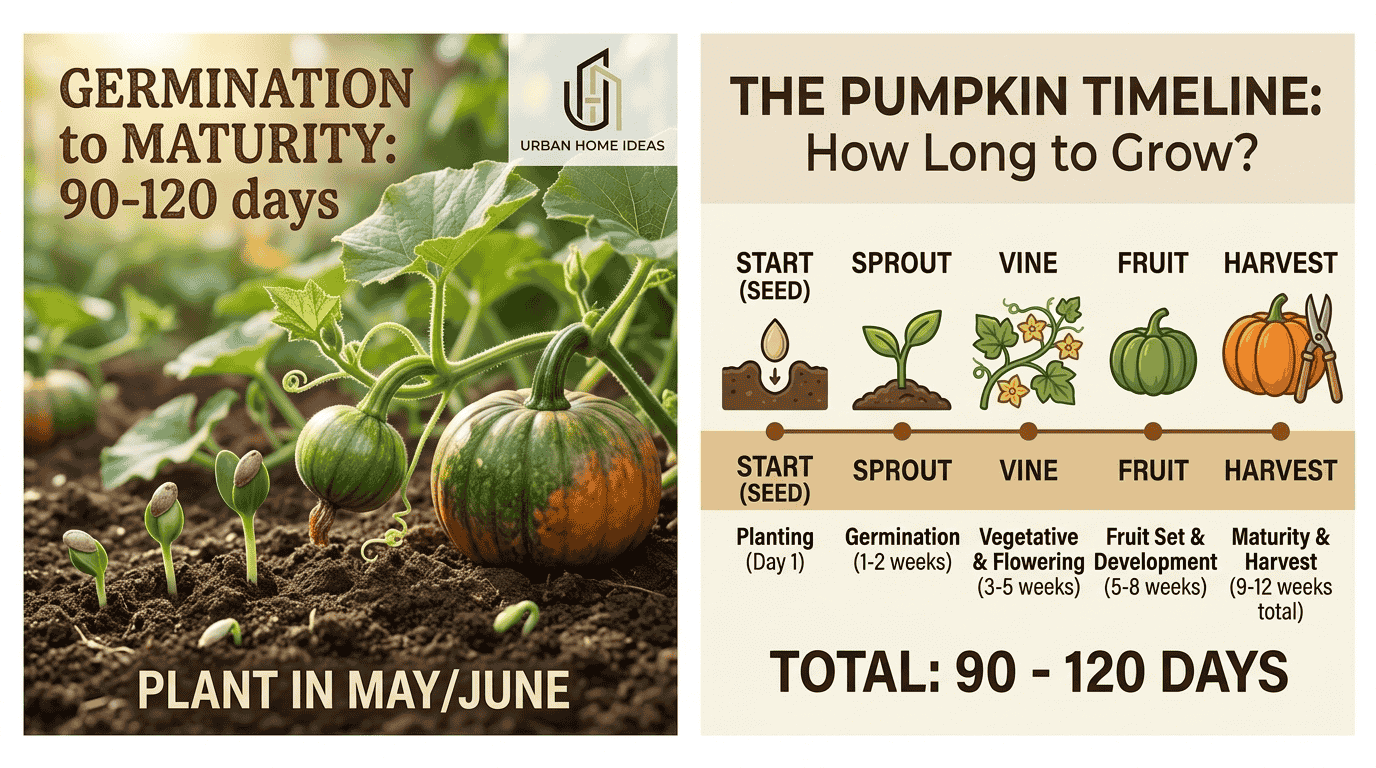
For anyone asking how long does it take for pumpkins to grow, most need roughly 90–120 days from seed to harvest, although maturity time changes with variety and climate. In a home garden, successful production starts with warmed soil, full sun, and steady care through every development stage.
- How Long Does It Take for Pumpkins to Grow?
- Pumpkin Growing Stages
- Germination
- First Leaves and True Leaves
- Vine Growth
- Flowering
- Pollination
- Pumpkin Fruit Development
- Ready for Harvest
- When Do Pumpkins Grow?
- Watering and Pumpkin Growth
- Soil, Sunlight, Planting, and Spacing
- Fertilization
- Pumpkin Problems
- Unique Competitor Headings
- How Many Pumpkins Per Plant?
- What Do Pumpkin Plants Look Like?
- Recommended Pumpkin Varieties
- Mulches and Row Covers
- Tips on Growing Giant Pumpkins
- Pumpkin Plant Productivity
- Storage and Preservation
Pumpkins are warm-season annual plants and tender plants, so frost can quickly interrupt the growing process. Stable warm conditions help the earliest pumpkin growth stages progress normally. They perform best in sunny locations with fertile soil, well-drained soil, plenty of organic matter, and about 8–10 hours of direct sunlight. Good growing conditions also include timely planting, careful irrigation, sensible fertilization, mulching, and ongoing pest management.
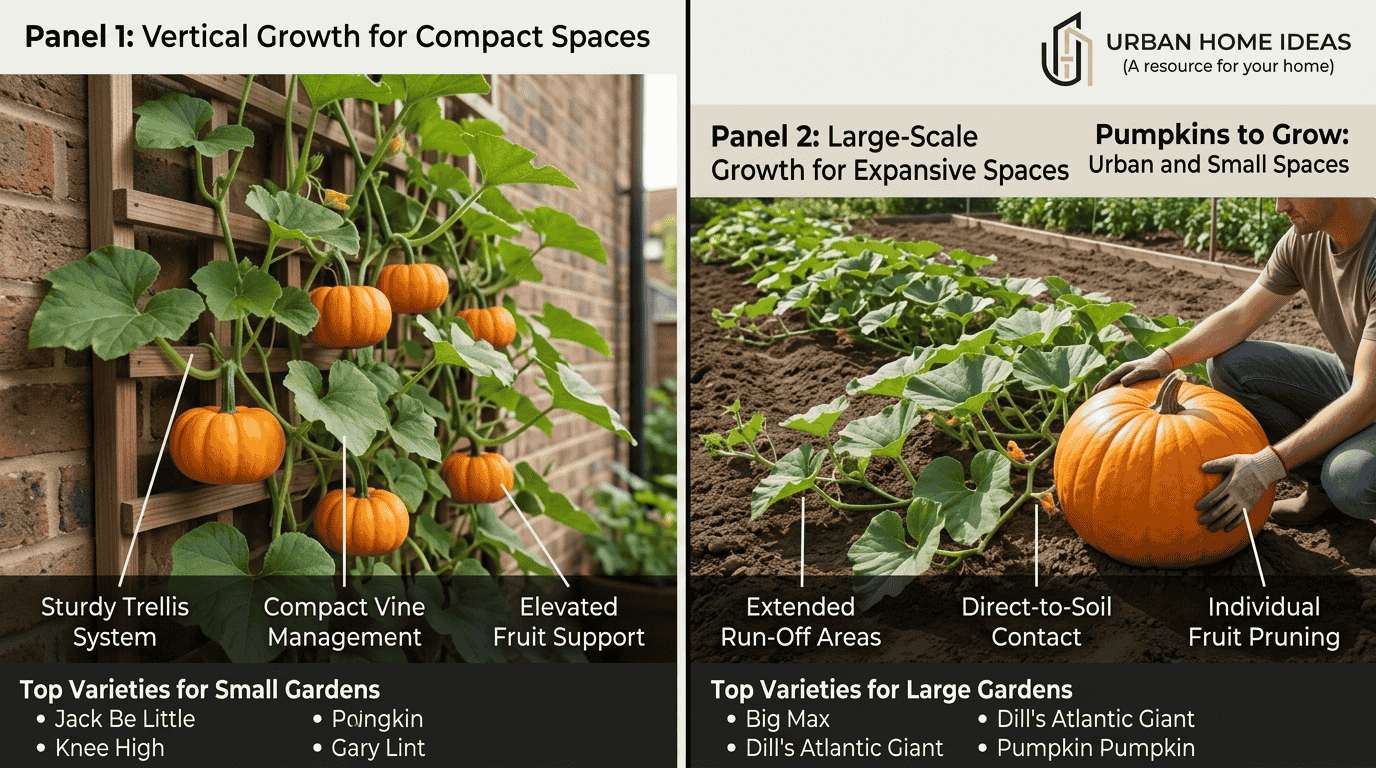
A grower should also match the crop to available garden space. Larger varieties may send vines close to 20 feet, requiring considerable space, while smaller varieties fit more comfortably into compact home gardens. From seeds and early plant development to fruit production, harvesting, and storage, each step affects expected yield, final maturity, plant appearance, and whether the crop is intended for food or seasonal decoration. Even though 100 days is a useful planning benchmark, the condition of the soil, choice of fertilizer, and health of the pumpkin plants can all shift the final schedule.
How Long Does It Take for Pumpkins to Grow?
Most pumpkins reach maturity in about 90–120 days, with approximately 100 days being a practical average for many garden types. The exact days to maturity depend on cultivar, weather, and the total growth duration from planting to maturity.
- From seed: Germination can begin in about 10 days, followed by vegetative growth and flowering around 8–10 weeks after planting. For many cultivars, the full seed to maturity schedule is near three months or more than 100 days.
- After flowering: The answer to “How long does it take for pumpkins to grow after flowering?” is usually about 40–50 days to 45–55 days. This flowering to mature harvest period covers pollination, fruit development, fruit maturation, and the final ripening period.
- By variety: Small varieties and smaller cultivars may finish near 85 days, while large cultivars and long-season varieties can need 120 days, 125 days, or around four months. Some giant pumpkins grown toward 100 pounds or more often sit at the long end of the pumpkin maturity period.
- Signs the clock is nearly finished: Tiny fruits enlarge, develop full coloration, and ripen as the growth period closes. A mature pumpkin normally has a firm rind with good scratch resistance; if a fingernail does not easily mark it and vine dieback is visible, harvest timing is close.
- Overall timing: Pumpkin growing time is not one fixed number. A cool spring, slower variety, or weak pollination can delay the mature harvest, while favorable conditions can keep development closer to the expected range.
For readers asking “How long does it take for pumpkins to grow from seed?”, the simplest planning figure is 90–120 days for real garden pumpkins.
Pumpkin Growing Stages
The pumpkin growth cycle moves from planting and seed germination through vine growth, flowering, pollination, fruit formation, ripening, and harvest. The visible growth sequence is useful for judging whether plant development and pumpkin fruit development are on schedule.
- During the early pumpkin plant stages, a seedling emerges, produces first leaves, then develops true leaves before stronger vine extension begins.
- As the plant enters its reproductive cycle, male flowers normally appear before female flowers. Bees carry pollen, helping fruit set begin after successful pollination.
- The next development phase produces young pumpkins, followed by enlargement, color change, and increasing plant maturity and fruit maturity.
- In late growth stages, mature pumpkins become ready for picking while vine decline signals the end of active growth.
- “Pumpkin growing stages pictures” are most useful when they show the same progression side by side: seedling, true-leaf plant, spreading vine, flowers, small fruit, enlarging fruit, and harvest-ready pumpkin.
For the query “How long does it take for pumpkins to grow in Minecraft,” the real-world pumpkin growing stages do not apply: planted pumpkin seeds create a central stem, and that stem takes about 10–30 minutes to fully develop before it can generate pumpkins on suitable adjacent blocks.
For “How long Pumpkin take to grow stardew,” the game answer is 13 days from Pumpkin Seeds to harvest, passing through five visual stages before harvest.
Germination
Germination usually takes about 5–10 days to 7–10 days when pumpkin seeds are planted in warm soil. This first visible development is the start of growth from seed.
- Proper soil temperature matters because pumpkin seeds germinate more reliably in warmed soil than in cold ground.
- Once planting is complete, the seed begins internal seed development, followed by sprouting and seedling emergence.
- A small green seedling emerging through warm garden soil marks the transition from the underground phase to visible early growth.
- These first days are part of the early pumpkin plant stages, so keeping the soil evenly moist without saturation supports a newly planted crop.
First Leaves and True Leaves
Within about one week of emergence, a pumpkin seedling begins stronger leaf development as true leaves follow the initial seed leaves. This is a key point in plant establishment.
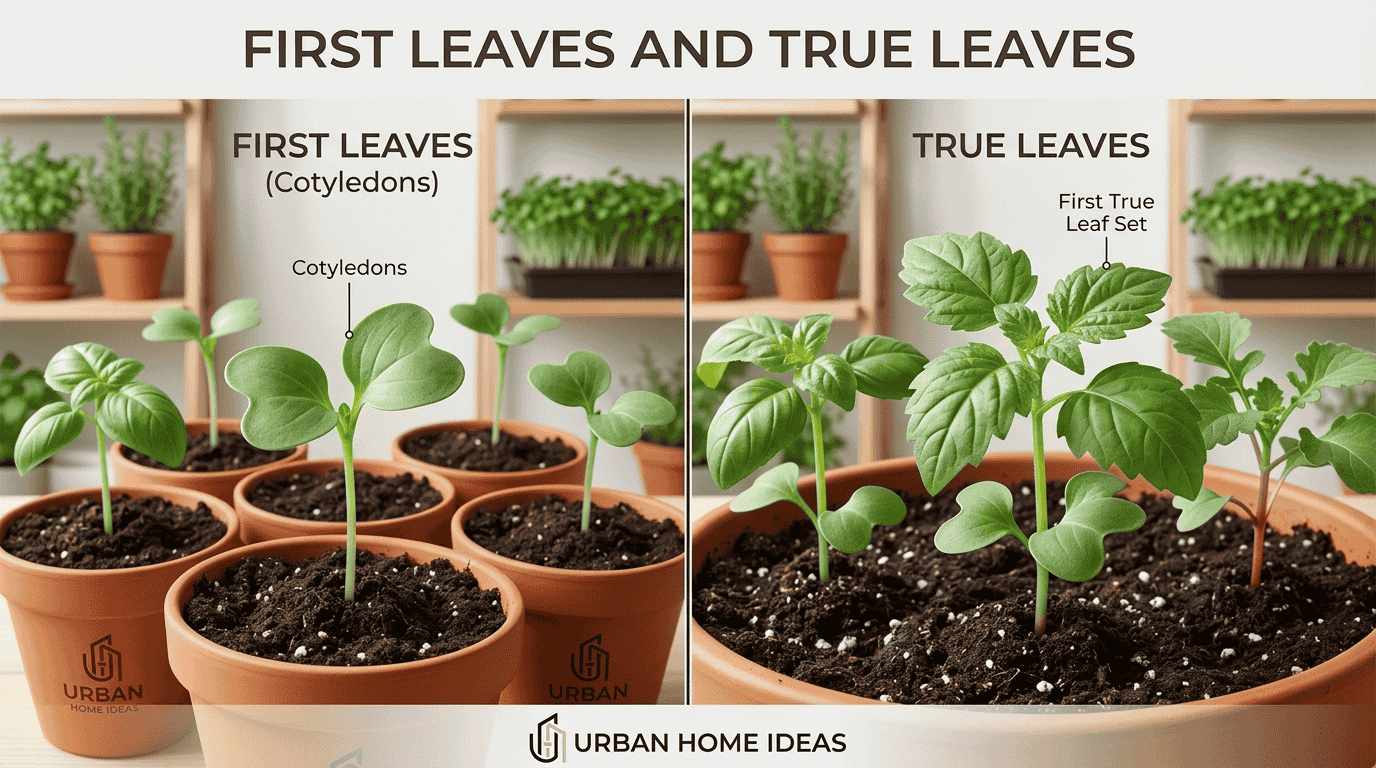
- The first embryonic leaves support the young plant, while new leaves begin from the center of stem.
- Continued leaf emergence produces the recognizable first leaves of a young pumpkin plant, followed by broader true leaves.
- Adequate light, water, and growing room help pumpkin seedlings develop without becoming weak or crowded.
- During these early pumpkin plant stages, healthy plant growth and early growth around the central stem indicate that the root and leaf systems are establishing properly.
Vine Growth
After true leaves are established, pumpkins shift into vigorous vine development and can show rapid growth in warm weather. Mature pumpkin vines may eventually reach 20 feet, depending on variety.
- In sunny conditions and other warm conditions, the vines can extend several inches in one day.
- As the leaves enlarge, increasing vine length creates a greater need for space and growing room.
- Large plants often need open ground, while compact varieties or vertical growing methods may make better use of limited areas.
- Strong sunlight encourages plant growth, and healthy established plants typically display the vigorous growth expected during active vine development.
Flowering
Pumpkin flowering time often begins around 8–10 weeks after planting, with male flowers usually opening first. Female flowers and female blossoms commonly appear about 10 days later or within one to two weeks.
- Early male flower development starts the plant’s reproductive cycle, even though those flowers cannot form fruit by themselves.
- Pumpkin flowers are typically yellow flowers or bright yellow blossoms, making the flowering stage easy to recognize.
- The first early flowers are commonly male blossoms; later female flower development introduces blossoms with a small swollen ovary behind the flower.
- Strong flower production and healthy blossoms create the conditions for a productive bloom period and successful plant maturity.
- Once flower development includes both sexes, pollinators can move pollen and the crop can progress toward fruit.
Pollination
Successful pollination happens when bees or another method completes pollen transfer from male flowers to female flowers. This pollination stage determines whether small pumpkins begin forming.
- Natural bee pollination depends on active pollinators visiting male blossoms, collecting pollen, and carrying it to female blossoms during bloom.
- If rainy conditions reduce bee activity, or if water stress affects the flowers, poor fruit set and pollination failure can occur.
- Careless use of pesticides around open blossoms can also reduce pollinator activity and interfere with the reproductive process.
- Where natural flower pollination is weak, hand pollination can help improve fruit set and fruit production.
- Once pollination succeeds, the plant shifts toward producing pumpkins, and active pumpkin development becomes visible.
Pumpkin Fruit Development
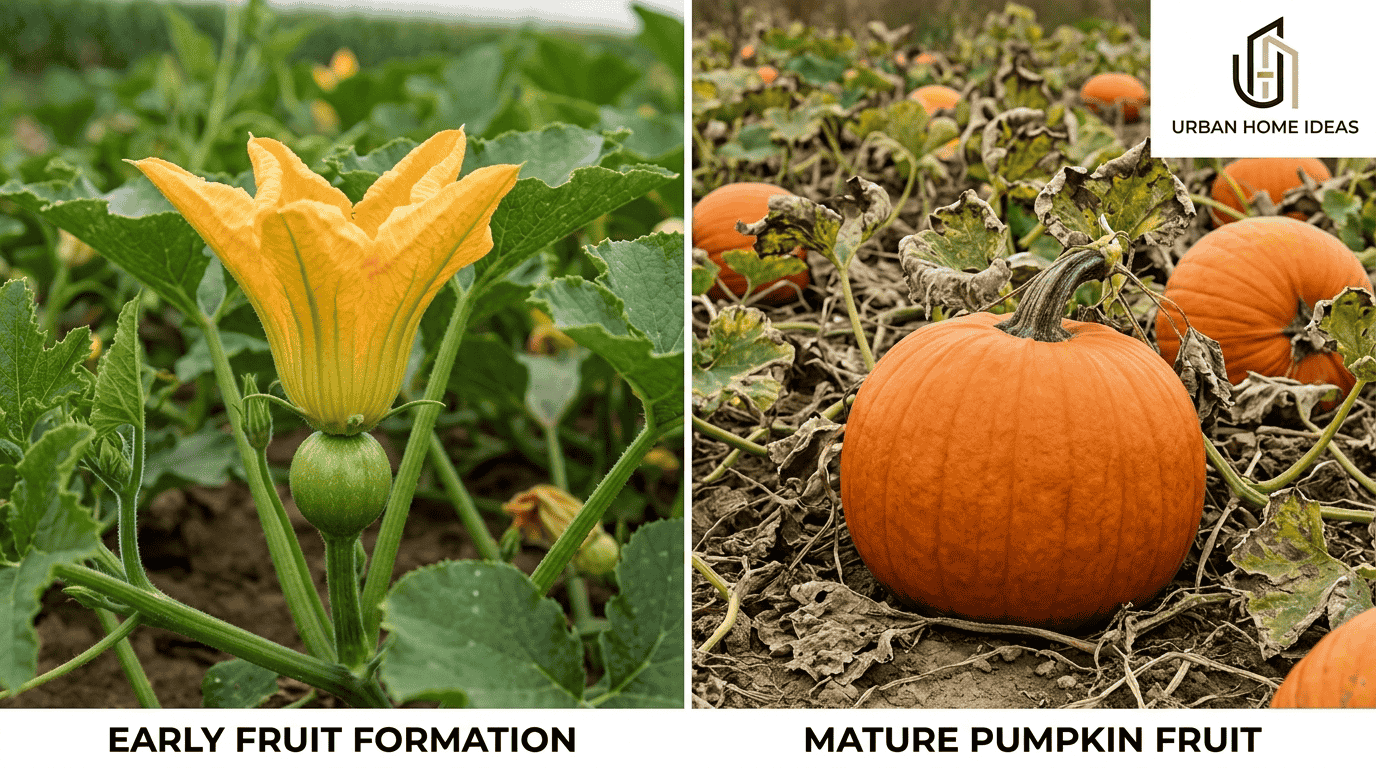
After successful pollination, a tiny fruit begins developing quickly; 45–55 days after flowering is a useful window for reaching mature fruit. Many pumpkins complete most of their visible fruit growth in about 40–50 days to 55 days.
- At first, tiny pumpkins may have a dark green appearance. As fruit enlargement continues, color development moves them toward their expected mature color.
- Pollinated flowers mark the start of fruit formation, and the following growth period can involve surprisingly rapid growth.
- A pumpkin growing time lapse would show the clearest change during this stage: swelling fruit, expanding shoulders, rind hardening, and gradual ripening.
- Depending on cultivar, nearly two months can pass between early fruit set and full development, especially where slower maturation is normal.
- As young pumpkins approach fruit maturity, gardeners should watch for color completion and other signs of harvest readiness before harvest.
- This entire phase is the core of pumpkin fruit development, moving from small fruit to fully mature produce.
Ready for Harvest
A mature pumpkin is usually fully colored, has a hard rind, and shows strong scratch resistance. Vine decline and vine dieback are additional ripeness indicators that help confirm harvest readiness.
- A ripe rind should resist pressure from a fingernail; a weak or easily marked surface may mean fruit maturity is incomplete.
- Some ripe pumpkins produce a hollow sound when tapped, though color, rind hardness, and vine condition are better used together.
- During harvesting, leaving several inches of stem and keeping the stem attached improves handling and reduces accidental damage.
- Late September and October are common harvest periods in many temperate gardens, but the crop should be protected before severe frost.
- Once mature plants stop active growth, picking the mature fruit at proper harvest maturity improves later storage.
- The best harvest decision combines mature coloration, a firm rind, healthy stem, and clear signs that the fruit has finished ripening.
When Do Pumpkins Grow?
Pumpkins are warm-season crops that grow best in warm weather, usually from late spring through summer and into early fall. The safest planting time comes after frost danger has passed and soil temperatures are near 65°F or warmer.
- Because pumpkins are frost-sensitive, seeds should not be planted into cold ground simply to start early.
- Proper soil warming and naturally warm soil support better emergence and steady seasonal growth.
- During the growing season, suitable air temperatures, soil conditions, and other warm conditions support vigorous vines and developing fruit.
- In cooler areas, black plastic can increase soil warmth, while row covers offer short-term protection from light frost.
- These techniques may support earlier maturity, but covers should not block pollinating insects once flowering starts.
- Most fruits ripen from late summer into fall, with exact maturity depending on climate, planting season, and local temperatures.
Watering and Pumpkin Growth
Pumpkins need consistent watering and adequate moisture, especially during flowering and rapid fruit development. A practical target is around 1–2 inches of water per week, adjusted for rainfall, heat, and soil moisture.
- Deep watering or deep irrigation encourages moisture to reach the root zone around the plant base, rather than keeping only the surface wet.
- During hot weather or drought, extra attention to watering helps prevent water stress and keeps plant progress steady.
- Around the flowering stage, dependable moisture supports pollination and reduces stress while fruits begin forming.
- Once pumpkins developing on the vine enter strong fruit growth, regular irrigation supports fruit development and eventual mature fruit.
- Some guidance uses one inch of water per week as a minimum benchmark; thirstier soils may require the broader 1–2 inch range.
- Less-frequent watering with deeper soaking is generally preferable to constant shallow wetting. Persistent wet conditions can favor fungal problems.
- As fruits move toward maturity, reduced irrigation may be appropriate where soil remains sufficiently moist. The goal is steady pumpkin growth without saturation.
Soil, Sunlight, Planting, and Spacing
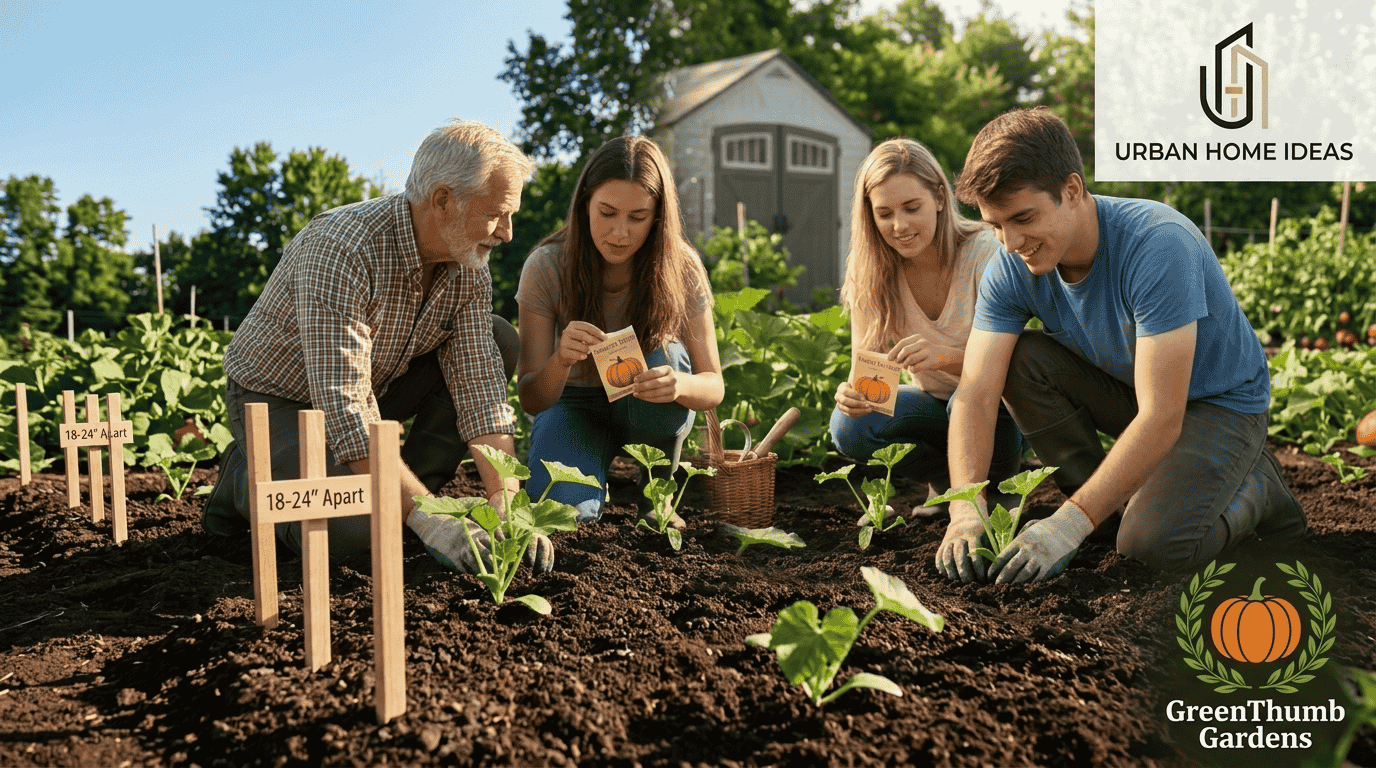
Pumpkins perform best in fertile soil, well-drained soil, and full sun, with roughly 8–10 hours of direct sunlight when possible. Correct pumpkin planting also requires enough room for extensive vine spread.
| Factor | Practical Guidance |
| Soil | Enrich garden soil with compost and organic matter to build soil fertility and a productive root system. Loose organic soil should still drain well. |
| Temperature | Wait for warm soil and favorable soil temperatures, commonly around 65°F or above, before sowing. |
| Light | A minimum of about six hours of sunlight can support growth, though 8–10 hours in open sun is preferable. |
| Sowing | A typical planting depth is about 1–2 inches deep for seeds. |
| Spacing | Depending on type, plant spacing may place hills or plants several feet apart because vines can travel close to 20 feet. |
| Space | Large cultivars need considerable space, while smaller cultivars can suit restricted spaces and tighter garden space. |
| Transplants | Transplants should be handled carefully because unnecessary disturbance can cause root damage. |
Good spacing keeps plants from crowding one another and gives leaves enough access to light, air, and growing room throughout planting and establishment.
Fertilization
Balanced fertilization supports strong vines and fruit without pushing the plant into excessive leafy growth. The best approach starts with soil testing, then matches nutrient management to actual soil fertility and crop needs.
- Before planting, pre-plant fertilization can supply needed pre-plant nutrients and improve early plant nutrition.
- Pumpkin nutrient requirements change over time; early feeding supports roots and leaves, while later nutrients support fruit formation.
- Nitrogen encourages plant growth, and carefully timed additional nitrogen can help once runners and vines are active.
- Too much fertilizer, especially excessive fertilizer, can create excessive vines while reducing the plant’s balance between foliage and fruits.
- Poor nutrient balance may contribute to fruit problems, whereas appropriate nutrients support steady growth and pumpkin development.
Pumpkin Problems
Strong plant health depends on early pest monitoring, weed suppression, and timely disease control. Ignoring small problems can lead to vine damage, weak plant development, or serious fruit set problems.
- Common pests and insects include aphids, cucumber beetles, squash bugs, squash beetles, and squash vine borers.
- Important diseases include powdery mildew, other mildew diseases, fungal diseases, wilt diseases, and viral diseases caused by viruses.
- Poor flowering conditions may produce pollination failure, which can look like a fruit disease even when no pathogen is involved.
- Regular pest management, sensible disease management, and general crop protection reduce damage before it spreads through pumpkin plants.
- Removing or suppressing weeds improves airflow and reduces competition for water and nutrients.
- Choosing suitable varieties can also improve resilience, but no cultivar replaces regular inspection and preventive care.
Unique Competitor Headings
Several practical topics influence pumpkin success beyond the basic calendar, including cultivar selection, fruit size, pumpkin yield, storage, and preservation of mature pumpkins. Together they explain why two healthy plants can have very different outcomes.
- Plant appearance: Healthy pumpkin vines, green leaves, yellow flowers, and sometimes orange flowers reflect vigorous growth before fruiting.
- Yield: Plant productivity, overall productivity, fruit production, and fruits per plant vary widely between small varieties, carving types, and giant pumpkins.
- Variety: Thoughtful variety selection and pumpkin varieties determine eventual mature color, fruit use, vine size, and expected yield.
- Season protection: Mulches, row covers, soil warming, moisture conservation, weed control, and frost protection can improve establishment and reduce stress.
- Pollination and growth: Active pollinators, enough growing space, balanced nutrition, and steady water all support the crop.
- After harvest: Harvested pumpkins benefit from cool storage and good air circulation during storage and longer-term preservation.
- Final use: Carving pumpkins are selected differently from eating types, so fruit purpose should be considered before harvest.
How Many Pumpkins Per Plant?
The number of pumpkins a plant produces depends largely on cultivar, fruit size, and plant condition. In general, vines carrying large pumpkins tend to finish with few fruits, while smaller-fruited types can support more fruits.
- Yield variation is normal because pumpkin production changes by variety, climate, nutrition, and available vine growth.
- Large carving pumpkins require substantial resources, so their fruit quantity is usually lower than that of small pumpkins.
- Smaller varieties often support stronger numerical yield, even when total fruit weight is not dramatically different.
- Good plant productivity means the crop balances leaf area and fruit production rather than simply maximizing the pumpkins per plant count.
- The most useful measure is therefore expected fruit yield for the chosen size, not one universal yield number.
What Do Pumpkin Plants Look Like?
Healthy pumpkin plants typically have vigorous vines, large green leaves, broad large leaves, bright flowers, and enlarging fruits. Their plant appearance changes noticeably as vine growth gives way to flowering and fruiting.
- The basic plant structure consists of spreading vines, petioles, leaves, flowers, and developing pumpkin fruit.
- Blossoms are usually yellow flowers, although some can appear closer to orange flowers depending on light and stage.
- Fruits vary in fruit shape, overall shape, and eventual fruit color.
- Different pumpkin colors include familiar orange types as well as white pumpkins, red pumpkins, and softer pastel pumpkins.
- Orange cultivars generally deepen toward their expected mature color as the fruit finishes development.
Recommended Pumpkin Varieties
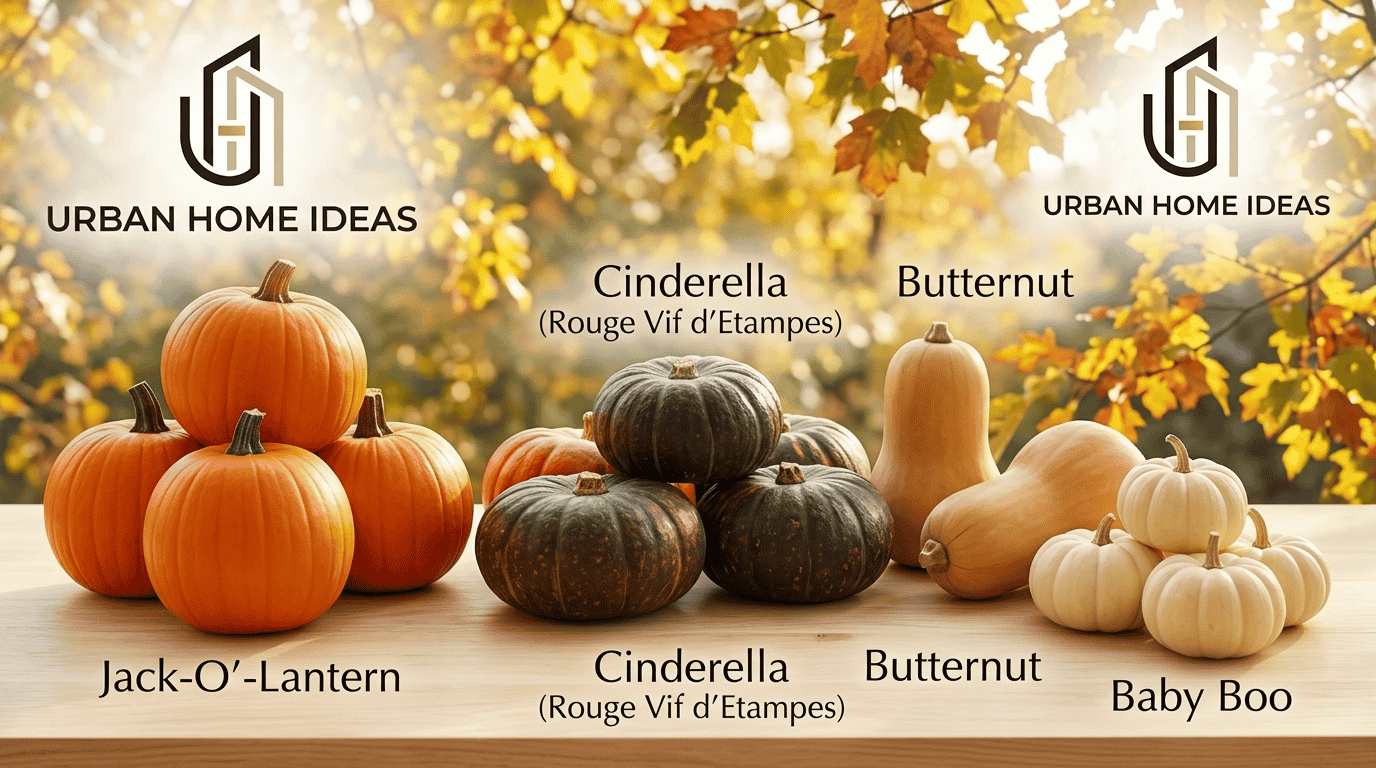
The best variety selection depends on available space, intended purpose, desired fruit size, and local maturity time. Different pumpkin cultivars can produce everything from small pumpkins to extremely large fruit.
- Small varieties are practical where space is limited and can offer good fruit production with manageable vines.
- Large carving types and other carving pumpkins are chosen for shape, rind, and display use rather than maximum eating quality.
- Some cultivars produce white pumpkins, while others focus on traditional orange color, storage, or culinary qualities.
- Large pumpkins and cultivars bred for giant fruit demand more space and usually have a longer maturity period.
- Comparing pumpkin types, expected productivity, and cultivar selection before planting helps match the garden to the intended result.
- There is no single best among all varieties; the right choice is the one whose season length and use fit the grower’s needs.
Mulches and Row Covers
Plastic mulch and row covers can support soil warming, moisture conservation, and early plant protection. Used correctly, they may promote earlier maturity while protecting young pumpkin plants from cool temperatures.
- Mulch helps conserve moisture, maintain a steadier soil temperature, and reduce weeds around the crop.
- Warmer ground supports warm soil conditions at the beginning of the growing season.
- Covers provide short-term frost protection for young plants, especially when night temperatures remain unstable.
- Once the flowering stage begins and blossoms open, covers should not prevent pollinators from reaching the flowers.
- Good access for insects is essential for pollination, so protection strategies should change as flowering starts.
- Used together with weed suppression, mulch and covers can make early-season management more predictable.
Tips on Growing Giant Pumpkins
Giant pumpkins may need around four months of careful management, and successful size gains depend on strong genetics, consistent resources, and deliberate vine management. Giant-fruited cultivars also demand more growing space than standard garden types.
- Good cultivar selection comes first because only appropriate genetics can produce true giant fruit or large fruit.
- Early plant selection should favor the strongest plant with healthy leaves, roots, and vines.
- Once several fruits set, concentrating resources on one selected pumpkin can increase eventual size; that selected pumpkin then becomes the main sink for the plant.
- Steady water, balanced nutrition, and ongoing plant nutrition support strong fruit growth without sudden stress.
- Long fruit development means the growing period and maturity time must fit the local season.
- Monitoring overall growth and expected pumpkin maturity helps the grower decide when to reduce competing vines or fruits.
Pumpkin Plant Productivity
Pumpkin productivity depends on cultivar, fruit size, growing conditions, and how many fruits the vine can support. A realistic pumpkin yield should therefore be based on the chosen variety, not on a single universal number.
- Planting quantities can be planned around expected household use, especially when the crop is intended for cooking, decoration, or storage.
- The likely expected harvest should account for both harvest quantity and average fruit size.
- Strong pumpkin plants with balanced plant productivity usually deliver more reliable production than overcrowded plants pushed for maximum fruit count.
- Good fruit production is ultimately the balance between overall yield, usable fruit quality, and the space available.
Storage and Preservation
Good storage conditions help mature pumpkins remain usable after harvest. The best environment is a cool location, dry location, and well-ventilated area with steady air circulation.
- Keep the stem attached where possible because an intact stem protects the fruit from unnecessary wounds.
- Harvested pumpkins and other harvested fruit should be dry before going into cool storage or longer-term dry storage.
- Avoid freezing conditions, which can damage mature fruit and reduce pumpkin quality.
- During the post-harvest period, inspect fruit regularly and remove damaged pieces before decay spreads.
- Proper fruit preservation, storage, and general preservation practices extend usability well beyond picking.
Other Post
How Do You Grow an Almond Tree? Our Easily Growing Secrets
America’s Gardening Resource: Smart Ideas For Better Gardens