


A reliable gutter system is not only about removing rainwater; it is about protecting the complete structure of a property. How to maintain gutters at home depends on understanding how gutter maintenance, water flow, drainage system, and debris buildup work together. Regular checks help prevent water damage, foundation damage, and costly repairs caused by blocked or damaged gutters.
- How To Maintain Gutters At Home?
- Understanding The Real Purpose Of Gutters
- A Practical Maintenance Mindset
- Why Is Regular Gutter Maintenance Important?
- Clean Your Gutters Regularly
- Flush Gutters And Downspouts With Water
- Check And Clear Clogged Downspouts
- Inspect Gutters For Damage
- Repair Gutter Leaks And Holes
- Check Gutter Slope And Water Flow
- Secure Loose Or Sagging Gutters
- Install Gutter Guards
- Direct Water Away From Your Home
- When To Call A Professional
- Gutter Maintenance Safety Tips
- Tools Needed For Gutter Maintenance
- Signs Your Gutters Need Maintenance
Many homeowners view gutters as a simple exterior feature, but experienced professionals see them as an important protection layer for the entire house. A properly maintained gutter system manages rainfall, guides water through downspouts, and reduces pressure on walls, siding, roofs, and foundations.
The interesting part is that gutter problems often begin silently. A few leaves, small cracks, or slow drainage may appear harmless, yet these small issues can gradually create serious structural concerns. Experts usually recommend inspecting and cleaning gutters regularly because seasonal debris, weather exposure, and nearby trees directly affect performance.
How To Maintain Gutters At Home?
The best way to understand how to maintain gutters at home is to look beyond simple cleaning. A complete approach combines inspection, cleaning, repairs, and proper water drainage. Professional experience shows that homeowners who focus on prevention usually avoid larger gutter failures later.
A gutter system works as a connected pathway. The roof, gutters, and downspouts must work together to move water safely away from the property. When one section fails, problems can spread to exterior walls, landscaping, and the foundation.

A practical maintenance approach includes checking seasonal changes, removing unwanted materials, and confirming that water follows the correct route. The process is not only about removing leaves. It also involves understanding how clogs, leaks, and poor alignment affect the complete drainage system.
Understanding The Real Purpose Of Gutters
Many people assume gutters only handle heavy rain, but their role is much broader. They collect water from the roof and control where it travels.
Important functions include:
- Protecting siding from constant water exposure.
- Preventing moisture around the foundation.
- Reducing soil erosion near the property.
- Supporting better exterior drainage.
- Limiting chances of mould and dampness.
A well-maintained gutter system creates a controlled path for rainwater instead of allowing water to spread randomly around the home.
A Practical Maintenance Mindset
Experienced homeowners often follow a simple rule: small gutter issues should be handled before they become expensive repairs.
A minor crack can become a larger leak. A small blockage can become complete overflow. A loose bracket can turn into a detached gutter section.
This preventive mindset changes gutter care from an emergency task into a normal part of home ownership.
Why Is Regular Gutter Maintenance Important?
Regular gutter maintenance protects more than the gutters themselves. It protects the entire property from unwanted moisture problems.
When gutters become filled with leaves, twigs, dirt, and other debris, water cannot move properly. Instead of flowing through the drainage system, water may overflow toward exterior areas.
Common problems caused by neglected gutters include:
- Water overflow during rainfall.
- Damage to exterior walls and siding.
- Moisture entering interior spaces.
- Foundation-related issues.
- Landscaping damage caused by uncontrolled water.
- Increased risk of mould and dampness.
A blocked gutter does not always show immediate damage. In many cases, the issue develops slowly until repairs become unavoidable.
How Debris Affects Gutter Performance
Organic material such as leaves, seeds, blossoms, and pollen can collect inside gutters. Over time, this material becomes heavier and restricts movement.
The combination of:
- debris buildup
- standing water
- poor drainage
- weather exposure
can reduce the lifespan of a gutter system.
Homes surrounded by trees usually need more attention because seasonal buildup happens faster.
Protecting The Structure Of The Home
A functional gutter system supports the property by directing water away from vulnerable areas.
When water reaches the wrong location, it may affect:
- foundation stability
- wall surfaces
- roof edges
- landscaping areas
Regular inspections help identify these risks before they become major structural problems.
Clean Your Gutters Regularly
Cleaning is one of the most important parts of gutter care, but the method matters. Random cleaning without inspection may remove visible debris while leaving hidden problems behind.
A professional approach begins with understanding what collects inside gutters and why it affects performance.
Typical gutter materials include:
- leaves
- twigs
- seeds
- blossoms
- pollen
- dirt particles
These materials can create blockages that prevent smooth water movement.
Most homes benefit from cleaning during spring and autumn because seasonal changes create additional buildup. Properties with many nearby trees may require more frequent cleaning.
Tools Required For Cleaning Gutters
The right tools make gutter maintenance safer and more effective.
Useful equipment includes:
- stable ladder
- waterproof gloves
- utility gloves
- garden hose
- plastic gutter scoop
- bucket
- tarp for collecting debris
A simple setup prevents unnecessary movement and helps complete the cleaning process efficiently.
Cleaning Process
A careful cleaning process usually follows these steps:
- Position a stable ladder on secure ground.
- Remove visible leaves and debris.
- Check corners where buildup commonly appears.
- Clear connections around downspouts.
- Flush remaining dirt with a garden hose.
- Confirm proper water flow.
Professionals often focus on safety because gutter cleaning involves height and sharp debris. Gloves protect hands while proper ladder placement reduces accident risks
Flush Gutters And Downspouts With Water
After removing visible debris, flushing gutters with water provides a clearer understanding of how the entire system performs. This step is often overlooked because many homeowners believe cleaning alone is enough. However, water testing reveals hidden issues that cannot always be noticed through visual inspection.
A garden hose helps remove smaller particles and remaining sediment trapped inside the gutter channels. During this process, professionals observe whether water moves smoothly toward the downspouts or whether slow movement indicates a possible blockage.
A proper flushing process helps identify:
- Restricted water movement.
- Hidden clogs inside drainage paths.
- Areas where water collects.
- Overflow points during testing.
- Poor connection between gutters and downspouts.
The goal is not only to make gutters look clean but to confirm that the complete water pathway is working correctly.
Checking Water Movement After Cleaning
After flushing the system, homeowners should observe how quickly water travels through the gutters.
Healthy gutters usually show:
- Smooth water flow.
- No standing water.
- No overflow from edges.
- Proper movement toward downspouts.
If water remains inside the gutter, the problem may involve incorrect slope, debris inside the pipe, or damaged sections.
Check And Clear Clogged Downspouts
Downspouts play an important role because they carry collected water away from the house. A clean gutter system cannot perform properly if the downspouts are blocked.
Many drainage problems begin at the connection between the gutter channel and downspout. Small debris can collect in these areas and gradually create complete blockages.
Maintenance usually includes:
- Checking the bottom opening of the downspout.
- Removing visible blockages.
- Flushing the pipe with water.
- Inspecting deeper sections for trapped material.
- Ensuring water moves away from the foundation.
A blocked downspout can force water backward into gutters, causing overflow and unnecessary pressure on the entire system.
Why Downspout Direction Matters
The final destination of rainwater is just as important as collecting it. If downspouts release water too close to the home, moisture can affect:
- Foundation areas.
- Soil conditions.
- Exterior walls.
- Basement spaces.
Proper extension and positioning help create better drainage around the property.
Inspect Gutters For Damage
A professional gutter inspection is not limited to finding obvious holes. Small changes in gutter condition often provide early warning signs.
During inspection, experts usually check:
- Cracks.
- Splits.
- Rusted sections.
- Sagging areas.
- Detached gutter sections.
- Loose hangers.
- Damaged brackets.
Running water through gutters is a simple method to identify leaks that remain hidden during a dry inspection.
Common Damage Signs To Notice
Certain signs suggest that gutter maintenance is required:
- Water appearing below gutter joints.
- Gutters pulling away from fascia boards.
- Visible rust or corrosion.
- Unusual bending or sagging.
- Overflow during normal rainfall.
Early identification allows smaller repairs instead of complete gutter replacement.
Repair Gutter Leaks And Holes
Even small gutter leaks can reduce the effectiveness of the entire drainage system. Water escaping from damaged sections may reach walls, landscaping, or foundation areas.
Repair methods depend on the size and location of the damage.
Common solutions include:
- Applying gutter sealant.
- Using waterproof caulking.
- Repairing small holes with suitable patches.
- Adding sheet metal over larger damaged areas.
- Replacing severely damaged sections.
Before applying any repair material, the damaged area should be cleaned properly. Dirt and moisture can prevent sealants from creating a strong connection.
Small Repairs Vs Complete Replacement
Not every damaged gutter requires replacement. Minor cracks and small holes can often be repaired when detected early.
Replacement may become necessary when:
- Multiple sections are damaged.
- Rust has weakened the material.
- Gutters cannot maintain proper water flow.
- Structural attachment has failed.
Check Gutter Slope And Water Flow
Correct gutter slope is essential for efficient drainage. Gutters are designed with a slight angle that allows water to travel naturally toward downspouts.
Incorrect slope can create:
- Standing water.
- Slow drainage.
- Overflow during rainfall.
- Increased debris buildup.
A gutter may appear clean but still fail if the angle does not support movement.
Adjusting Gutter Alignment
Professionals often inspect:
- Gutter hangers.
- Supporting brackets.
- Attachment points.
- Overall alignment.
Small adjustments can restore proper movement and improve the performance of the entire gutter system.
Secure Loose Or Sagging Gutters
Weather exposure, accumulated debris, and standing water can place extra weight on gutters. Over time, this pressure may loosen connections.
Loose or sagging gutters should not be ignored because they can change the direction of water flow.
Maintenance includes:
- Checking gutter hangers.
- Tightening loose fasteners.
- Repairing detached sections.
- Adding additional supports.
- Confirming secure attachment to fascia boards.
A properly secured gutter remains stable during heavy rainfall and protects siding and foundation areas from unwanted water exposure.
Why Gutter Support Matters
Strong support prevents:
- Bending.
- Separation from the home.
- Water pooling.
- Structural strain.
Regular checks help maintain a reliable gutter structure throughout changing weather conditions.
Install Gutter Guards
Gutter guards are often considered a convenience feature, but they also play a role in reducing maintenance pressure. They help limit the amount of leaves, debris, and organic material entering the gutter system while allowing rainwater to continue moving through the channels.
Many homeowners believe gutter guards completely remove the need for cleaning. However, experienced professionals understand that they only reduce the frequency of maintenance. Small particles such as pollen, dirt, and seeds can still collect over time and require inspection.
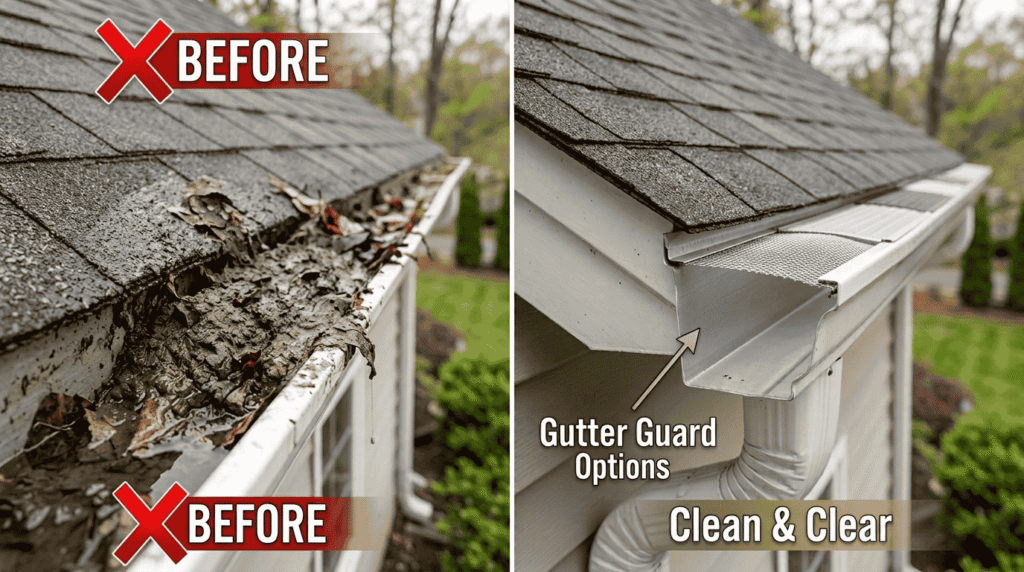
A balanced gutter protection approach includes:
- Checking gutter guards after seasonal changes.
- Removing surface buildup.
- Confirming proper water movement.
- Inspecting connection points.
- Cleaning areas where small particles collect.
The effectiveness of gutter guards depends on the design of the system, local weather conditions, and surrounding environment.
Choosing The Right Gutter Protection
Different properties experience different types of debris. Homes surrounded by trees may require stronger protection against leaves and twigs, while open areas may deal more with dust and small particles.
Important considerations include:
- Gutter material.
- Roof design.
- Rainfall patterns.
- Nearby vegetation.
- Existing drainage conditions.
A suitable gutter guard system supports better maintenance but does not replace regular inspection.
Direct Water Away From Your Home
One of the most important goals of gutter maintenance is controlling where water goes after leaving the roof. A gutter system only works effectively when collected rainwater is directed safely away from the property.
Poor water management can contribute to:
- Foundation problems.
- Soil erosion.
- Wall moisture.
- Landscape damage.
- Unwanted water collection.
Downspouts should release water at a safe distance from the home. Extensions can help move water away from vulnerable areas and improve overall drainage performance.
Creating Better Water Drainage Around The Property
A complete drainage strategy considers:
- Downspout placement.
- Ground slope.
- Soil condition.
- Water movement patterns.
- Foundation protection.
The purpose is to prevent concentrated water from repeatedly affecting the same area.
When To Call A Professional
Although many homeowners can handle basic gutter cleaning, some situations require professional assistance. Working at height, repairing damaged sections, or replacing major parts of a gutter system can create safety challenges.
Professional support is recommended for:
- Difficult-to-reach gutters.
- Severe damage.
- Loose gutter systems.
- Structural repair needs.
- Complete gutter replacement.
Experts bring experience in identifying hidden issues and ensuring repairs are completed correctly.
Situations That Need Expert Attention
A professional inspection becomes valuable when homeowners notice:
- Repeated overflow.
- Persistent leaks.
- Multiple damaged sections.
- Water reaching the foundation.
- Gutters separating from the structure.
Early professional help can prevent larger repair costs.
Gutter Maintenance Safety Tips
Safety should remain a priority during every maintenance task. Gutter cleaning appears simple, but working from height and handling wet debris can create risks.
Recommended safety practices include:
- Using a stable ladder.
- Wearing protective gloves.
- Avoiding excessive stretching.
- Having assistance when possible.
- Checking equipment before starting.
A safe maintenance routine protects both the homeowner and the gutter system.
Safe Cleaning Practices
Before beginning work:
- Place the ladder on stable ground.
- Keep tools within reach.
- Avoid standing on unstable surfaces.
- Do not ignore damaged equipment.
Safety-focused maintenance creates better results because careful work reduces accidental damage.
Tools Needed For Gutter Maintenance
The right tools improve efficiency and reduce unnecessary effort during gutter care. Professionals usually prepare equipment before starting because proper preparation helps complete maintenance safely.
Common tools include:
- Ladder.
- Gloves.
- Garden hose.
- Plastic scoop.
- Wire cutters.
- Pliers.
- Roof cement.
- Sheet metal.
- Sealant materials.
Each tool has a specific purpose. For example, a scoop removes debris, while sealant materials support minor repairs.
Selecting Practical Maintenance Equipment
The best equipment depends on the type of gutter problem.
For cleaning:
- Gloves protect hands.
- Scoops remove buildup.
- Hoses test water movement.
For repairs:
- Sealants close small leaks.
- Sheet metal supports damaged areas.
- Cutting tools assist with repair preparation.
Signs Your Gutters Need Maintenance
Many gutter problems provide warning signs before serious damage occurs. Learning these signs helps homeowners act before repairs become more complicated.
Common indicators include:
- Water overflowing during rainfall.
- Visible debris buildup.
- Slow drainage.
- Sagging gutter sections.
- Leaks.
- Holes.
- Water collecting near the foundation.
- Damp walls.
- Mould problems.
These signs suggest that the gutter system may not be managing water properly.
Understanding Early Warning Signals
A gutter system communicates problems through visible changes. Overflow, unusual movement, and moisture around the home should not be ignored.
Regular observation helps identify:
- Drainage issues.
- Structural concerns.
- Maintenance requirements.
- Repair opportunities.
A proactive approach keeps gutters functional and protects the property over time.