

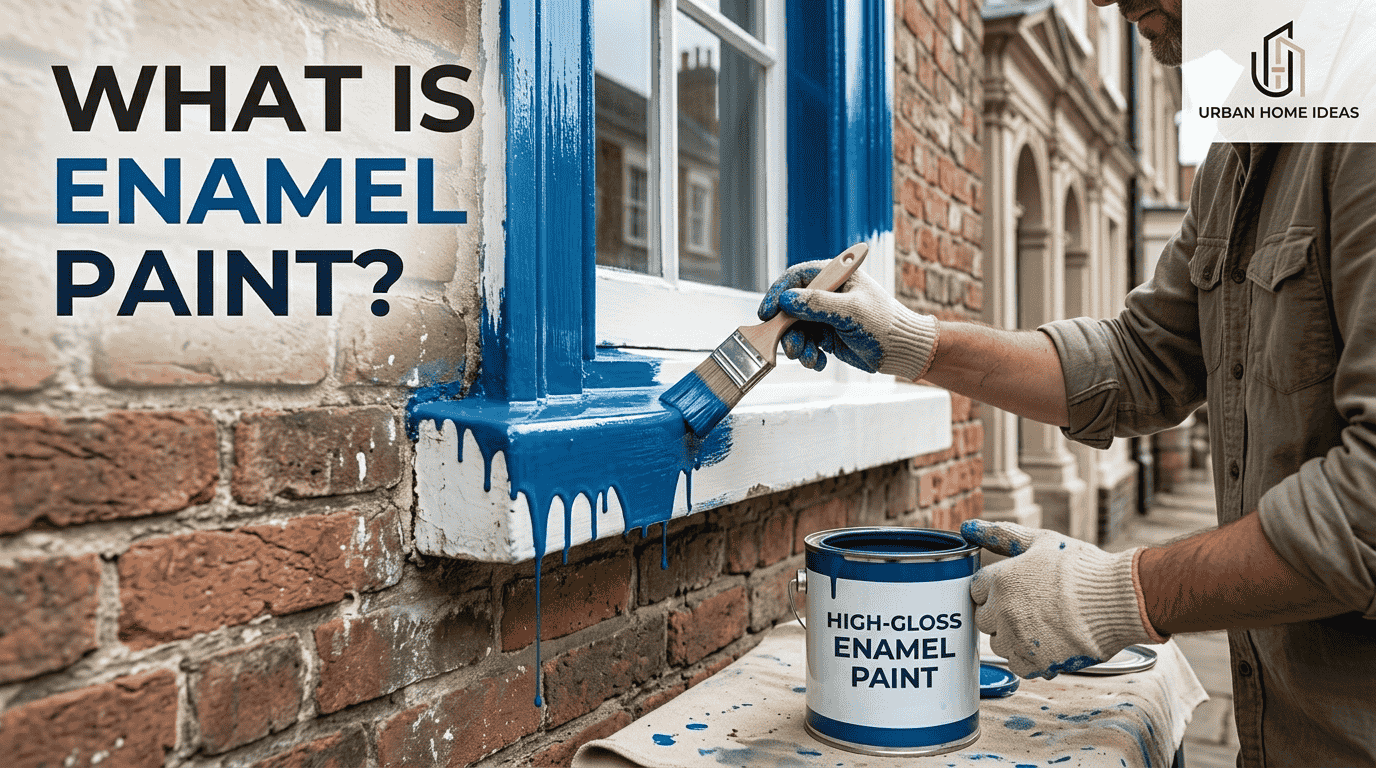
When someone asks what is enamel paint, the simplest answer is that enamel paint is a paint designed to form a hard, durable, and often glossy finish after drying. Its smooth, protective surface handles moisture, stains, scratches, and general wear, making it practical for doors, trim, cabinets, furniture, appliances, metalwork, and windows.
- What Is Enamel Paint?
- Benefits / Pros Of Enamel Paint
- Disadvantages / Cons Of Enamel Paint
- Where To Use Enamel Paint?
- Refurbishing A Barbecue Grill
- Painting A Steel Door
- Painting Door Casing And Trim
- Revitalizing Outdoor Furniture
- Touching Up Kitchen Appliances
- Materials Compatible With Enamel Paint
- Different Types Of Enamel Paint
- How To Use Enamel Paint
- Dos And Don’ts Of Enamel Paint
- What Sets Enamel Paint Apart?
- Paint Additives
- Enamel Paint Origins
- Where Not To Use Enamel Paint
- Enamel Paint Safety
- What Are The Disadvantages Of Enamel Paint?
- What Is The Difference Between Latex Paint And Enamel Paint?
- How Do You Apply Enamel Paint?
- Is Enamel Paint More Expensive Than Other Paint?
- How Long Does Enamel Paint Take To Dry?
- Other Post
Traditional solvent-based and oil-based products built enamel’s reputation for toughness. Today, water-based and hybrid enamel formulations provide more choices. Despite the name, ordinary enamel does not contain glass enamel. The term mainly describes its glass-like appearance, dried coating, and protective finish.
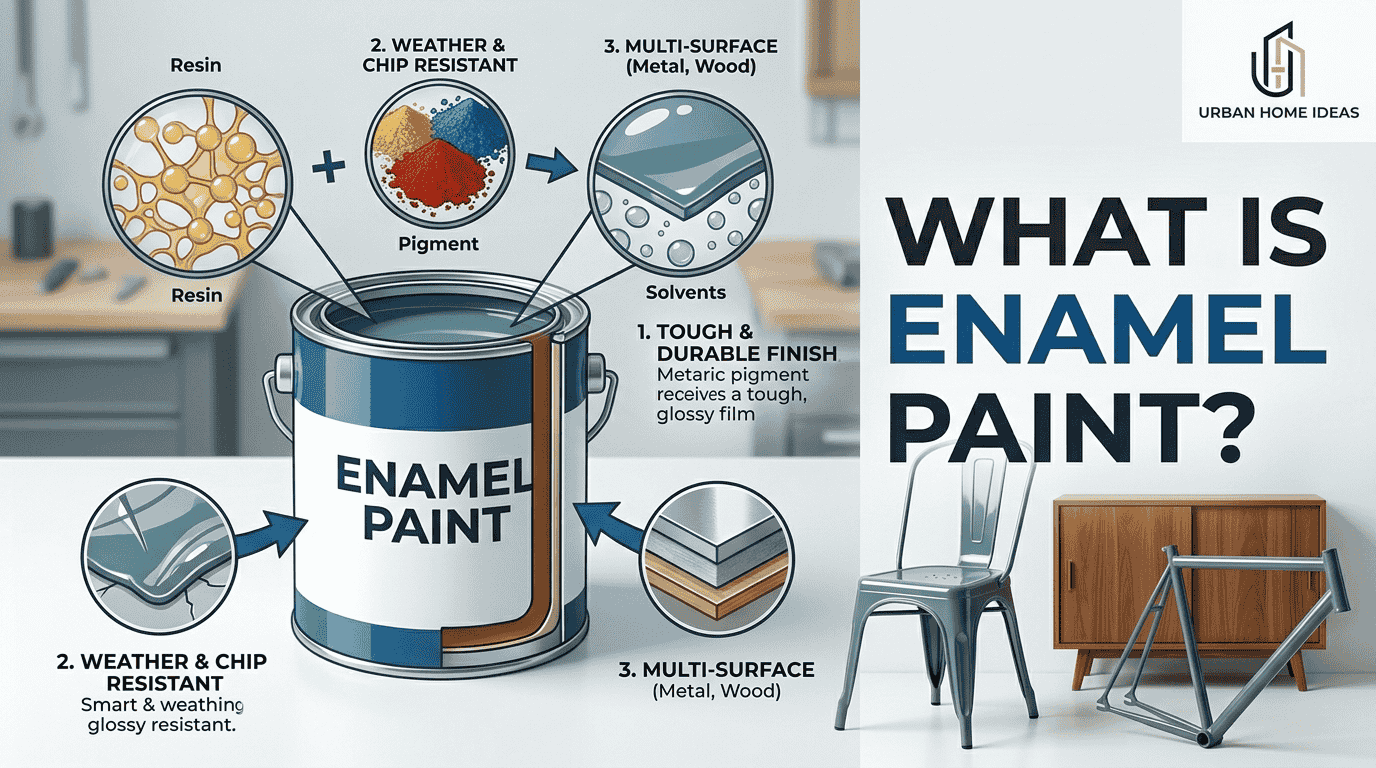
Modern manufacturers offer products labeled enamel for many applications. Some rely on alkyd resins, while other traditional formulations and modern products use different chemistry. Their exact characteristics vary, but resistance, durability, decorative finish, and protection during everyday handling remain important qualities of the coating. That broad definition explains why these paints are common on frequently touched surfaces.
What Is Enamel Paint?
Enamel paint is a type of paint that air-dries to form a hard, tough, and protective shell over a surface. As the coating dries, it creates a durable barrier that can have a glossy appearance. This paint is valued for its protective qualities, especially where a glossy protective shell and lasting surface strength are needed.
Benefits / Pros Of Enamel Paint
The benefits and pros of enamel paint become noticeable on surfaces that receive regular use. A hard, durable surface can withstand everyday wear, while strong adhesion helps the coating perform on numerous materials.
Its smooth, polished finish is also easy-to-clean, which makes finished surfaces more practical in busy spaces. Quality products can provide good color retention, resistance to yellowing, and overall resistance to wear. Suitable formulations may offer excellent leveling properties, improving the final finish.
For frequently touched surfaces, these qualities can be especially valuable. Some specialty products are designed for high temperatures, providing heat resistance where appropriate. A cured enamel can also reduce blocking, where two painted surfaces stick together. Together, good adhesion and durability explain enamel’s popularity.
Disadvantages / Cons Of Enamel Paint
The disadvantages and cons depend heavily on the formulation. Traditional oil-based versions may release strong odors, and their longer drying time can make a project slower than one using ordinary water-based wall paint.
Cleanup can also be less convenient. Some products require solvents or mineral spirits rather than water. This additional cleanup, combined with potentially difficult application, may discourage inexperienced painters.
A high-gloss finish can reveal surface imperfections, while some traditional hard enamels have limited flexibility and may become brittle. Certain formulations can contain higher VOCs, producing noticeable odor. Cost may also exceed lower-sheen alternatives. These factors mean the hard finish, gloss, and wear-resistant coating are not automatically ideal for every project.
Where To Use Enamel Paint?
Enamel paint suits surfaces where heavy use, moisture, or weathering can quickly damage ordinary finishes. Its durable, hard-wearing nature provides reliable surface protection for doors, trim, furniture, and metal. These hard-wearing finishes are especially practical where repeated contact demands stronger protection and lasting performance.
Refurbishing A Barbecue Grill
A barbecue grill experiences demanding conditions, so ordinary paint is not suitable for every area. Properly rated heat-resistant enamel can protect approved exterior grill surfaces while providing durability, resistance, and heat resistance at high temperatures.
Good preparation begins with thorough cleaning of the surface. The selected enamel and coating should then be used according to its specified application requirements. This is one project where temperature rating matters as much as appearance.
Painting A Steel Door
A steel door benefits from a coating that combines adhesion and protection. Suitable enamel can form a hard coating and durable finish over metal, helping protect the underlying steel surface.
Before painting, preparation of steel doors is essential. Maintaining the painted exterior also contributes to long-term surface protection, particularly where the door experiences frequent handling and environmental exposure.
Painting Door Casing And Trim
A door casing receives frequent contact and occasional abuse, so a durable finish and washable finish are useful. Properly applied enamel can provide both.
Its leveling properties can create a smooth appearance on properly prepared trim. Careful surface preparation before painting supports better durability on doors and trim, helping the finished coating tolerate repeated contact.
Revitalizing Outdoor Furniture
Some enamel paints can restore color and create a durable coating on outdoor furniture. Successful results depend on correct surface preparation and a formulation specifically intended for exterior exposure.
The challenge is movement. Hard traditional enamels may provide less flexibility, while furniture kept outdoors encounters changing temperatures and weather exposure. Therefore, the chosen paint should suit the actual surface, exterior environment, and furniture material.
Touching Up Kitchen Appliances
Small damage does not always require refinishing an entire appliance. Appliance enamel may be useful for repairing small scratches and chips on compatible appliance surfaces.
Products intended for kitchen appliances, including certain refrigerators and stovetops, should be selected specifically for that application. Correct touch-up work can cover minor surface damage, but the product must be compatible with the original coating.
Materials Compatible With Enamel Paint
Suitable enamel paint can adhere to many materials, although compatibility depends on the specific formulation. Common examples include wood, metal, concrete, masonry, wicker, wrought iron, plaster, ceramic, and glass.
Good adhesion depends on preparation as well as the coating itself. Before application, painters should verify compatible surfaces through the manufacturer’s instructions. A product that performs well on one surface may not provide the same result on another.
Different Types Of Enamel Paint
There is no single formulation that answers what is enamel paint for every project. The main types include water-based enamel, oil-based enamel, and hybrid enamel.
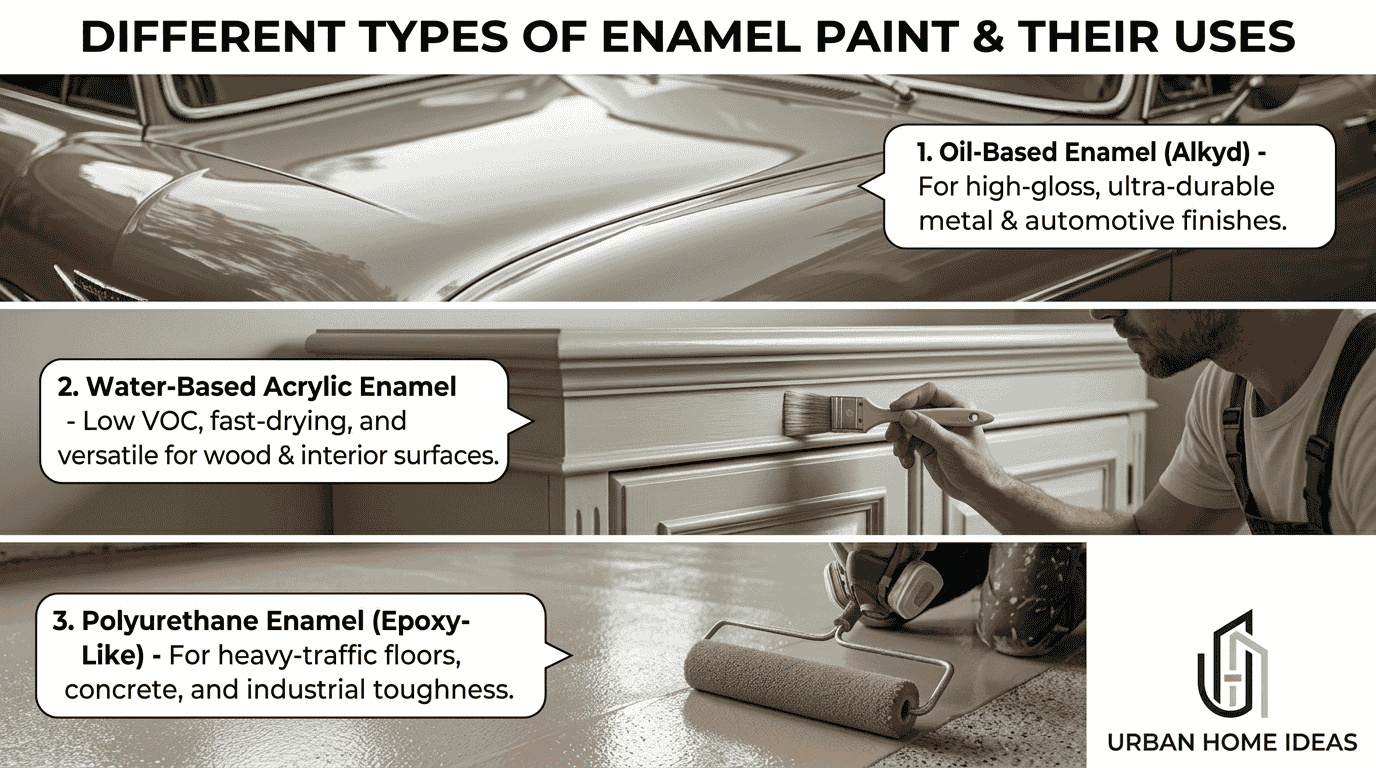
These modern formulations developed alongside traditional enamel, giving painters different balances of application, durability, drying behavior, and finish. Selecting the right paint and coating depends on the surface and working conditions.
Water-Based Enamel
Water-based enamel is often selected for easier application and faster drying. It generally has a mild odor, and soap-and-water cleanup makes tools easier to maintain.
A typical product can provide moderate coverage, although some options offer lower durability than traditional oil-based enamels. Even so, modern water-based technology can provide useful coverage, convenient cleanup, and a durable finish for many household projects.
Oil-Based Enamel
Oil-based enamel represents the more traditional approach. Its excellent leveling and good coverage can produce a particularly smooth finish and hard finish.
The tradeoff is working time. Slow drying and stronger odor are common, while cleanup may require mineral spirits or thinner because the solvent system does not wash away with plain water. For projects where high durability, strong coverage, and good leveling are priorities, suitable oil-based formulations remain useful.
Hybrid Enamel
Hybrid enamel attempts to combine useful characteristics of oil-based products and water-based products. Depending on the hybrid formulation, it can offer easier application, good coverage, and lower odor.
Many modern versions permit soap-and-water cleanup and faster drying than traditional oil enamel. At the same time, the coating can remain durable and develop a smooth finish. This balance of coverage, cleanup, and durability makes hybrid products practical for many detailed projects.
How To Use Enamel Paint
Proper application begins before a brush touches the surface. Surface preparation, cleaning, and the right primer affect adhesion and final appearance.
After mixing the paint, a painter can choose a suitable brush, roller, or sprayer. The right tools and technique help the coating develop a smooth finish while correct drying conditions allow it to cure properly.
1: Wash And Prepare The Surface
A clean surface provides a stronger foundation. Dirt, grease, dust, and other contaminants should be removed before painting.
Where necessary, sanding can correct irregularities, defects, and other imperfections. Because glossy enamel can emphasize flaws, creating a smooth surface is worthwhile. After sanding, sanding residue should be removed. Thoroughly wash, prepare, and clean the area so the surface preparation supports the next stage.
2: Prime The Surface
Once the surface has dried, an appropriate primer can improve adhesion and reduce the risk of chipping. Proper priming also creates a more consistent foundation for the coating.
For exterior projects, suitable exterior primers should tolerate the expected exterior conditions. Correct surface preparation, protection, and paint adhesion are especially important where weather exposure is involved.
3: Mix The Enamel Paint
Before application, mix and stir the enamel paint thoroughly. This helps keep pigments, resins, additives, and other components evenly distributed throughout the container.
A consistent paint mixture supports predictable performance from the formulation and helps the final coating maintain an even appearance.
4: Apply The Paint
The paint can be applied with a high-quality brush, roller, or sprayer, depending on the project and product instructions.
Good tools and careful technique help minimize brush marks. Thin, controlled application also supports leveling and a smoother finish across the surface. The enamel should be allowed to form its intended coating without unnecessary disturbance.
Dos And Don’ts Of Enamel Paint
The hardness of enamel can be both a strength and a weakness. Hard oil-based enamel coatings provide excellent protection, but reduced flexibility can create problems on surfaces that undergo substantial expansion, contraction, or surface movement.
On doors, windows, and cabinets, a hard finish can be beneficial because fully curing painted surfaces are less prone to sticking. These are practical applications where enamel’s durability is valuable.
By contrast, large areas of drywall, plaster, siding, and stucco often do not require traditional enamel. A flexible wall paint or suitable exterior paints can be more appropriate and economical, especially under significant weather exposure.
What Sets Enamel Paint Apart?
Enamel paint differs from ordinary wall paints through the protective surface it creates. As it dries, the coating becomes hard, smooth, and often glossy. This exceptionally hard shell provides greater durability, while its protective shell can create a refined glossy protective shell that typical wall paints may not provide.
Paint Additives
Certain enamel systems support compatible additives for specific purposes. Examples can include hardeners, adhesion promoters, and drying accelerators that alter working characteristics or drying characteristics.
Compatibility is essential. A manufacturer may specify which additions suit its formulation. Technical data sheets can explain drying time, application thickness, acceptable uses, application methods, and other specifications.
Following this information protects adhesion, drying, and overall application quality rather than assuming every additive can be mixed into every coating.
Enamel Paint Origins
The history of enamel paints helps explain the terminology. The word enamel became associated with hard, smooth surfaces resembling finishes on porcelain, ceramics, and cookware.
By the nineteenth century, enamel products were increasingly associated with weather resistance, corrosion protection, and durability on demanding surfaces, including ironwork and outdoor structures. Later, enamel coatings became strongly linked with appliances and industrial finishes.
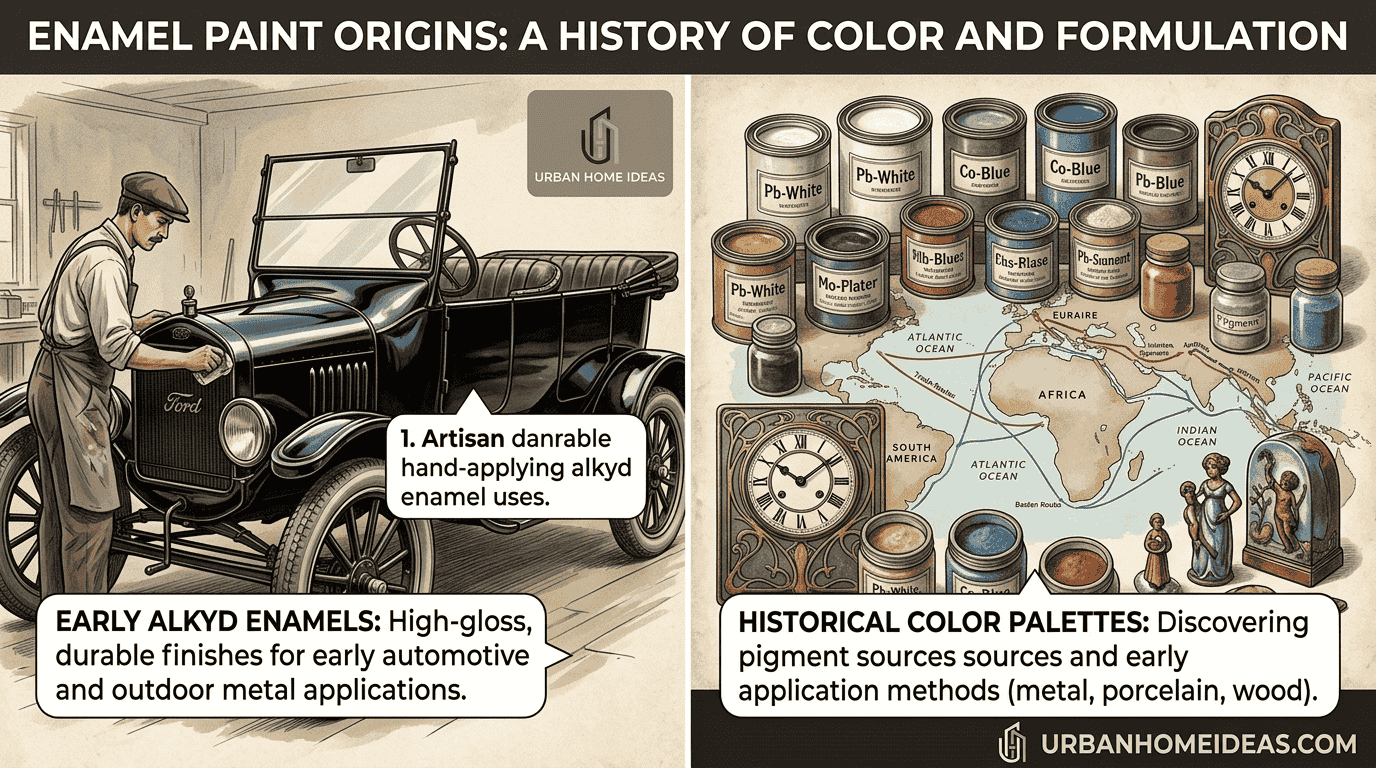
Technology continued changing. Modern powder coatings replaced traditional baked enamel in many industrial applications, while latex, acrylic, water-based enamel, and hybrid technologies expanded options for residential painting. This history shows how a familiar protective finish evolved across different coatings and surface requirements.
Where Not To Use Enamel Paint
Not every project benefits from enamel. Large interior walls and ceilings rarely need such a hard finish, while a glossy finish can expose roller marks, brush marks, uneven textures, and other surface imperfections.
Flexible exterior substrates present another concern. Where significant movement and weather exposure occur, a flexible acrylic coating may outperform traditional enamel. Choosing paint according to flexibility, exterior conditions, and actual ordinary surfaces prevents the wrong coating from being used merely because it looks durable.
Enamel Paint Safety
Safety becomes particularly important with traditional solvent-based enamel. Some formulations may contain notable VOC levels and produce strong fumes or persistent paint fumes.
Good ventilation and suitable protective equipment reduce unnecessary exposure to solvent vapors during application. Older painted surfaces require additional caution. Sanding or scraping can release hazardous material, including lead-containing dust where old lead paint is present. Appropriate protection should therefore be part of any safe coating project.
What Are The Disadvantages Of Enamel Paint?
The disadvantages of enamel paint become noticeable during application. Its long drying times can slow projects, while strong chemical odors may require better ventilation. Once painting is finished, difficult cleanup processes can add extra work. These processes often involve more demanding cleanup, and lingering chemical odors make drying times less convenient. Such odors, slow drying, and difficult cleanup should be considered before use.
What Is The Difference Between Latex Paint And Enamel Paint?
The key difference between latex paint and enamel paint is usually the paint base. Latex is typically water-based, while traditional enamel paint is commonly oil-based or alkyd-based. However, modern enamels have changed this distinction, as modern water-based enamels now exist. These water-based enamels offer another option beyond traditional enamel, making the base of each enamel product worth checking.
How Do You Apply Enamel Paint?
For a smooth application, the painter should clean the surface before starting and use light sanding where needed. After applying a matching primer, they should stir the enamel paint well and apply thin even coats using the correct brush or roller. Each layer should dry completely before the next layer is added. Proper primer, brush control, and even coats help the paint form consistent coats without rushing the process.
Is Enamel Paint More Expensive Than Other Paint?
Some enamel products can be more expensive than lower-gloss alternatives, although actual price varies by brand, chemistry, and intended use.
The additional cost can reflect a specialized formulation, increased durability, or a specialized finish. Rather than judging paint by price alone, the expected lifespan and performance of the durable coating should be considered.
How Long Does Enamel Paint Take To Dry?
The drying time of enamel paint depends largely on its formulation. Water-based types can dry to the touch in about 1 to 2 hours, while oil-based types generally need around 6 to 24 hours. These types should not be treated alike, since water-based and oil-based coatings dry at different rates. Temperature, ventilation, and coat thickness can also affect the actual hours required.
Other Post
How to Design Seamless Interiors: Stunning Design Secrets
Smart Mudroom and Entryway Furniture for Every Home
What Is Color Drenching The Surprising Secret Behind Luxury Rooms