

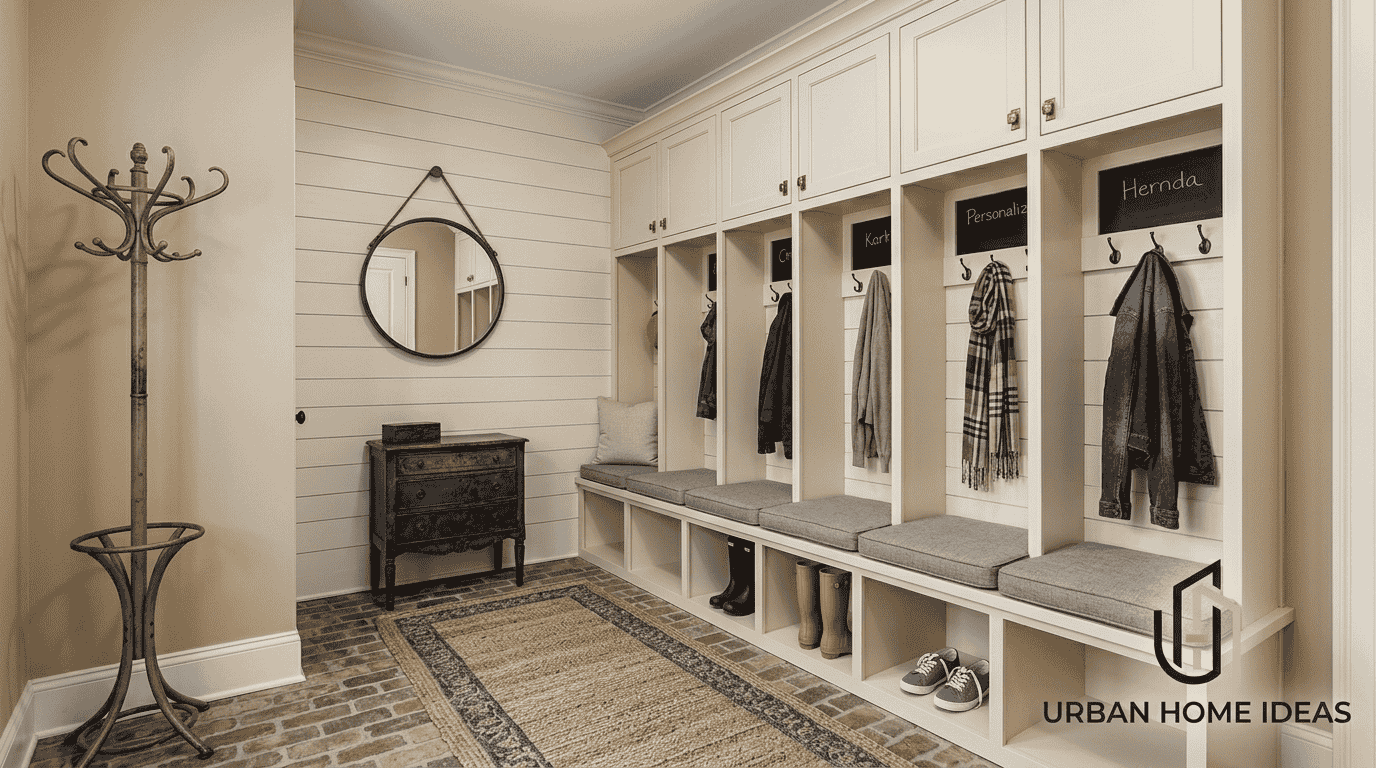
Mudroom and entryway furniture helps a busy household control clutter by giving coats, shoes, bags, backpacks, and other everyday belongings a fixed place near the entrance. Smart storage, benches, cabinets, baskets, and hooks improve organization and functionality while creating a practical yet stylish entrance for daily routines.
- Mudroom and Entryway Furniture
- Mudroom and Entryway Storage Furniture
- Entryway Benches and Built-In Seating
- Built-In Cabinets and Closed Storage
- Cubby Storage and Family Organization
- Wall Hooks and Open Shelving
- Console Tables and Freestanding Furniture
- Baskets, Bins and Small-Item Storage
- Using Vertical Space for Storage
- Customizing Mudroom and Entryway Furniture
- Furniture for Small Mudrooms and Entryways
- Flooring and Furniture for High-Traffic Areas
- Coordinating Furniture With Mudroom and Entryway Decor
- What’s the Difference Between an Entryway and a Mudroom?
- How to Turn Any Space Into an Entryway or Mudroom
- Extra Mudroom Additions
- Additional Pantry Space
- Pet-Friendly Mudroom Features
- Combine Laundry and Mudroom Spaces
- Create Two Rooms in One
- Use Large Furniture for Wide Entryways
- Optimize Drawer Space
- Hide Clutter Behind Closed Furniture
Mudroom and Entryway Furniture
Good storage planning starts with daily habits rather than appearance alone. The right setup should make coming home easier while keeping frequently used items within reach and less-used belongings safely stored.
Mudroom and Entryway Storage Furniture
Choosing mudroom and entryway furniture becomes easier when the available entrance size and actual household needs are considered first. A busy mudroom or entryway may require several forms of storage furniture instead of one oversized unit.
Built-in cabinetry, lockers, coat closets, tall shelving, shoe racks, open shelves, and floor-to-ceiling cabinets can create permanent storage zones. Smaller layouts may work better with benches, hidden storage, standalone storage units, or flexible cubbies.
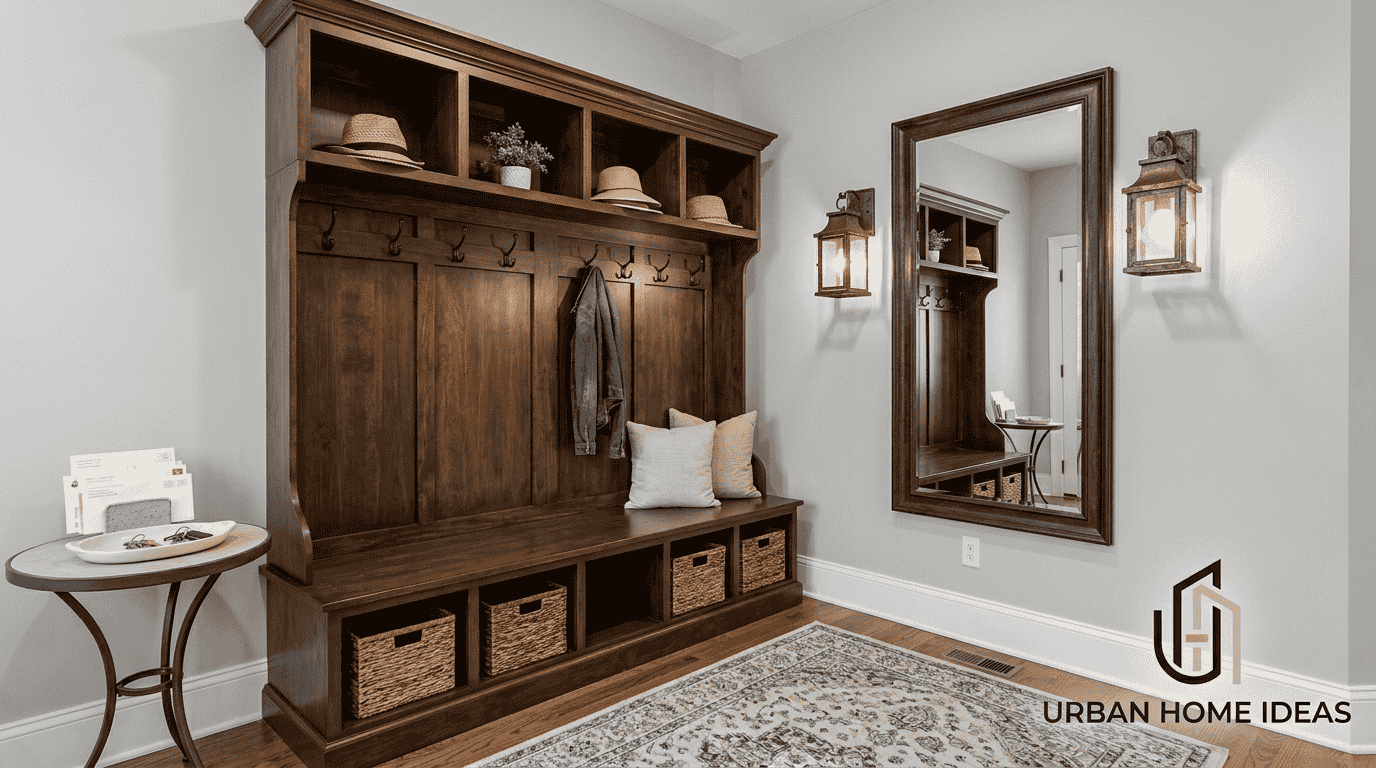
A practical arrangement can also combine console tables, cabinets, shelves, baskets, drawers, and hooks. In larger spaces, built-in units and closed-door storage help keep coats, shoes, bags, backpacks, clutter, and everyday belongings organized without making the entrance feel crowded.
Entryway Benches and Built-In Seating
A useful storage bench provides more than simple seating. It gives people a comfortable place to handle shoes and boots, while the area underneath can become hidden storage for items that are not needed every day.
That lower compartment can hold seasonal objects, outdoor accessories, toys, and household supplies. This makes the bench especially useful in a functional entry area where every piece of furniture needs to perform more than one task.
A home does not need a formal mudroom to benefit from this arrangement. A few hooks can handle coats, hats, and bags, while built-in benches or other compact furniture provide organized storage and practical shoe storage for everyday use.
Built-In Cabinets and Closed Storage
For homeowners who prefer a calmer appearance, built-in cabinets and closed storage can keep daily mess out of sight. Tall cabinets and floor-to-ceiling cabinetry also make use of wall height that might otherwise remain empty.
These cabinets can hold household items, maintenance supplies, seasonal belongings, and cleaning products that do not belong in the main living area.
Where space permits, custom cabinetry and built-in storage can create separate zones for clutter, coats, shoes, equipment, and miscellaneous items. Simple cabinet doors hide irregular objects and help maintain a clean entrance, better organization, and a more orderly mudroom.
Cubby Storage and Family Organization
A shared entrance often works better when every person has a clearly defined place for personal belongings. Cubby storage can improve family organization because it reduces the need to search through one large cabinet.
Custom cubbies, lockers, shoe compartments, and storage benches can provide household members with their own designated areas for daily belongings. Homes with active children may also benefit from specialized lockers designed for bulky sports equipment.
A cubby-based system is useful for families and shared households because it can incorporate coat racks, baskets, benches, cabinetry, and hooks in one organized wall.
Separate spaces for shoes, bags, clothing, and accessories create practical individual storage and make everyday routines easier to maintain.
Wall Hooks and Open Shelving
Large cabinets are not always necessary. Wall hooks and open shelving can provide a lighter solution when an existing closet does not offer enough room.
Coat racks, hooks, and open shelves work particularly well for objects used several times each day. When a home lacks a defined entrance, partition walls can help create an entry zone within an existing room.
Adding practical storage to that wall can include small shelves for keys, hanging areas for coats, and lower storage for shoes and other everyday necessities.
This method works especially well in narrow entry spaces where limited storage is a concern. Using vertical storage turns unused wall space into functional organization without reducing the walking area.
Console Tables and Freestanding Furniture
Not every entrance needs permanent construction. Console tables and freestanding furniture can create flexible storage where built-in closets are unavailable.
A combination of coat racks, shelving, storage benches, and decorative furniture can organize an entrance while allowing the layout to change later.
An open console table is especially useful in an entryway because it offers accessible storage without appearing visually heavy. Baskets can sit underneath while the tabletop holds simple décor and frequently used small objects.
In larger entry areas, furniture with drawers adds more hidden capacity. Well-scaled standalone furniture also creates visual openness and can preserve valuable floor space.
Baskets, Bins and Small-Item Storage
Some of the hardest objects to organize are the smallest ones. Baskets, bins, and other forms of small-item storage can stop loose belongings from collecting on benches or tables.
The most useful storage features reflect the real habits of the family. They may need to hold shoes, outerwear, children’s items, seasonal equipment, and extra household supplies.
Woven baskets, small bowls, drawers, and cabinet baskets work well for umbrellas, footwear, keys, wallets, bags, and other daily necessities.
Giving these everyday items a specific place improves organization and reduces surface clutter, especially near the main door.
Using Vertical Space for Storage
When the floor plan cannot become larger, vertical space can provide additional storage without reducing walking room.
Tall cabinets and floor-to-ceiling storage are useful in a compact mudroom because they take advantage of the full wall area. Extending cabinetry toward the ceiling can also eliminate awkward unused gaps.
Storage placed above doors can become practical high storage for holiday decorations, seasonal clothing, and spare footwear that does not require everyday access.
This form of space optimization keeps regular-use items lower while upper cabinets hold belongings that are needed only occasionally.
Customizing Mudroom and Entryway Furniture
The best storage plan rarely looks identical from one household to another. Customizing a mudroom should start with the people who use the space and the belongings they regularly bring through the door.
A family may need storage for children’s belongings, holiday decorations, crafts, hobbies, pets, and additional household supplies rather than simply more coat space.
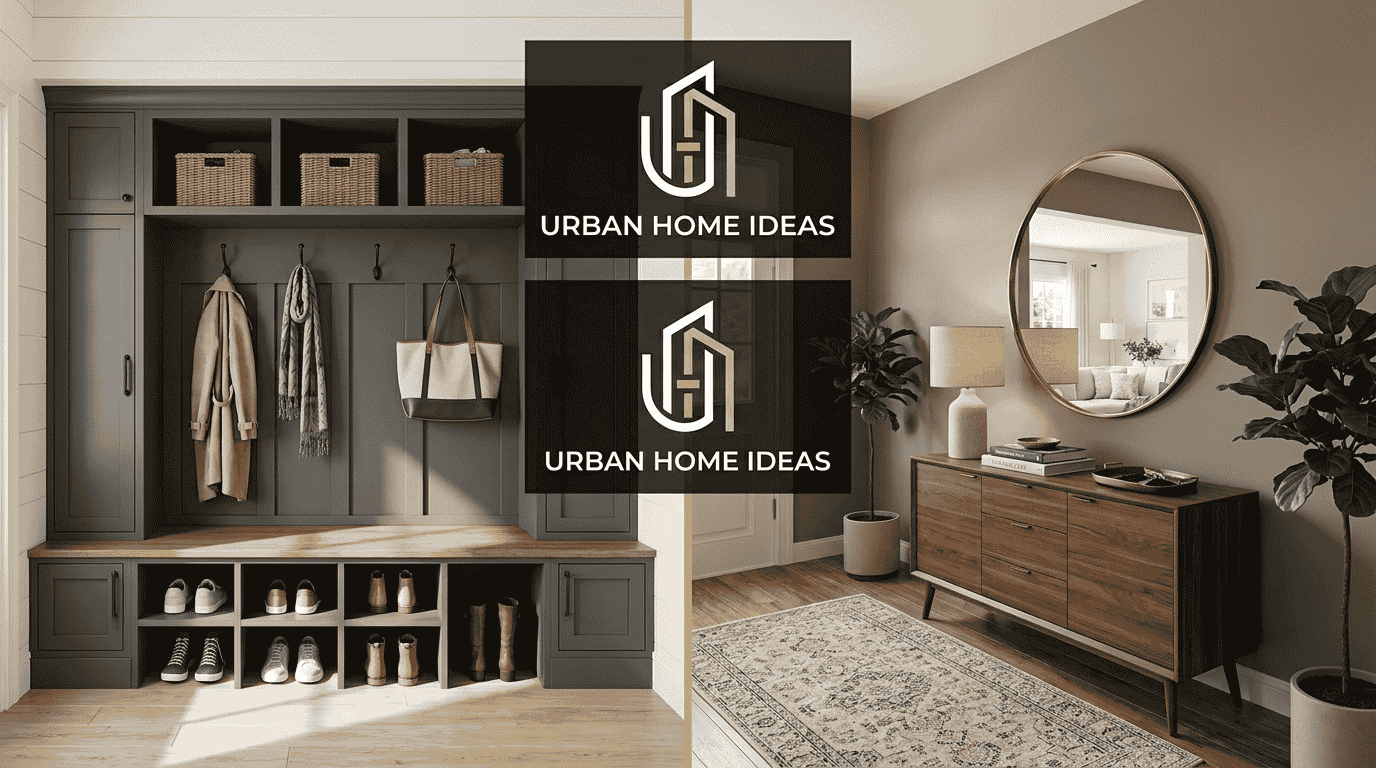
Custom built-ins, cabinets, benches, shelving, and baskets can be combined into flexible organizational furniture.
Good mudroom and entryway furniture should respond to the available space and genuine storage needs. This creates a more useful functional design with personalized storage instead of forcing the household to adapt to a generic layout.
Furniture for Small Mudrooms and Entryways
Small spaces do not automatically require fewer functions. Small mudrooms and entryways simply need better-scaled furniture.
Where limited square footage prevents a major addition, simple partitions, shelves, hooks, and compact storage furniture can still establish a functional entrance.
A bench, narrow shelf, baskets, or compact console can improve organization without consuming excessive floor area.
In apartments, narrow hallways, and entrances connected directly to an adjoining room, multifunctional furniture is often the most practical choice.
Carefully selected mudroom and entryway furniture can provide space-saving storage while keeping the route through the room comfortable and open.
Flooring and Furniture for High-Traffic Areas
A functional entrance also depends on the surfaces surrounding its storage. Flooring and furniture in high-traffic areas should tolerate frequent movement and occasional moisture.
An entryway or mudroom often acts as one of the home’s busiest transition spaces, making it more exposed to outdoor dirt and debris.
Durable surfaces such as ceramic, stone, brick-look, and tile can handle frequent use while simplifying regular maintenance.
Practical rugs with mixed patterns or varied tones can also make everyday dirt less noticeable. Materials with good durability and easy cleaning generally perform better than finishes selected purely for appearance.
Coordinating Furniture With Mudroom and Entryway Decor
Practical storage does not need to look purely functional. Furniture in a mudroom can work with surrounding entryway décor to create a more finished entrance.
The overall design can combine storage furniture, artwork, mirrors, paint colors, lighting, and other decorative elements.
Depending on the home, the entrance might lean toward a cottage-inspired style, an industrial style, or something simpler and more neutral.
Benches, baskets, cabinets, rugs, and hooks can be connected through complementary colors, materials, and finishes.
Well-coordinated mudroom and entryway furniture also creates a stronger visual connection with adjacent rooms, helping practical storage feel like part of a coordinated design rather than an afterthought.
What’s the Difference Between an Entryway and a Mudroom?
An entryway and a mudroom both help people move between outdoors and indoors, but their roles are usually different.
A foyer generally works as a more formal transition area near the main entrance. It may include a coat closet, foyer table, armoire, or other decorative furniture.
A mudroom is typically a casual household entrance designed to cope with dirty footwear, wet outerwear, and heavier everyday utility.
Because of this practical role, it usually requires more storage and functions as a hardworking transition space.
Choosing suitable mudroom and entryway furniture depends on understanding this difference while still supporting convenient everyday organization.
How to Turn Any Space Into an Entryway or Mudroom
A useful entryway or mudroom can sometimes be created without adding a completely new room.
The first considerations should be location, available square footage, existing flooring, doorway arrangement, and permanent fixtures.
After that, the household can identify its actual storage requirements and decide how much of the surrounding living area or another transitional space should be adapted.
A full home addition may not be necessary. A partition or simple conversion can create enough separation when careful space planning is used.
The goal should be a functional entrance where the storage design supports movement instead of restricting it.
Designing an Entryway
An entryway that opens directly from the front door into the main living space often benefits from some form of visual boundary.
A partial dividing wall can create separation while allowing light to travel through the room. A full dividing wall may be more suitable where stronger separation is needed.
Either option can establish an obvious entry zone.
Adding shelves and hooks turns the new surface into usable wall storage rather than a purely decorative barrier.
The most effective visual separation gives the entrance its own identity while preserving a comfortable and functional layout.
Designing a Mudroom
A practical mudroom can sometimes be created from an existing back porch, kitchen-side area, or secondary entrance.
Instead of rebuilding the entire area, the design can focus on useful storage through cabinets, benches, and built-ins.
This type of utility-focused furniture can transform an overlooked space into a purposeful household zone.
A thoughtful conversion creates a more organized household entrance, helping improve everyday organization while keeping outdoor gear closer to the door.
Extra Mudroom Additions
Not every mudroom needs to serve only as a coat-and-shoe area. Certain mudroom additions can help the room handle other household activities.
A utility sink can support cleaning tasks, while a compact bar or dedicated wine storage may suit larger entertaining spaces.
Creative households might prefer a craft area or hobby workspace supported by built-in shelving.
The mudroom should still remain easy to navigate. Any specialized storage or extra utility features should suit the overall multifunctional space.
Both room size and room location should determine whether these additions genuinely improve the space or simply create more clutter.
Additional Pantry Space
A climate-controlled mudroom may provide useful pantry space when the main kitchen lacks adequate storage.
Adding pantry cabinetry can create organized food storage, and part of the room may even support a small preparation area near the kitchen.
The pantry function should remain visually and physically separated from dirty outdoor items.
Closed cabinets can provide additional household storage, while a dedicated secondary food area makes productive use of the available space.
Pet-Friendly Mudroom Features
A pet-friendly mudroom can make everyday pet care easier while keeping mess away from living spaces.
Dedicated feeding areas can organize bowls and supplies, while a discreet litter-box space gives indoor pets a predictable location.
Homes with active dogs may benefit from a pet-washing station close to the exterior entrance, allowing muddy paws to be cleaned immediately.
These mudroom features improve dirt control and can create a convenient cleaning area.
Nearby pet storage for leads, towels, grooming supplies, and food can also support better household hygiene while keeping pet essentials organized.
Combine Laundry and Mudroom Spaces
A laundry room and mudroom can work effectively as a combined space, particularly where the home has limited square footage.
Well-positioned cabinets can create household storage above or beside the laundry area.
Placing appliances beneath a continuous counter can preserve useful work surfaces for folding clothes, sorting belongings, or handling everyday household tasks.
This arrangement improves space efficiency because two practical functions share the same area.
A carefully planned multifunctional room can combine laundry activities with storage furniture without making either function difficult to use.
Create Two Rooms in One
A back-door area can serve as a multifunctional space even when it connects directly with another room.
Adding storage baskets, bins, and a narrow console can provide a practical place for daily belongings without making the area look overly utilitarian.
The key is visual coordination with the nearby living space.
A well-planned dual-purpose room feels intentional when its storage furniture matches the surrounding materials and proportions.
This allows the entry area to handle daily organization while still appearing connected to the rest of the home.
Use Large Furniture for Wide Entryways
Compact furniture is not always the right choice. Large furniture can suit wide entryways, wide halls, and oversized entrances where very small pieces may look visually weak.
Substantial drawer units, cabinets, and benches can use a long wall effectively while still preserving enough floor space for comfortable movement.
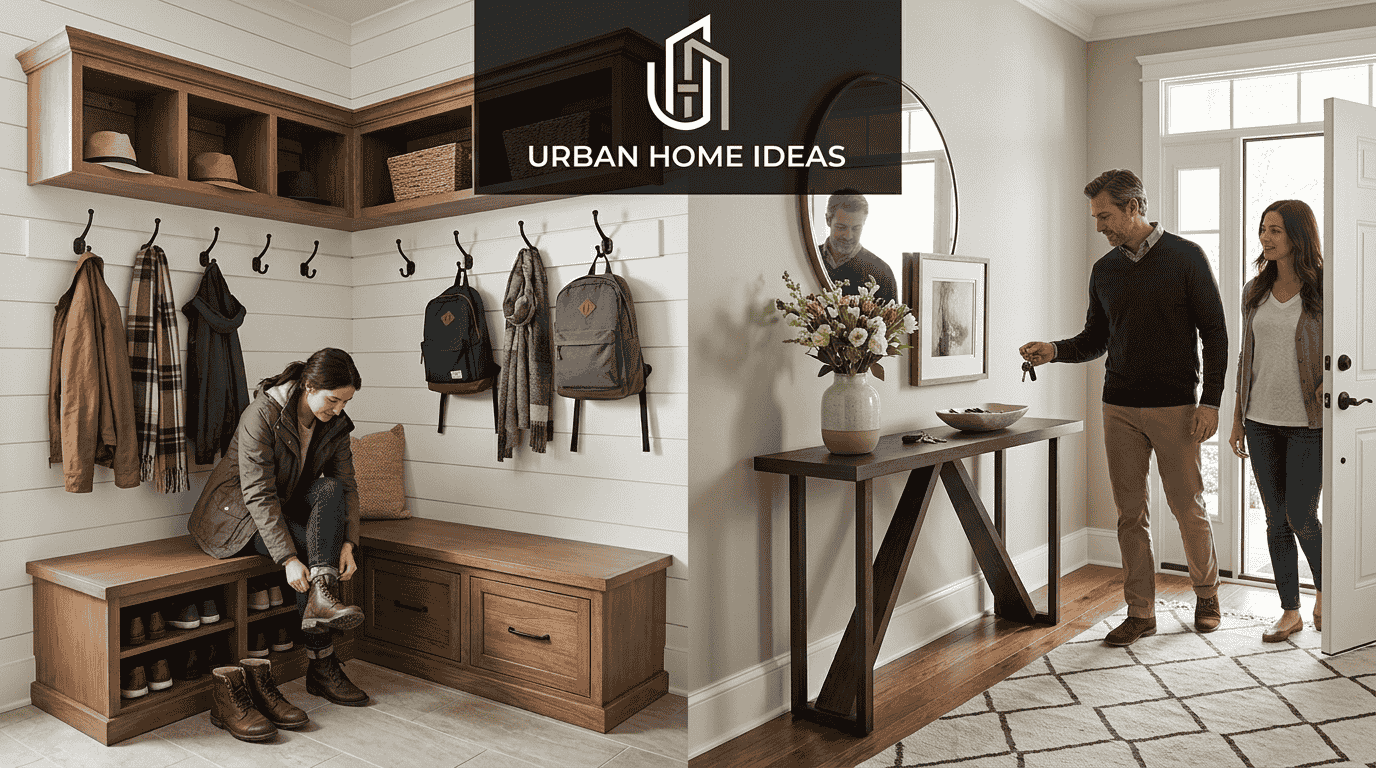
The size of the furniture should respond to the room scale rather than following a fixed rule that entryway pieces must be narrow.
Properly sized storage furniture can make broad spaces more functional, while substantial furniture can visually anchor an otherwise empty entrance.
Optimize Drawer Space
Useful drawer space depends on organization rather than simply having a large number of drawers.
A multi-drawer unit can divide everyday storage between family members or roommates, giving each person an obvious place for frequently used items.
This type of individual storage can be a simpler alternative to built-in lockers, especially when tall compartments are unnecessary.
When integrated into wider cabinetry, clearly assigned drawers can improve organization and prevent personal belongings from spreading across benches or countertops.
Well-planned drawers make storage furniture easier to use and maintain over time.
Hide Clutter Behind Closed Furniture
Busy entrances rarely remain perfectly organized every hour of the day. Clutter is easier to control when closed furniture and closed cabinetry provide places to hide irregular objects.
A visually clean entrance does not require every one of the household’s daily items to remain on display.
Behind cabinet doors, hidden storage can hold shoes, bags, equipment, and loose accessories while maintaining quick accessibility.
Good visual organization should balance neatness with convenience.
Closed-front mudroom and entryway furniture allows practical storage furniture to keep an entryway composed while still supporting ordinary household routines.