


How to wash wool blanket requires careful attention to wool fibers, cleaning methods, and proper fabric protection. A wool blanket should be cleaned using gentle washing, a correct detergent, and controlled temperature to avoid shrinking, felting, and matting. Proper care maintains the soft texture, warm feel, and durable nature of wool while supporting long-term blanket maintenance.
- How To Wash a Wool Blanket?
- How Often Should You Wash A Wool Blanket?
- Simple Maintenance Between Washes
- Things To Do Before Washing A Wool Blanket
- Check The Care Label
- Remove Dust And Refresh The Blanket
- How To Remove Stains From A Wool Blanket
- How To Hand Wash A Wool Blanket
- How To Machine Wash A Wool Blanket
- How To Remove Excess Water From A Wool Blanket
- How To Dry A Wool Blanket
- How To Store A Wool Blanket
- Common Mistakes When Washing Wool Blankets
- FAQs
- Can You Wash A Wool Blanket In A Washing Machine?
- What Detergent Is Safe For Wool Blankets?
- Can You Wash Wool Blankets Without Shrinking Them?
- Should Wool Blankets Be Washed In Hot Or Cold Water?
- Can You Put A Wool Blanket In The Dryer?
- How Do You Dry A Wool Blanket After Washing?
- How Do You Remove Stains From A Wool Blanket?
- Why Does Wool Shrink After Washing?
- Is Hand Washing Better Than Machine Washing Wool Blankets?
Wool is a natural material known for its natural resistance to dirt and odors, which means it does not always require frequent washing. Understanding the right approach helps protect the blanket from shape distortion, loss of softness, and other washing-related risks.
How To Wash a Wool Blanket?
The best way to clean a wool blanket is to focus on protecting the structure of the material rather than using aggressive cleaning methods. Wool contains delicate wool fibers that respond better to controlled washing, suitable products, and careful handling.
A proper cleaning routine includes checking the care label, following manufacturer instructions, selecting the right detergent, and maintaining a safe washing environment. These steps reduce the possibility of damage and help extend life by preserving the original quality of the blanket.

The main purpose of washing wool is not only removing dirt but also maintaining the natural qualities of the fabric. A balanced process protects the wool material, improves freshness, and keeps the blanket comfortable for regular use.
How Often Should You Wash A Wool Blanket?
A wool blanket usually does not need constant washing because wool naturally provides protection against daily buildup. The natural wool properties help with dirt resistance and odor resistance, reducing the need for unnecessary cleaning.
The correct wash frequency depends on the environment, usage, and overall condition of the blanket. Some blankets may only require cleaning every few months, while others may benefit from yearly washing depending on exposure.
A simple cleaning schedule can include occasional cleaning instead of regular washing. Between washes, users can maintain freshness through basic care methods.
Simple Maintenance Between Washes
- Allow the blanket to air outdoors for natural refreshing.
- Use fresh air to reduce trapped odors.
- Shake off dust to remove loose particles.
- Remove surface dirt using gentle methods.
- Brush surface areas with a soft-bristle brush.
- Spot clean small stains when needed.
This approach supports blanket care, a healthy maintenance routine, and better wool longevity.
Things To Do Before Washing A Wool Blanket
Before starting the washing process, proper preparation helps protect the wool blanket from unnecessary damage. A careful approach includes understanding the material, reviewing care instructions, and choosing suitable cleaning steps.
The purpose of preparation is to create a safe washing environment where the fibers remain protected. Following manufacturer guidance and practicing proper wool care can help prevent damage while maintaining the blanket’s natural structure.
A good cleaning preparation routine reduces risks and makes the complete washing process easier.
Check The Care Label
The care label provides important information about the correct treatment method for a wool blanket. Before cleaning, the label should be reviewed carefully to understand the recommended process.
The instructions may mention whether the blanket is:
- Machine washable
- Hand wash only
- Dry clean only
Choosing the correct cleaning method prevents mistakes and supports better fabric care. The recommended cleaning process from the manufacturer helps maintain the original quality of the wool blanket.
Remove Dust And Refresh The Blanket
Removing surface particles before washing helps reduce unnecessary cleaning pressure on the fabric. Wool blankets can often be refreshed through simple methods before a complete wash is needed.
A gentle refresh routine includes:
- Remove dust from the surface.
- Place the blanket outside for outdoor airing.
- Shake blanket carefully to release particles.
- Allow fresh air circulation around the fibers.
- Reduce trapped odors removal through ventilation.
- Remove remaining surface dirt with a soft-bristle brush.
When brushing, follow the natural brushing direction of the fibers to maintain the smooth fabric appearance. This type of natural cleaning supports regular wool maintenance without unnecessary washing.
How To Remove Stains From A Wool Blanket
Stains require careful attention because wool reacts differently from ordinary fabrics. Quick action through immediate treatment can prevent marks from becoming harder to remove.
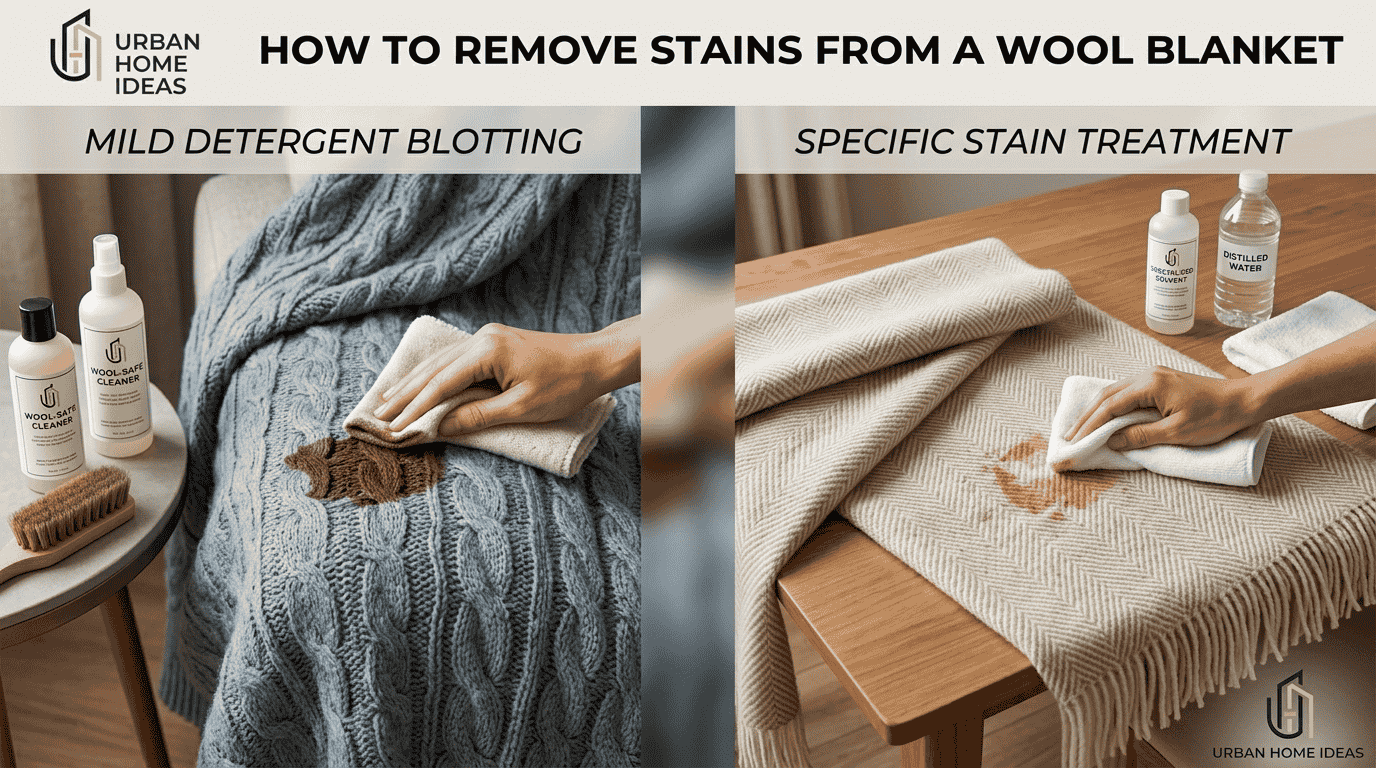
For fresh stains, the safest approach is gentle cleaning rather than aggressive scrubbing. A suitable method includes:
- Applying cool water or lukewarm water.
- Using mild wool detergent.
- Taking a soft cloth for cleaning.
- Blot stain instead of rubbing.
- Dab stain carefully until the mark reduces.
Strong rubbing should be avoided because rubbing avoidance reduces friction damage to delicate wool fibers. Excess friction can lead to felting and affect the texture of the blanket.
Small marks often need only spot cleaning or localized cleaning instead of a complete wash, helping preserve the overall condition of the wool blanket.
How To Hand Wash A Wool Blanket
Hand washing is one of the safest options when extra control is needed. The process focuses on protecting fibers through slow movement, suitable water conditions, and gentle handling.
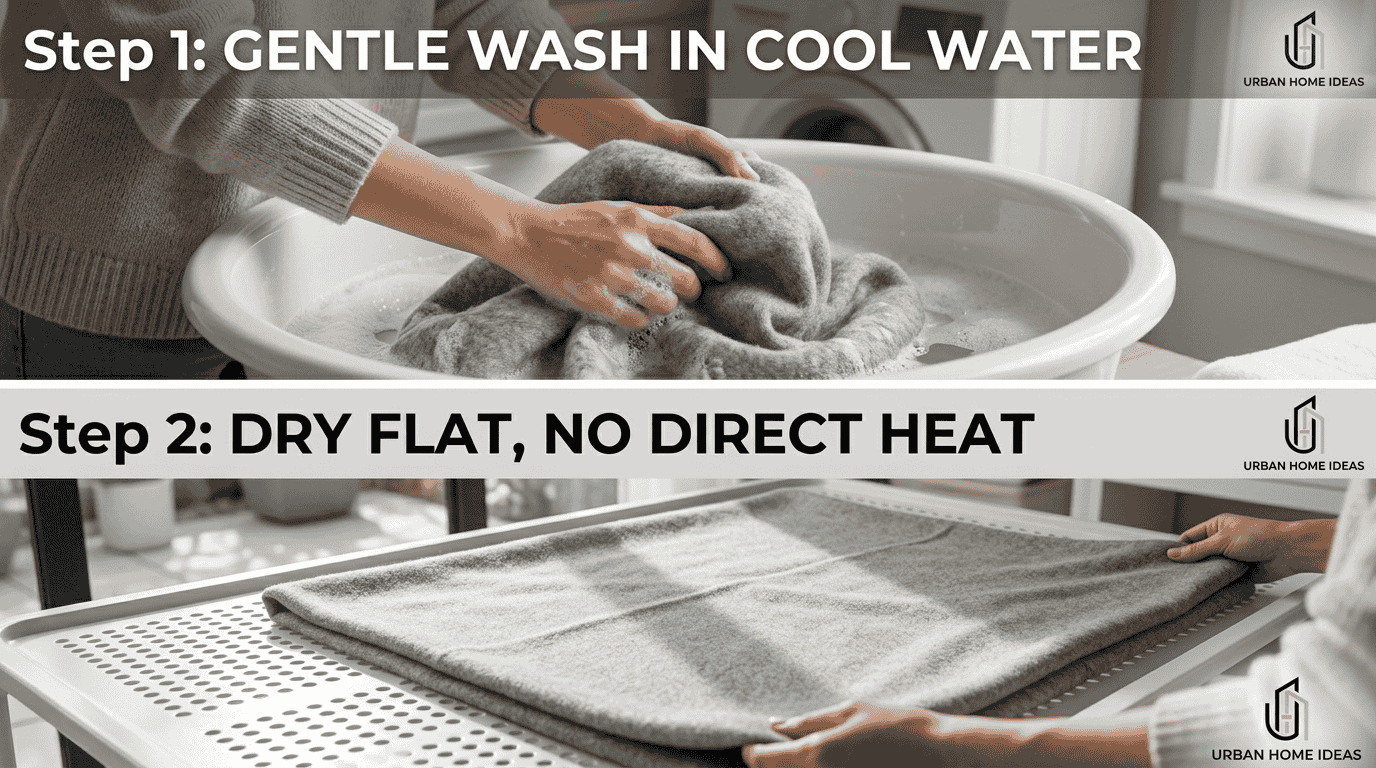
A careful hand wash involves:
- Preparing a suitable washing space.
- Using the correct water temperature.
- Applying a wool-friendly cleaning product.
- Avoiding harsh movements.
The main goal is gentle cleaning while maintaining fiber protection. Since wool can react negatively to heat, hot water avoidance is important for shrinking prevention.
1: Prepare Water And Detergent
Proper water preparation and detergent preparation create the foundation for safe washing.
The process includes:
- Filling a clean bathtub or large basin.
- Adding cool water or lukewarm water.
- Using wool-specific detergent.
- Applying only a small amount of detergent.
Using hot water can create heat damage, causing wool shrinkage and affecting the structure of the fibers. Careful washing supports better fiber care.
2: Soak The Blanket
After preparing the water, the blanket should be allowed to absorb the cleaning solution gradually.
During this stage:
- Soak blanket completely.
- Allow proper water absorption.
- Keep the blanket inside the detergent solution.
- Continue the cleaning process for around 10–20 minutes.
A controlled soaking period allows dirt removal without aggressive handling. Gentle soaking supports fiber protection and prepares the blanket for the next washing stage.
3: Clean Gently
During the cleaning stage, wool fibers require careful movement because aggressive handling can affect the blanket structure. The goal is to remove dirt while maintaining the natural condition of the material.
The blanket should be moved slowly through the water instead of using force. Gentle underwater movement allows proper water circulation around the fibers without creating unnecessary stress.
Avoid the following actions:
- Avoid scrubbing because strong friction can weaken the surface.
- Avoid twisting because wet wool can lose its original shape.
- Avoid kneading because pressure can encourage fiber compression.
- Avoid wringing because squeezing can stretch the blanket.
Reducing movement intensity supports friction reduction, fiber damage prevention, and matting prevention. This approach keeps the wool structure protected and maintains proper wool protection throughout cleaning.
4: Rinse The Blanket
After the cleaning process is complete, rinsing removes remaining detergent and prepares the blanket for drying.
A careful rinse involves:
- Removing the used washing water.
- Adding fresh clean water.
- Washing away detergent residue.
- Maintaining similar washing water conditions.
Sudden changes in temperature can affect wool fibers, so temperature consistency should be maintained during rinsing. Avoiding sudden temperature changes helps prevent stress on the material.
A gentle rinse supports healthy wool fibers, creates a clean finish, and completes the washing process without damaging the blanket.
How To Machine Wash A Wool Blanket
Machine washing can be suitable for some wool blankets when the care label confirms that this method is allowed. The washing machine should be used carefully because excessive movement can affect wool fibers.

A safer machine cleaning approach includes:
- Selecting a wool cycle.
- Choosing a delicate cycle.
- Using cold water.
- Adding wool-safe detergent.
- Keeping gentle agitation.
- Avoiding overload.
A smaller detergent amount is usually enough because excess products may remain inside the fibers. Proper machine washing supports fiber protection while reducing the possibility of damage.
The right settings allow machine cleaning without compromising the blanket’s softness and structure.
How To Remove Excess Water From A Wool Blanket
Removing water after washing requires patience because a wet wool blanket becomes heavier and more sensitive. Excess pressure can cause stretching and unwanted changes in shape.
Safe excess water removal includes:
- Using gentle pressing instead of squeezing.
- Placing the blanket between towels.
- Allowing towels to absorb moisture.
- Using towel rolling to improve water absorption.
- Supporting careful water extraction.
A wet wool blanket contains heavier fibers, which increases the stretching risk during rough handling. Wringing avoidance and twisting avoidance protect the material.
Proper shape protection and careful wool handling help maintain the original appearance after washing.
How To Dry A Wool Blanket
Drying affects the final texture, shape, and softness of a wool blanket. The correct drying approach focuses on controlled moisture removal instead of using high heat.
A safe drying method includes:
- Allowing natural airflow.
- Supporting gradual moisture removal.
- Using a suitable drying surface.
- Reshaping the blanket while damp.
- Allowing enough drying time.
Wool fabric naturally holds moisture, so rushing the drying process can affect the final condition. Proper safe drying and moisture management help maintain the blanket’s quality.
Dry Flat
Flat drying is one of the safest methods for maintaining the structure of a wool blanket. A wet blanket should not hang heavily because the weight can pull and stretch the fibers.
For effective flat drying:
- Place the blanket on clean towels.
- Use a drying rack if available.
- Keep it on a flat surface.
- Maintain proper airflow.
- Reshape the damp blanket while drying.
This method supports moisture control, maintains the original form, and provides a safe drying method for long-term wool care.
Avoid Heat And Direct Sunlight
Heat exposure is one of the biggest risks during wool drying. Wool fibers can react negatively to high temperatures, causing changes in texture and size.
Avoid:
- Clothes dryer.
- Radiators.
- Heaters.
- Strong sunlight.
Proper heat avoidance prevents wool shrinking, fiber damage, and changes caused by high temperature. Direct sunlight may also contribute to color fading.
Excessive heat can create a coarse wool texture, reducing the softness and comfort of the blanket. Careful drying keeps the blanket protected.
How To Store A Wool Blanket
Proper storage helps protect a wool blanket when it is not being used for an extended period. Before placing it away, the blanket should be completely cleaned and fully dry because trapped moisture can affect the fibers over time.
A suitable storage environment includes:
- Keeping the blanket in a cool place.
- Maintaining a dry environment.
- Using breathable storage options when possible.
- Choosing an airtight container for additional protection.
- Adding proper pest protection.
Wool is naturally durable, but insects can still affect stored fabrics. Using cedar products can provide natural protection against unwanted pests.
Proper storage supports wool preservation, protects the blanket from damage, and helps maintain quality during long-term storage.
Common Mistakes When Washing Wool Blankets
Many wool blanket problems occur because of incorrect cleaning habits rather than the washing process itself. Understanding common mistakes helps prevent unnecessary damage and protects the natural softness of wool.
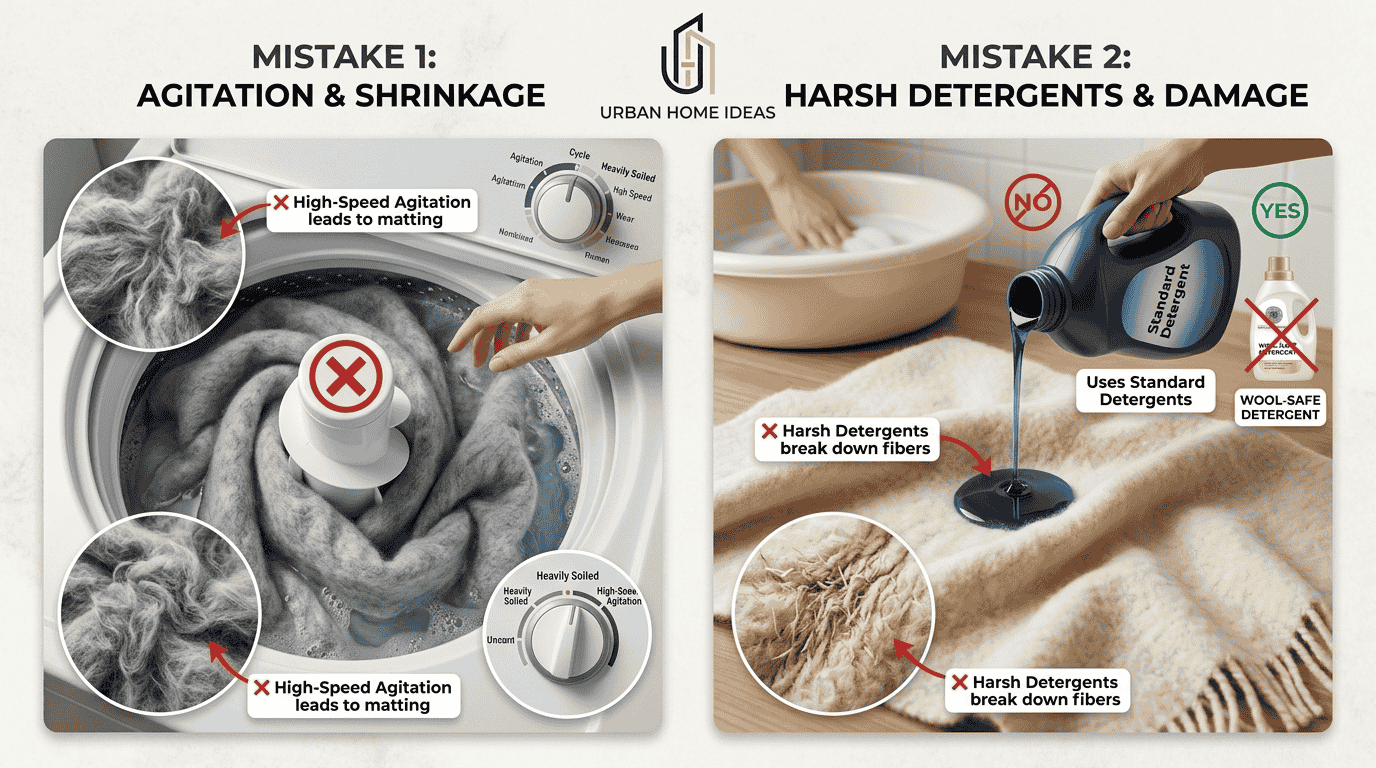
Common problems include:
- Using unsuitable temperatures.
- Selecting incorrect cleaning products.
- Applying excessive force during washing.
- Choosing unsafe drying methods.
Avoiding these mistakes improves wool care and reduces the chance of permanent changes to the blanket.
Using Hot Water
Hot water is one of the most common causes of wool damage. High temperatures can affect the natural structure of wool fibers and create unwanted changes.
Problems caused by hot water include:
- High temperature exposure.
- Shrinking of wool fibers.
- Fiber damage.
- Changes in wool structure.
- Fabric distortion.
Heat exposure changes the relationship between fibers and can reduce the blanket’s original quality. Using safer washing temperatures helps maintain the material.
Using Regular Detergent
Regular cleaning products are not always suitable for wool because many contain strong ingredients that can affect delicate fibers.
Using harsh products may lead to:
- Chemical damage.
- Fiber weakening.
- Reduced softness.
- Poor fabric condition.
A regular detergent may remove dirt, but it can also affect wool quality. Choosing a wool-safe detergent and suitable cleaning products helps maintain fiber strength.
Scrubbing Too Hard
Strong scrubbing creates unnecessary pressure on wool fibers. Unlike durable fabrics, wool requires gentle movement to avoid surface problems.
Excessive scrubbing can cause:
- Increased friction.
- Felting.
- Matting.
- Surface damage.
Using gentle techniques provides better fiber protection and keeps the blanket comfortable.
Wringing The Blanket
Wringing is another mistake that can affect the structure of wet wool. A soaked blanket becomes heavier, making the fibers more vulnerable.
Avoid:
- Forceful wringing.
- Excessive twisting.
- Pulling or stretching wet fibers.
These actions can cause stretching, shape distortion, and damage to the blanket. Careful handling supports damage prevention and keeps the original shape.
Using A Dryer
A dryer may seem convenient, but high heat can create serious problems for wool blankets.
Machine drying risks include:
- High heat exposure.
- Shrinkage risk.
- Fiber damage.
- Changes in wool structure.
- Softness loss.
Allowing the blanket to dry naturally is usually safer than using machine drying.
FAQs
Can You Wash A Wool Blanket In A Washing Machine?
Yes, some wool blankets can be washed using a washing machine when the care label permits machine washing. A safe approach includes cold water, wool cycle, delicate cycle, and wool-safe detergent.
Gentle washing settings reduce stress on fibers and provide better fiber protection during the machine cleaning process.
What Detergent Is Safe For Wool Blankets?
The safest option is a mild detergent designed specifically for wool. A wool detergent or wool-safe detergent with a gentle formula helps protect fibers.
Strong chemicals should be avoided because they may affect the blanket’s structure and reduce fiber protection.
Can You Wash Wool Blankets Without Shrinking Them?
How to wash wool blanket without causing damage requires careful attention to the cleaning method. Wool blankets can be washed safely by using cold water, a gentle wool detergent, and proper gentle washing techniques. Avoiding heat exposure, harsh wringing, and excessive movement supports shrinking prevention, protects wool fibers, and maintains long-term fabric care.
Should Wool Blankets Be Washed In Hot Or Cold Water?
How to wash wool blanket safely depends on choosing the correct washing temperature and protecting the natural structure of the material. Wool blankets should be cleaned using cold water because it supports safe washing, reduces heat-related risks, and helps maintain wool fibers. Proper temperature control, gentle cleaning, and fiber protection help prevent damage during the washing process.
Can You Put A Wool Blanket In The Dryer?
How to wash wool blanket safely includes understanding the correct drying approach after cleaning. A standard wool blanket should generally avoid a dryer because high heat and tumbling action can cause shrinking, warp the material, and create fiber damage. Proper temperature control, natural drying, and careful moisture removal help maintain wool fibers and provide better fabric protection.
How Do You Dry A Wool Blanket After Washing?
How to wash wool blanket correctly does not end after cleaning because the drying process directly affects the blanket’s final condition. After washing, excess water removal should be handled carefully through gentle rolling with a clean towel to support towel absorption. Proper air dry methods, flat drying, and natural airflow help maintain wool fibers, prevent damage, and provide safe fabric protection.
How Do You Remove Stains From A Wool Blanket?
How to wash wool blanket with stains requires careful treatment rather than aggressive cleaning. The process starts with immediate action, blot excess liquid, and spot-clean methods using cold water and wool-safe detergent. Proper stain removal, gentle cleaning, and controlled liquid removal protect wool fibers, maintain fabric protection, and support effective blanket care.
Why Does Wool Shrink After Washing?
How to wash wool blanket properly requires understanding wool’s natural behavior during cleaning. Wool shrinkage occurs when wool fibers face moisture, heat, and agitation. The microscopic surface scales and overlapping scales can create felting, causing fiber locking and permanent locking. Excessive friction and movement during the washing process change the wool structure and cause shrinkage.
Is Hand Washing Better Than Machine Washing Wool Blankets?
How to wash wool blanket depends on the material type, care requirements, and cleaning approach. Hand washing is a safer method for delicate blankets, vintage blankets, and unlabelled wool blankets, while suitable machine cleaning uses a dedicated cold wool cycle, cold washing, and gentle cleaning to maintain fiber protection and proper wool care.
Other Post
How to Clean Grout Between Floor Tiles and Restore Its Unique Look
Best Mop For Laminate Floors: Keep Your Floors Looking New
How To Clean Stone Countertops: Proven Tips For Granite, Quartz & Marble