

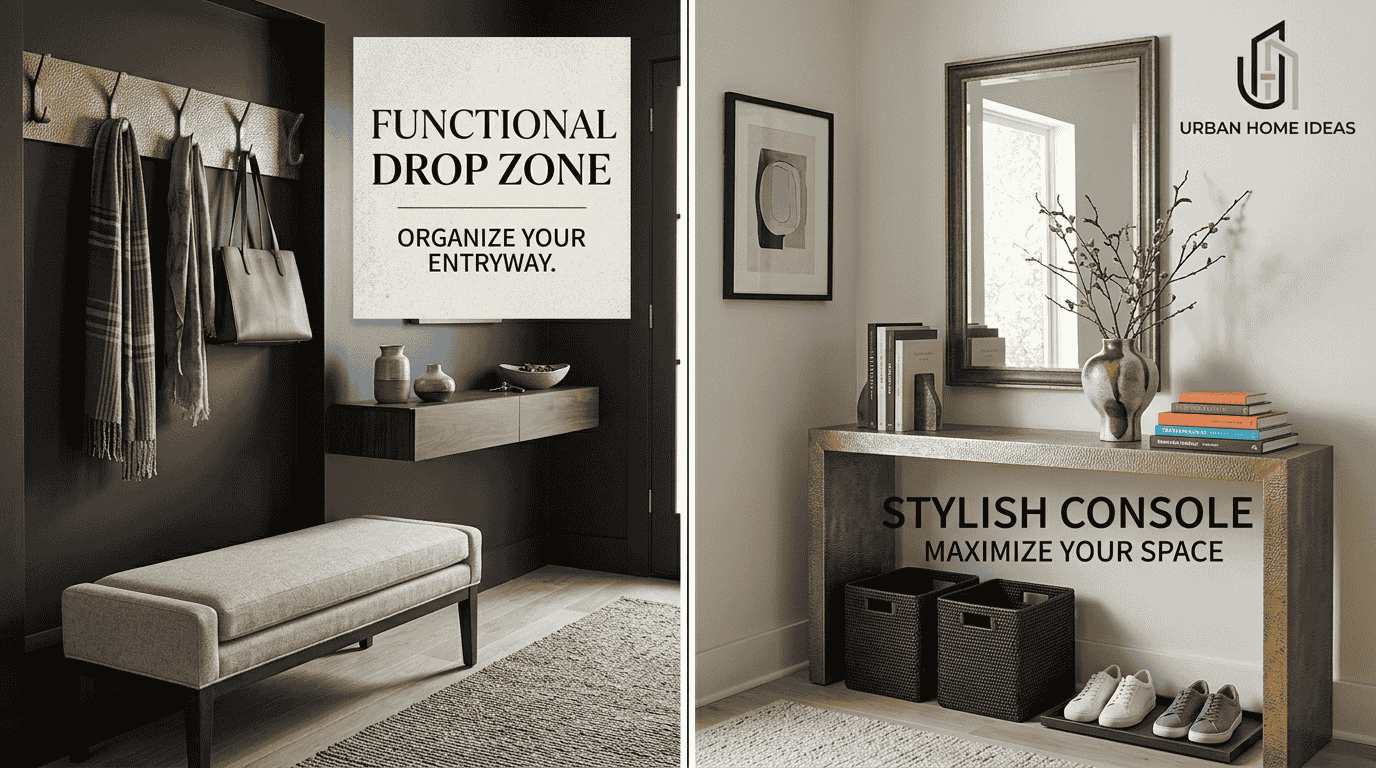
How to design a functional entryway requires understanding how an entry influences the overall feeling of a home. The front door area creates first impressions while supporting family routines through thoughtful planning and smart storage solutions. A successful entryway becomes an inviting space that combines functional space, interior design, and practical systems to create a comfortable arrival point.
- How To Design A Functional Entryway?
- Foundational Pieces For A Functional Entryway
- Identify The Needs Of The Space
- Create Smart Storage Solutions
- Add Seating For Comfort And Function
- Style Different Types Of Entryways
- Lighting In A Functional Entryway
- Add Color, Pattern, And Personality
- Styling Details That Make An Impact
- Accessories
- Creating A Welcoming First Impression
- Maximize A Small Entryway
- Create A Drop Zone
- Use Baskets, Hooks, And Hidden Storage
- Choose Furniture Based On Your Lifestyle
- Add Personal Touches And Decor
- Use Rugs To Define The Space
- Keep The Entryway Organized
- Consider Your Entryway Layout
- Make The Most Of Architectural Features
- Create A Cohesive Look With The Rest Of Your Home
- Entryway Checklist: What Every Functional Entry Needs
An entryway is not only a transition between outside and inside; it represents the personality and habits of the people living there. Different homes may have different spaces, styles, and collections, but each can benefit from a design approach that balances cozy details with everyday usability.
From a small apartment entrance to a larger grand foyer connected to a driveway, the purpose remains similar: creating a place that feels organized, welcoming, and reflective of personal taste. A thoughtful entryway design considers size, style, and lifestyle needs while creating a warm welcome.
How To Design A Functional Entryway?
When homeowners explore how to design a functional entryway, the focus should move beyond appearance and consider how the area performs every day. A successful setup combines functional, beautiful, and practical elements to support real life while maintaining real style.
Modern entryways often work as a multi-purpose area. They may serve as a decorative entrance, a formal foyer, or a family-focused entryway where belongings naturally collect. This is why many designers view the entry as a hardworking drop zone rather than an overlooked corner.
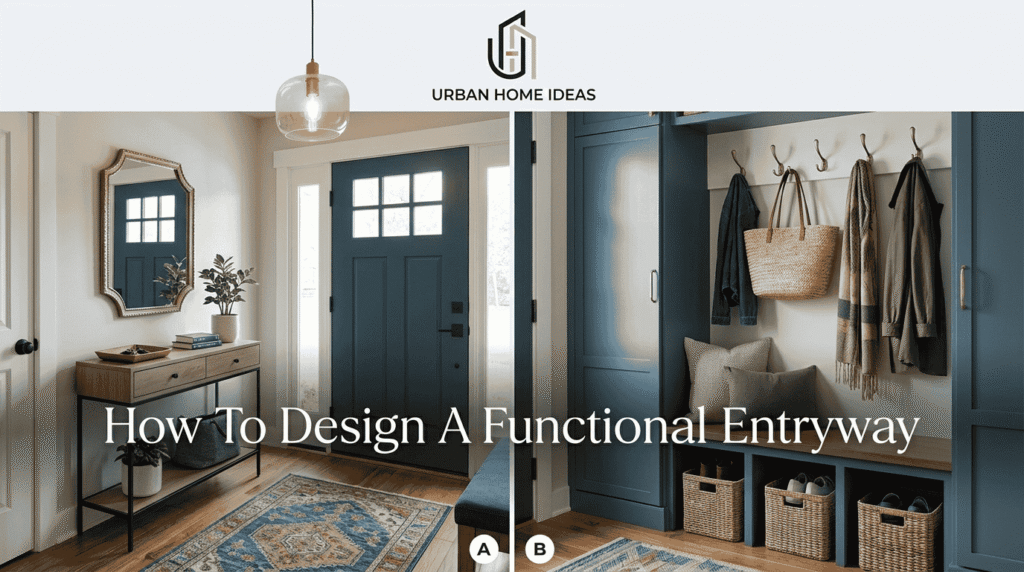
A balanced design formula includes storage, comfort, and personality. The right choices allow homecomings to feel easier, create meaningful memories, and support a household’s lifestyle with clear purpose.
Foundational Pieces For A Functional Entryway
The foundation of an effective entryway begins with furniture and storage elements that match daily needs. A console table or built-in cabinet provides structure while offering a useful surface for practical items and decorative displays.
Seating options such as benches and stools improve daily transitions, especially for households with little ones who may need help managing muddy boots before entering the rest of the home.
A well-designed foundation includes:
- Hooks for frequently used belongings
- Baskets for flexible organization
- Drawers for smaller items
- Dedicated areas for keys, leashes, hats, and bags
These elements combine furniture, organization, and storage to improve overall functionality without making the entry feel crowded.
Identify The Needs Of The Space
Before selecting furniture or décor, the household should identify what the entryway needs to handle. Some homes have a closet with light storage, while others require additional solutions for coats, shoes, and personal belongings.
A practical storage solution should provide usable storage rather than simply hiding items temporarily. Understanding the amount of available space helps determine whether a home requires a complete storage center near the front door.
The design process should consider:
- Everyday items
- Household objects
- Existing storage limitations
- Potential sources of clutter
Good planning ensures the entry meets practical needs while respecting space requirements.
Create Smart Storage Solutions
A successful entryway depends on storage that supports daily movement instead of creating more obstacles. Practical storage solutions help manage shoes, coats, and bags while keeping household objects controlled and accessible.
A well-planned storage system allows frequently used items to remain easy to reach while maintaining a clean appearance. When storage is designed around actual habits, the area feels more calm, organized, and welcoming.
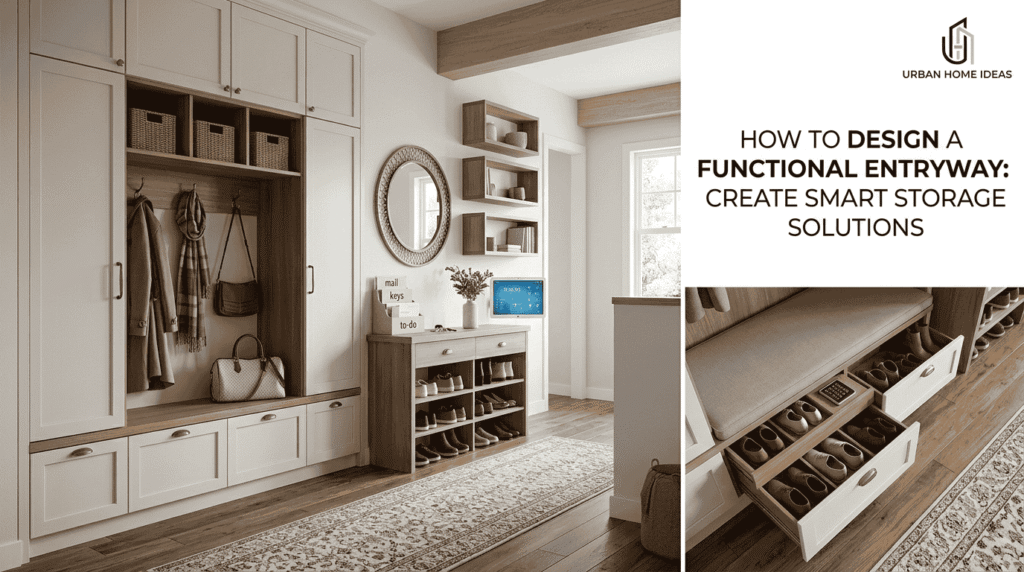
A combination of hidden and visible options can improve the overall function of the space. A closet can store seasonal belongings, while open sections make daily routines easier through hanging and organized placement.
Accessible Storage Methods
A functional setup may include:
- Tucking away items that are not used regularly
- Adding additional storage where existing solutions are limited
- Creating a sole storage center for homes without enough built-in options
- Using hooks, baskets, and drawers for quick access
Small storage details help manage keys, leashes, hats, and other daily essentials without allowing clutter to spread throughout the home.
Add Seating For Comfort And Function
Seating brings both comfort and practicality to an entryway. A bench, upholstered chair, or stool creates a dedicated seat where residents and guests can prepare before entering or leaving the home.
A comfortable greeting place creates a more welcoming experience by making it easier to handle outerwear and remove shoes. This simple addition improves movement through the area while adding a sense of hospitality.
Entryway seating also supports emotional connection. A thoughtful arrangement helps create a cozy feeling and strengthens the relationship between the home, daily routines, and personal memories.
A functional seating area supports:
- Comfortable arrival and departure
- Easier transition between outdoor and indoor spaces
- Better functionality for different household members
- A stronger feeling of welcome
Style Different Types Of Entryways
Every entrance has different characteristics, so the approach should match the available entryway types. A narrow entrance requires different decisions compared with a larger spacious mudroom or open area.
An intentional design considers the existing layout and creates smart solutions that improve usability without overwhelming the room.
For smaller areas, designers often look for stylish ways to maximize space while maintaining a clear functional area. Larger spaces may allow more furniture, storage zones, and decorative elements.
The overall goal is to combine practical planning with a strong decorative style that connects with the rest of the home.
Lighting In A Functional Entryway
Lighting influences the feeling of an entryway from the moment someone arrives. Good lighting improves the mood and strengthens the overall first impression of the space.
A layered approach creates both beauty and usefulness. Layered lighting can combine different sources to improve ambience and daily function.
Common lighting choices include:
- Table lamps for soft illumination
- Wall sconces for focused lighting
- An overhead fixture for general visibility
Beyond basic brightness, lighting can become a design element through shape, placement, and visual appeal. Features with sculptural interest add character while creating a more welcoming atmosphere.
Add Color, Pattern, And Personality
Entryways provide an opportunity to introduce design choices that may feel too bold in larger rooms. Adding color, pattern, and personality can transform ordinary entryways and hallways into visually interesting areas.
A colorful design approach may include artwork, decorative finishes, or carefully selected accents. Strong choices such as bold color can create memorable impactful designs when balanced correctly.
Decor should support the homeowner’s identity through thoughtful decorative choices rather than unnecessary additions. The entryway becomes a place to experiment with style while adding personality and visual interest.
Because people often spend only a short amount of time in these areas, they can be ideal spaces for creative expression without affecting the comfort of larger living areas.
Styling Details That Make An Impact
Small decisions often determine whether an entryway feels unfinished or complete. Thoughtful small design choices can create the biggest difference by adding character, organization, and visual balance.
The right combination of furniture, styling, and decorative details helps create a finished look without making the space feel crowded. Every item should support the purpose of the area while contributing to the overall atmosphere.
A carefully styled entryway becomes a more personal environment rather than just a passing area. Creating a personal space through intentional placement allows accessories and design features to reflect the homeowner’s preferences.
Important styling considerations include:
- Selecting items that add character
- Maintaining visual balance
- Combining practical elements with decorative features
- Creating a cohesive appearance through thoughtful arrangement
Accessories
Accessories add the final layer that connects function with personality. Carefully selected accessories can transform a simple entryway into a more expressive part of the home.
Decorative elements such as decorative objects, artwork, and mirrors add interest while supporting the overall design direction. Natural details like plants and greenery can introduce freshness and create a softer atmosphere.
Personal items often make the area feel more connected to the people living there. Displaying family photos, decorative bowls for small belongings, and seasonal accents creates a meaningful environment.
Useful accessory ideas include:
- Mirrors to enhance visual space
- Artwork to introduce personality
- Plants and greenery for natural character
- Bowls for organizing small items like keys
- Seasonal touches to refresh the appearance
These details create a strong personal style and provide the final finishing layer that completes the entryway.
Creating A Welcoming First Impression
A successful entryway creates a positive experience from the moment someone enters. A well-designed entryway combines a strong first impression with a practical approach to everyday living.
The goal is to create a warm welcome while maintaining a transitional space that feels comfortable and connected. A carefully planned area should remain uncluttered, organized, and aligned with the overall home style.
Since entryways experience frequent movement and busy demands, the design should consider people passing through while maintaining beauty and usability.
A balanced entryway focuses on:
- Keeping the area practical
- Supporting a functional lifestyle
- Maintaining a beautiful appearance
- Creating visual balance
- Achieving successful design
Maximize A Small Entryway
A limited area does not prevent an entryway from becoming effective. A small entryway can feel bigger and brighter when every element is selected with purpose.
The arrangement should focus on improving available space without creating unnecessary crowding. A narrow console table can provide a useful surface while taking up minimal room.
Smart solutions for compact entrances include:
- Wall-mounted storage to save floor area
- Hooks for frequently used belongings
- Shelves for organized display and storage
- Mirrors to reflect light and improve openness
The use of reflected light can create the illusion of a larger area, while vertical storage helps maximize unused wall space.
Careful placement of decorative items and intentional décor prevents overcrowding while keeping the entry functional and attractive.
Create A Drop Zone
A functional entrance often needs a dedicated area where daily belongings naturally arrive. A proper drop zone allows the functional entryway to support real household routines.
Creating designated spaces for items near the door helps maintain order. Instead of allowing belongings to spread throughout the home, each item has a specific location.
A practical drop zone can organize:
- Shoes
- Coats
- Bags
- Keys
- Accessories
Families may also need storage for backpacks, jackets, and pet supplies depending on their routines.
A well-planned system supports family routines, creates a hardworking area, and improves overall storage design by making daily essentials easier to manage.
Use Baskets, Hooks, And Hidden Storage
An efficient entryway depends on storage methods that support everyday movement while keeping belongings easy to access. Baskets, hooks, and hidden storage create practical solutions for managing frequently used items without affecting the appearance of the area.
Small functional details often improve the experience of the space. When collected items such as coats, bags, hats, and dog leashes have assigned locations, the entry remains easier to maintain.
Storage should balance accessibility with appearance. A well-organized system reduces clutter while improving visual cleanliness and creating a more comfortable environment.
Effective storage options include:
- Baskets for flexible organization
- Hooks for hanging daily belongings
- Hidden storage for items that should remain out of sight
- Practical arrangements that improve accessibility
These approaches provide practical solutions while strengthening overall organization throughout the entryway.
Choose Furniture Based On Your Lifestyle
Furniture selection should reflect how the household actually uses the entryway. A decorative choice alone is not enough; every piece should support movement, storage, and comfort.
A furniture selection process begins by considering lifestyle, household size, and daily habits. A console table may work well in a decorative entrance, while a bench with storage may better support busy households.
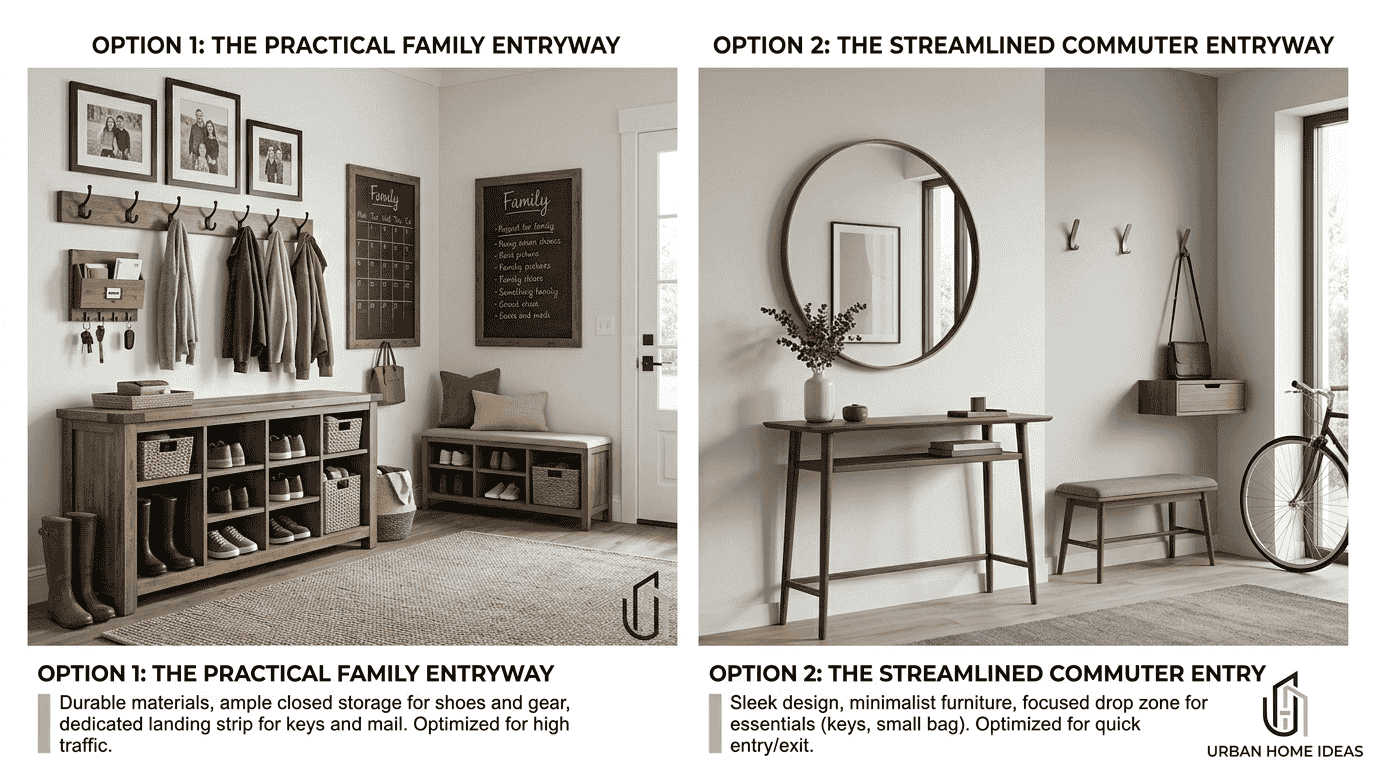
The right furniture creates a balance between appearance and function. Well-chosen pieces provide storage, improve organization, and support different activities within the space.
Important considerations include:
- The number of people using the area
- Available storage needs
- Required seating
- Whether the area serves multiple purposes
When furniture supports daily routines, the entryway becomes more efficient while maintaining a beautiful furniture arrangement and improved functionality.
Add Personal Touches And Decor
A functional entryway becomes more inviting when practical design is combined with personal expression. Personal touches allow the area to represent the homeowner while maintaining a clear purpose.
A purposeful décor approach focuses on selecting meaningful elements rather than filling every surface. Items such as artwork, mirrors, and rugs can add depth while improving the visual connection between spaces.
Natural elements like plants and greenery create warmth, while family photos and decorative bowls add personal character.
Design choices may include:
- Adding decorative objects that reflect personality
- Using family photos to create connection
- Introducing seasonal décor for variation
- Creating a stronger home extension through consistent style
These details enhance personality and help develop a welcoming atmosphere that feels connected to the rest of the home.
Use Rugs To Define The Space
An entryway rug provides both visual and practical benefits. It introduces warmth, texture, and color while helping protect flooring from daily use.
Since entrances experience frequent activity, choosing durable materials is important. A quality rug can handle dirt and everyday wear while maintaining its appearance.
In larger homes or open layouts, an entryway rug helps create a defined area and visually separates the entrance from nearby rooms.
Important rug considerations include:
- Supporting flooring protection
- Handling high traffic
- Adding softness
- Improving personality
- Creating a more welcoming feeling
A carefully selected rug supports both design and practicality without overwhelming the surrounding area.
Keep The Entryway Organized
Organization is what allows a beautiful entryway to remain functional over time. Regular maintenance ensures that storage systems continue supporting daily life.
A successful system considers item placement, clear surfaces, and accessible storage. Keeping organized storage helps maintain a calm atmosphere and prevents unnecessary buildup.
Long-term organization requires reviewing what belongs in the space and removing items that no longer serve a purpose.
Key habits include:
- Maintaining clear surfaces
- Improving clutter prevention
- Regularly reassessing items
- Supporting ongoing entryway maintenance
A consistent approach to organization keeps the entryway prepared for everyday use while preserving its intended design.
Consider Your Entryway Layout
A successful entryway begins with understanding how the area naturally functions. The entryway layout should support movement, accessibility, and daily habits rather than forcing people to adjust their routines.
Before decorating, designers often study the walking flow and natural movement of the household. The placement of furniture, storage, and decorative elements should work with the available area instead of blocking pathways.
Important layout considerations include:
- Available space and how it is used
- Item placement near arrival points
- The connection between the entry and other rooms
- Creating a smooth room transition
A thoughtful home connection improves the overall experience by allowing the entrance to feel like a natural extension of the interior. Good design flow combines appearance with functionality and creates a more practical arrangement.
Make The Most Of Architectural Features
Existing architectural details can add character and provide opportunities for better organization. Instead of ignoring these elements, homeowners can use them to enhance the entryway design.
Features such as alcoves, built-ins, and wall niches can become useful areas for display or storage. These details often provide unique solutions that improve both appearance and function.
Architectural opportunities may include:
- Creating storage within built-ins
- Using wall niches for decorative displays
- Highlighting original features
- Adding personality through existing structures
These elements bring additional character to the space while creating storage opportunities, display areas, and meaningful design details.
Create A Cohesive Look With The Rest Of Your Home
An entryway should feel connected to the rooms around it. A consistent design approach creates a smooth transition between spaces while allowing the entrance to maintain its own personality.
A cohesive look can be achieved by considering the existing home style, colors, and materials used throughout the interior.
Important design connections include:
- Matching colors with nearby rooms
- Selecting complementary materials
- Repeating important design elements
- Maintaining a consistent interior style
A balanced connection between areas improves visual comfort and creates stronger consistency throughout the home. The result is better visual harmony and a more complete design experience.
Entryway Checklist: What Every Functional Entry Needs
A well-planned entryway combines practical features with personal style. Every household may have different requirements, but certain elements help create a more effective and organized entrance.
Essential elements include:
- Storage solution for daily belongings
- Space for coats
- Storage for bags
- A dedicated shoe area
- Comfortable seating
- Proper lighting
- A useful surface for everyday items
- Decorative touches that support personality
- Durable materials for regular use
- Systems designed for high-traffic use
- Effective organization systems
- Features that match individual lifestyle needs
When these elements work together, the entryway becomes a practical and welcoming part of the home that supports daily routines while maintaining thoughtful design.