

How to clean stone countertops properly requires gentle cleaning solutions, warm water, and suitable cleaning products based on different stone materials. This approach protects natural stone countertops, maintains their beauty and durability, and prevents damage from acidic cleaners or harsh products.
- How To Clean Stone Countertops?
- Understand The Stone Surface Before Cleaning
- Use Gentle Cleaning Methods
- Safe Cleaning Products For Stone Countertops
- How To Clean Different Types Of Stone Countertops
- Match Cleaning Methods With Stone Characteristics
- Consider Protection And Maintenance Needs
- Granite Countertops
- Cleaning Sealed Granite Surfaces
- Protecting Granite Appearance
- Understanding Marble Sensitivity
- Safe Marble Cleaning Practices
- Cleaning Quartz Surfaces Safely
- Protecting Quartz Material
- Cleaning Sealed Concrete Surfaces
- Preventing Concrete Surface Damage
- Understanding Soapstone Characteristics
- Soapstone Cleaning And Maintenance
- Cleaning Limestone Surfaces Safely
- Protecting Limestone Appearance
- How To Remove Stains From Stone Countertops
- Understanding Different Stone Stains
- Using A Poultice Treatment For Stain Removal
- Protecting Stone Surfaces During Stain Removal
- What Should You Avoid When Cleaning Stone Countertops?
- Sealing Stone Countertops
- Quartzite Countertops
- Can You Use Vinegar, Bleach, or Alcohol on Stone Countertops?
- Understanding Chemical Effects On Stone Surfaces
- Why Vinegar And Bleach Should Be Avoided
- Using Alcohol For Safe Disinfecting
- Maintaining Safe Stone Cleaning Practices
- Dried Food And Sticky Residue Removal
- Water And Mineral Deposit Removal
- Understanding Mineral Buildup On Stone
- Safe Methods For Removing Water Deposits
- Preventing Future Water Marks
- When To Contact A Stone Care Professional?
Stone countertops add a premium look to kitchens because materials like granite, marble, quartz, limestone, and soapstone offer different textures and patterns. However, each surface has its own needs, including proper cleaners, finishes, and maintenance routines.
How To Clean Stone Countertops?
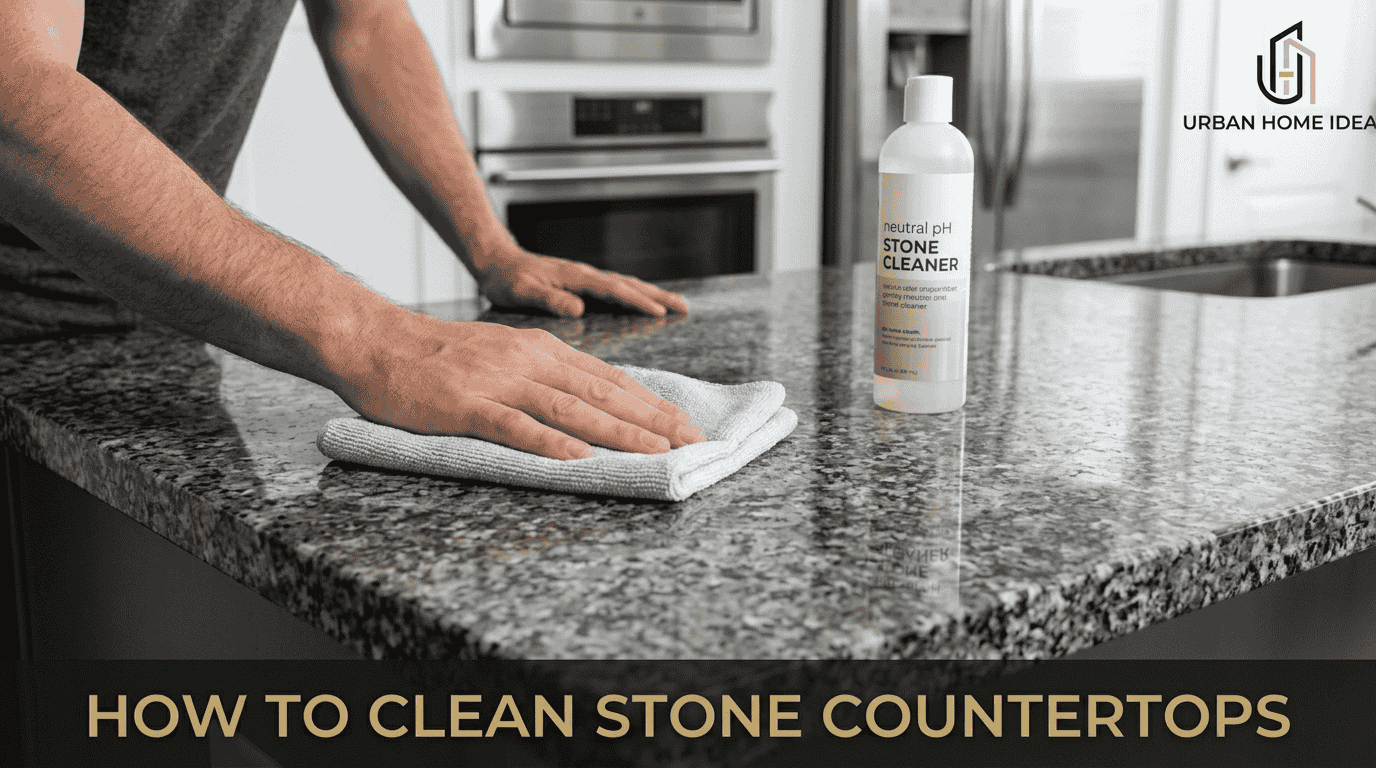
How to clean stone countertops safely starts with using mild liquid dish soap, warm water, and a soft microfiber cloth to remove dirt without harming the surface. A gentle cleaning routine protects stone surfaces, including granite, marble, and quartz, while maintaining surface appearance, preventing stains, and supporting long-term countertop care.
Understand The Stone Surface Before Cleaning
Before starting any cleaning process, identifying the countertop material makes a major difference. Some surfaces absorb liquids quickly, while others have stronger resistance against stains.
- Natural stone surfaces may require sealing because of their porous structure.
- Engineered stone often includes additional materials that affect cleaning requirements.
- Granite countertops usually need regular protection to maintain their finish.
- Quartz countertops require attention to their resin system.
- Marble countertops need extra care because of their sensitivity.
Following manufacturer recommendations ensures safer maintenance. A suitable cleaning method improves surface protection and supports long-term countertop maintenance without affecting the original appearance.
Use Gentle Cleaning Methods
A simple mixture of mild soap and water is often enough for everyday cleaning. Strong chemicals may create unwanted reactions with some stone surfaces, causing discoloration or surface damage.
The best practice is to:
- Remove loose debris before wiping.
- Clean spills quickly to avoid stains.
- Use soft materials instead of abrasive tools.
- Dry the surface after cleaning.
- Choose safe methods according to the stone properties.
Proper care keeps stone countertops attractive while reducing the need for expensive repairs or restoration.
Daily Cleaning Routine For Stone Countertops
A consistent daily cleaning routine helps protect the countertop from buildup and keeps the surface looking fresh. Regular care is one of the easiest ways to maintain stone quality without relying on aggressive treatments.
For everyday maintenance, a small amount of liquid dish detergent mixed with warm water creates a safe cleaning solution. This combination removes common kitchen messes such as food residue, fresh spills, and light stains while preserving the surface finish.
Simple Daily Care Practices
- Wipe the countertop after food preparation.
- Remove spills before they become permanent stains.
- Use gentle ingredients instead of harsh chemicals.
- Avoid abrasive products that can affect polished surfaces.
- Follow a regular cleaning schedule.
Different countertops need different levels of attention. Granite, marble, and other natural stone surfaces can be sensitive to acidic cleaners, while some engineered quartz surfaces require care because of their resin composition.
A proper cleaning frequency supports countertop durability and helps maintain the original appearance. Regular care also provides protective maintenance by reducing surface buildup and preventing avoidable damage.
Safe Cleaning Products For Stone Countertops
Choosing the right safe cleaning products plays an important role in protecting stone surfaces. Different stone countertop cleaners are designed for specific materials, and using the wrong product can affect the finish, coating, or overall appearance. Mild solutions are usually preferred because they remove dirt without creating harmful chemical reactions.
For everyday care, options like mild soap, liquid dish detergent, and water can work effectively when used correctly. However, the ideal choice depends on whether the surface is natural stone cleaner compatible or requires an engineered quartz cleaner, granite cleaner, marble cleaner, or concrete cleaner.
Choose Products According To Stone Type
Every countertop material has different needs. A product that works well on one surface may not be suitable for another.
- Granite cleaner should support the protective layer and avoid damaging the sealed surface.
- Marble cleaner should be gentle because marble can react with certain substances.
- Quartz cleaner should be compatible with the resin system.
- Concrete cleaner should protect the sealer and surface finish.
Before using any cleaner, checking manufacturer instructions helps avoid problems. Professionals often recommend avoiding products with high chemical concentration because they may weaken the stone structure over time.
Avoid Harmful Cleaning Ingredients
Some common household products can create issues on stone countertops. Substances such as vinegar, bleach, and alcohol may cause problems depending on the stone type and protective coating.
Avoid using:
- Acidic solutions that can affect sensitive stone.
- Abrasive cleaners that may create scratches.
- Harsh chemicals that can damage finishes.
- Unapproved products that are not designed for countertop materials.
The correct cleaning ingredients improve cleaning safety and help maintain the original condition of the surface. A careful selection of maintenance products protects the countertop while extending its usable life.
Protect The Stone Finish
The condition of the stone finish and protective coating determines how well the countertop handles daily use. A suitable cleaner should remove residue while preserving the protective layer.
Using appropriate products regularly supports better maintenance and reduces the risk of surface damage. Professional stone care focuses on balance: effective cleaning without unnecessary exposure to damaging chemicals.
How To Clean Different Types Of Stone Countertops
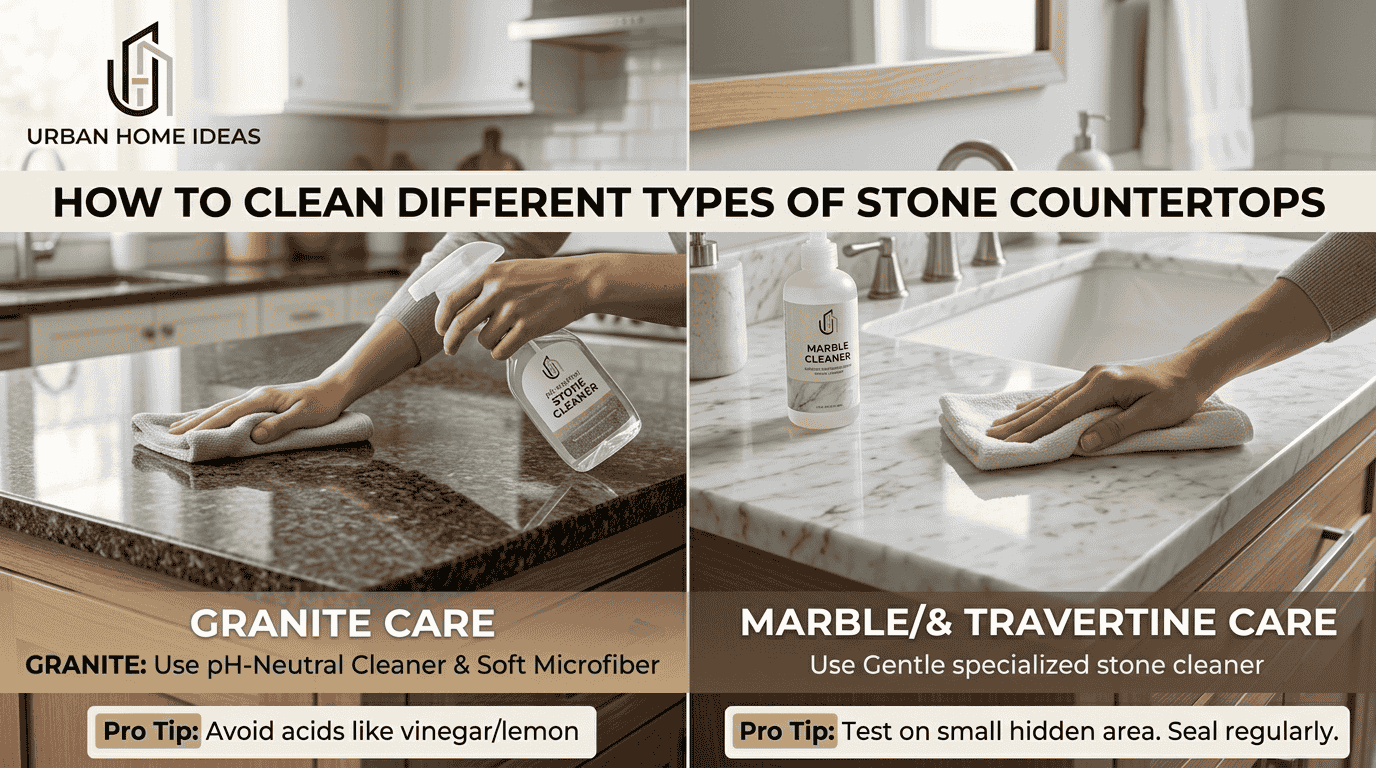
Understanding different stone countertop types makes cleaning easier because every material has its own characteristics. Natural stone and engineered stone require different care methods based on their structure, porosity, and resistance level.
Materials such as granite, marble, quartz, quartzite, concrete, soapstone, and limestone have different stone properties that influence cleaning requirements, sealing needs, and suitable products.
Match Cleaning Methods With Stone Characteristics
Each countertop material requires a specific approach:
- Porous surfaces may need regular sealing to reduce liquid absorption.
- Nonporous surfaces usually resist stains but still require proper maintenance.
- Softer stones need extra protection against scratches.
- Durable materials still require safe cleaning techniques.
Consider Protection And Maintenance Needs
The right cleaning method depends on factors like:
- Stain resistance
- Heat resistance
- Scratch resistance
- Surface protection
- Existing sealing condition
Choosing suitable products according to the countertop material helps preserve appearance and prevents unnecessary damage. Professional care focuses on maintaining the natural qualities of each stone instead of applying one cleaning method to every surface.
Granite Countertops
Granite countertops are among the most popular choices because natural granite offers a combination of strength, beauty, and long-term performance. This durable stone is widely used as a popular countertop material in kitchens because it provides excellent resistance when properly maintained.
Although granite is strong, it still requires proper care. Sealed granite has better protection because a penetrating sealer reduces liquid absorption and helps prevent stains. Since granite is a type of porous stone, regular maintenance supports better surface protection and keeps the original appearance intact.
Cleaning Sealed Granite Surfaces
A simple cleaning routine works well for most granite surfaces. Experts usually recommend:
- Using gentle cleaning products designed for stone.
- Removing spills quickly before absorption occurs.
- Avoiding harsh chemicals that affect the finish.
- Using mild cleaners with soft materials.
Proper natural stone care helps preserve the granite slab and maintain its polished appearance. The level of care may depend on the absorption level and the condition of the countertop finish.
Protecting Granite Appearance
Granite can handle everyday kitchen activities, but incorrect cleaning methods may reduce its shine. Strong chemicals and unsuitable products can create problems because of the stone’s chemical sensitivity.
Maintaining polished granite requires attention to:
- Regular cleaning schedules.
- Suitable maintenance routine.
- Safe cleaning products.
- Proper sealing condition.
A well-maintained granite surface continues to provide durability and visual appeal. Consistent stone maintenance protects the countertop while reducing the chance of stains, spills, and surface damage.
Marble Countertops
Marble countertops are known for their elegant appearance and natural patterns, making them a premium choice for many kitchens and bathrooms. However, natural marble requires careful handling because its structure contains calcium-based minerals, which make the surface more sensitive to certain substances.
Unlike harder stones, marble has a porous surface that can absorb liquids if not properly protected. This sensitive stone needs gentle cleaning methods because scratches, stains, and etching can affect the polished finish.
Understanding Marble Sensitivity
Marble can react with acidic substances found in common household items. Exposure to:
- Lemon juice
- Vinegar
- Acidic foods
- Acidic cleaners
may cause chemical damage and create dull spots on the surface.
These reactions often appear as marks where the polished surface loses its shine. Proper marble care focuses on preventing these issues through safe products and regular maintenance.
Safe Marble Cleaning Practices
A suitable cleaning routine includes:
- Using gentle cleaning products.
- Avoiding abrasive materials.
- Cleaning spills quickly.
- Maintaining proper sealing.
Regular surface protection helps preserve the natural finish and reduces damage risks. Because marble has unique mineral composition, cleaning methods should always match the characteristics of the stone.
Professional stone care experts recommend using approved products that support long-term countertop maintenance while protecting the natural beauty of marble surfaces.
Quartz Countertops
Quartz countertops are a common choice for modern kitchens because engineered stone combines quartz crystals, resin, and pigments to create a durable and attractive surface. Unlike many natural stones, quartz has a nonporous surface, which helps reduce liquid absorption and improves everyday maintenance.
Although quartz offers excellent performance, it still requires proper care. The resin system within quartz material can react negatively to certain substances, especially harsh chemicals and unsuitable cleaning products. Using approved methods helps protect the polished finish and maintain long-term countertop quality.
Cleaning Quartz Surfaces Safely
For regular maintenance, homeowners should focus on simple cleaning habits:
- Remove spills quickly before residue develops.
- Use manufacturer-approved cleaners for daily care.
- Avoid products that contain aggressive chemicals.
- Use soft materials to prevent surface marks.
- Clean leftover residue without damaging the finish.
The strong stain resistance of quartz makes it easier to maintain compared with some porous stones. However, the surface still requires attention because improper products may affect its appearance.
Protecting Quartz Material
Quartz does not usually require sealing because of its nonporous structure. However, it is important to protect the surface from situations that may cause heat damage or chemical exposure.
Safe quartz care includes:
- Following cleaning product recommendations.
- Avoiding extreme heat directly on the countertop.
- Maintaining the original polished finish.
- Using safe cleaning methods for engineered surfaces.
Proper surface maintenance improves the lifespan of quartz while preserving its appearance. A balanced routine supports countertop durability, protects the engineered surface, and keeps the kitchen countertop looking clean and attractive.
Concrete Countertops
Concrete countertops provide a unique appearance because they combine modern style with strong structural performance. Unlike ordinary concrete surfaces, kitchen versions are usually protected with a sealed concrete layer that improves resistance against stains, moisture, and daily use.
The condition of the protective sealer plays an important role in maintaining the surface. When properly maintained, concrete can offer good acid resistance, heat resistance, and scratch resistance while keeping its original finish.
Cleaning Sealed Concrete Surfaces
A proper cleaning routine helps protect the concrete surface and prevents unnecessary wear. Recommended practices include:
- Using gentle cleaning products.
- Removing spills quickly.
- Avoiding chemical exposure.
- Checking the condition of the sealer regularly.
A worn sealer may reduce protection and allow stains or moisture to affect the countertop. Regular care helps maintain the protective layer and supports long-term performance.
Preventing Concrete Surface Damage
Concrete countertops require attention because damage prevention depends on consistent maintenance. Harsh cleaners and incorrect methods may affect the finish or create visible marks.
Important maintenance factors include:
- Sealing condition.
- Surface protection.
- Cleaning routine.
- Countertop finish.
- Maintenance requirements.
With proper care, concrete remains a durable material within the stone countertop category. Safe cleaning practices help protect its appearance while extending the life of the surface.
Soapstone Countertops
Soapstone countertops are a unique choice because nonporous stone provides natural resistance against moisture and stains. This softer stone is made from a natural material that offers good performance in kitchens while creating a smooth and traditional appearance.
Unlike many other countertop materials, soapstone has strong heat resistance and does not easily absorb liquids. Its natural properties provide good stain resistance, but the surface can have some scratch sensitivity because it is softer compared with granite and quartz.
Understanding Soapstone Characteristics
Soapstone has a distinct structure that affects its maintenance needs. Important features include:
- Smooth countertop surface.
- Natural material composition.
- Resistance against heat.
- Lower risk of permanent staining.
- Softer texture compared with harder stones.
Because of these characteristics, soapstone requires a balanced approach. Gentle cleaning helps maintain the surface while protecting its natural appearance.
Soapstone Cleaning And Maintenance
A simple cleaning method is usually enough for daily care. Using mild products and avoiding aggressive chemicals helps preserve the finish.
Recommended practices include:
- Using gentle cleaning methods.
- Removing spills quickly.
- Avoiding abrasive materials.
- Following a regular maintenance routine.
- Applying food-grade mineral oil when desired.
Many homeowners use mineral oil as a surface treatment to create a more even, darkened appearance and enhance the natural color. This process improves the surface treatment without changing the stone structure.

Proper stone care keeps the kitchen countertop attractive and supports long-term durability. Regular cleaning and protective maintenance help maintain the natural beauty of soapstone while preserving the countertop appearance.
Limestone Countertops
Limestone countertops provide a natural and elegant look because natural stone offers a soft appearance similar to marble. This material is valued for its warm texture, but its porous material structure requires careful cleaning and regular protection.
Because limestone has a softer composition, it can be affected by stains, scratches, and discoloration when exposed to unsuitable products. Proper surface maintenance helps preserve the finish and reduces the risk of damage.
Cleaning Limestone Surfaces Safely
Limestone requires gentle methods because harsh products may affect the surface. Recommended practices include:
- Using gentle cleaners designed for stone.
- Avoiding acidic substances.
- Cleaning spills quickly.
- Maintaining proper sealing.
- Using safe cleaning methods.
The stone’s mineral composition influences how it reacts to cleaning products. Since limestone is a sensitive surface, selecting suitable solutions is important for long-term protection.
Protecting Limestone Appearance
Regular maintenance supports the natural beauty of limestone countertops. Proper sealing reduces absorption and improves resistance against stains.
Important care factors include:
- Countertop care
- Cleaning routine
- Natural stone maintenance
- Damage prevention
- Countertop finish
With consistent attention, limestone can maintain its appearance and remain a durable option for kitchen surfaces. Safe cleaning practices protect the material while preserving its natural characteristics.
How To Remove Stains From Stone Countertops
How to clean stone countertops when dealing with marks and buildup requires identifying the stain first and selecting the right treatment. A natural stone countertop can often be restored by using a careful stain removal process with a suitable DIY poultice paste that helps pull stains from the porous material while protecting the countertop surface.
Stone stains are not all created the same. A dark mark from cooking oil behaves differently from mineral deposits or food-related spills. Professionals usually begin with stain identification because understanding the stain type helps determine the safest approach without harming the stone.
Understanding Different Stone Stains
A proper cleaning process starts by examining what caused the discoloration. Common problems found on stone surfaces include:
- Food stains from sauces, beverages, and kitchen ingredients.
- Oil stains caused by cooking oils and greasy substances.
- Mineral deposits left behind after repeated water exposure.
- Rust stains created by metal contact.
- Dried residue from old spills and buildup.
Each stain requires a different method because the structure of the stone affects how deeply the mark can penetrate. A sealed surface may resist absorption better, while untreated stone may require additional care.
Using A Poultice Treatment For Stain Removal
A DIY poultice paste is commonly used for certain stains because it works as an absorbent treatment. The paste draws unwanted substances from the stone instead of aggressively scrubbing the surface.
A careful process usually involves:
- Preparing the poultice according to the stain condition.
- Applying it over the affected area.
- Allowing time for stain extraction.
- Removing the dried material gently.
- Cleaning the remaining residue.
This approach supports safer stain extraction because it focuses on removing the problem from the stone instead of damaging the finish.
Protecting Stone Surfaces During Stain Removal
The goal of stain treatment is not only removing marks but also maintaining long-term protection. Excessive scrubbing or unsuitable chemicals may create additional issues.
Experts recommend focusing on:
- Gentle methods for delicate stone materials.
- Safe cleaning solutions designed for countertops.
- Proper countertop care after treatment.
- Regular countertop maintenance to reduce future stains.
- Damage prevention through correct cleaning techniques.
The right protective treatment helps maintain the appearance and strength of stone surfaces. Whether dealing with granite, marble, or another stone material, careful stain removal preserves the countertop while supporting long-term surface protection.
What Should You Avoid When Cleaning Stone Countertops?
Avoiding common mistakes is just as important as choosing the correct cleaning method. Many countertop problems occur because homeowners use unsuitable products or apply incorrect techniques. Understanding what to avoid helps protect the stone surface and maintain its original appearance.
Avoid Harmful Cleaning Products
Some substances can create serious issues for stone countertops. Acidic cleaners, harsh chemicals, and abrasive cleaners may damage the finish or create permanent marks.
Products to avoid include:
- Vinegar on sensitive stone surfaces.
- Bleach without professional approval.
- Strong disinfectants not designed for stone.
- Excessively powerful cleaners.
- Abrasive tools that create scratches.
These products may cause chemical reactions, surface damage, or discoloration depending on the stone type and countertop material.
Protect The Sealed Surface
A protective layer helps defend the countertop against stains and moisture. Using incorrect products can weaken the protective sealer and affect the polished finish.
Safe maintenance focuses on:
- Using approved cleaning products.
- Following manufacturer recommendations.
- Protecting the surface care routine.
- Preventing scratches and etching.
- Maintaining countertop protection.
Incorrect cleaning methods often create problems that are difficult to reverse. A careful approach keeps stone surfaces attractive while reducing repair needs.
Sealing Stone Countertops
Stone countertop sealing is an important part of long-term protection because it helps reduce liquid absorption and improves resistance against stains. Many natural stone surfaces contain small pores that allow moisture and substances to enter. Applying a suitable penetrating sealer creates a protective barrier that supports better countertop protection.
Sealing does not replace regular cleaning, but it works together with proper maintenance. A protected surface is easier to maintain because it provides additional defense against spills, stains, and daily kitchen activities.
Why Stone Countertops Need Sealing
Different stones have different absorption levels. Materials with more porous structures usually require more frequent attention.
Sealing helps with:
- Improving stain resistance.
- Reducing liquid absorption.
- Protecting porous materials.
- Supporting regular cleaning.
- Maintaining surface durability.
Granite sealing and marble sealing are common practices because these stones can benefit from additional protection. However, the correct timing depends on the stone condition, usage level, and existing sealant quality.
Checking Sealer Condition
A countertop may need resealing when the protective layer becomes weak. Signs of reduced protection can include:
- Water absorbing quickly into the surface.
- Increased staining problems.
- Changes in surface appearance.
- Reduced protection against spills.
Professional assessment helps determine the correct sealing schedule. Applying too much sealer or using unsuitable products may affect the surface finish.
Maintaining A Sealed Countertop
A good maintenance routine combines sealing with proper cleaning habits. Using suitable products and avoiding harsh chemicals helps preserve the protective coating.
Important care factors include:
- Regular cleaning.
- Safe cleaning requirements.
- Proper stone maintenance.
- Professional sealing when required.
- Damage prevention practices.
A well-maintained sealed surface improves the lifespan of stone countertops and keeps the material looking attractive. Proper protection supports long-term performance while reducing the need for restoration.
Quartzite Countertops
Quartzite countertops are made from natural stone and are valued for their strength, unique patterns, and durability. Although the material is sometimes compared with engineered quartz, quartzite has different characteristics because it is formed naturally and contains compressed quartz crystals.
This countertop material offers excellent performance, but it still requires proper care. Like many natural surfaces, quartzite may have different absorption levels depending on the slab structure and requires suitable protection.
Understanding Quartzite Properties
Quartzite provides strong resistance against daily kitchen challenges, including:
- High scratch resistance.
- Good heat resistance.
- Strong stain resistance when protected.
- Long-lasting surface durability.
Because quartzite is a natural slab, each piece can have different patterns and characteristics. These differences influence cleaning requirements and maintenance methods.
Cleaning And Protecting Quartzite
Proper quartzite care focuses on gentle cleaning and regular protection. Recommended practices include:
- Using gentle cleaners.
- Choosing suitable cleaning products.
- Following manufacturer recommendations.
- Maintaining proper sealing requirements.
- Protecting the countertop finish.
Unlike some engineered surfaces, quartzite benefits from natural stone cleaning methods. Regular maintenance helps preserve the appearance while protecting the surface from stains and scratches.
A balanced care routine improves stone maintenance and allows quartzite countertops to maintain their natural beauty for many years.
Can You Use Vinegar, Bleach, or Alcohol on Stone Countertops?
How to clean stone countertops safely requires understanding how different cleaning chemicals interact with stone surfaces. Vinegar and bleach are generally avoided because their properties may affect sensitive materials, while diluted isopropyl alcohol can be suitable for disinfecting when used correctly. Proper product selection protects natural stone, engineered stone, and the overall countertop finish.
Many homeowners assume stronger chemicals provide better results, but stone care specialists often recommend a more controlled approach. The reaction between a cleaner and a countertop depends on the countertop materials, existing protection, and the type of surface being treated.
Understanding Chemical Effects On Stone Surfaces
Different stones respond differently to cleaning products. A solution that works on one material may create problems on another because of variations in composition and finish.
Important factors include:
- Stone sensitivity to certain substances.
- Possible surface reaction after chemical exposure.
- Existing protective layers on the countertop.
- The concentration level of the cleaner being used.
Natural stone surfaces, including granite surfaces and marble surfaces, require careful handling because some chemicals can affect their appearance. Engineered stone may also need specific products depending on its composition and protective coating.
Why Vinegar And Bleach Should Be Avoided
Although vinegar and bleach are common household cleaners, they are not always appropriate for stone countertops. Vinegar contains acidic properties that may react with certain stone materials, while bleach can create issues when used incorrectly.
Potential concerns include:
- Damage to the stone finish.
- Changes in polished surfaces.
- Reduced surface protection.
- Unwanted chemical reactions.
Using acidic substances and harsh chemicals without guidance may increase the risk of damage. Following manufacturer instructions helps prevent mistakes and supports safer countertop maintenance.
Using Alcohol For Safe Disinfecting
When properly diluted, alcohol can be useful for cleaning certain stone surfaces. Diluted isopropyl alcohol is often preferred when a safe disinfectant is needed because it can help remove germs without aggressive chemical exposure.
Safe usage includes:
- Using the correct cleaner concentration.
- Following recommended cleaning procedures.
- Avoiding excessive chemical exposure.
- Checking compatibility with the stone type.
A careful approach supports chemical safety and keeps cleaning effective. Choosing suitable cleaning products and following professional cleaning recommendations helps maintain long-term countertop care.
Maintaining Safe Stone Cleaning Practices
The goal of cleaning is not only removing dirt but also preserving the surface. Proper surface protection, regular care, and suitable disinfecting methods reduce future problems.
A reliable routine includes:
- Selecting a safe disinfectant when required.
- Using approved cleaning products.
- Protecting granite, marble, and quartz surfaces.
- Preventing unnecessary damage through correct maintenance.
Understanding chemical compatibility allows homeowners to clean confidently while preserving the natural beauty and performance of stone countertops.
Dried Food And Sticky Residue Removal
Removing dried food and sticky residue from stone countertops requires patience and gentle techniques. Hard scraping or aggressive tools may create unwanted marks, especially on polished surfaces. A careful approach protects the countertop while removing stubborn buildup.
The safest method usually involves softening the residue first. A warm damp cloth can help loosen hardened material before wiping the surface.
Safe Residue Removal Method
A proper cleaning process includes:
- Place a soft cloth with warm water over the affected area.
- Allow the residue to soften naturally.
- Remove buildup using gentle movements.
- Avoid sharp or abrasive tools.
- Clean the surface after removal.
Using non-abrasive tools is important because metal scrubbers and rough materials can create surface scratches. These scratches may affect the polished appearance and reduce the quality of the countertop finish.
Preventing Future Buildup
Regular cleaning reduces the chance of stubborn residue developing. Removing spills quickly and maintaining a consistent routine keeps the surface easier to manage.
Good practices include:
- Cleaning food spills immediately.
- Following a regular cleaning routine.
- Using safe tools.
- Protecting the surface finish.
- Maintaining proper stone care.
For polished stone, gentle handling is especially important because aggressive cleaning techniques may damage the shine. A simple approach using appropriate materials supports long-term countertop protection.
Water And Mineral Deposit Removal
Water deposits and mineral deposits are common issues that appear on stone countertops, especially around sinks, faucets, and areas exposed to frequent moisture. These marks often appear as white cloudy marks, water spots, or rough patches caused by mineral buildup from repeated water exposure.
Removing these deposits requires careful handling because some stones are sensitive to strong solutions. Using aggressive products may create chemical damage, especially on materials like marble and other natural stone surfaces.
Understanding Mineral Buildup On Stone
Mineral deposits usually develop when water evaporates and leaves behind dissolved minerals. Common signs include:
- White marks around faucet areas.
- Cloudy patches on stone surfaces.
- Rough texture caused by mineral buildup.
- Visible water spots after drying.
The type of stone determines the safest removal method. Natural stone sensitivity means that acidic products should be avoided because they can damage certain finishes.
Safe Methods For Removing Water Deposits
A gentle approach helps remove deposits while protecting the countertop. Recommended steps include:
- Use a soft cloth with suitable cleaning methods.
- Apply gentle solutions designed for stone care.
- Avoid harsh chemicals and acidic products.
- Clean the area regularly to prevent buildup.
- Dry wet areas after use.
Although some products are marketed as powerful solutions, acidic limescale removers may harm sensitive materials. For example, they can cause marble damage by affecting the surface finish and mineral structure.
Preventing Future Water Marks
Regular maintenance reduces the chance of mineral buildup returning. Simple habits can improve countertop protection:
- Wipe faucet areas regularly.
- Remove standing water quickly.
- Follow safe cleaning practices.
- Use suitable cleaning products.
- Maintain proper stone care.
A careful cleaning routine protects the surface while preserving the natural appearance of the countertop. Proper deposit removal should always focus on removing buildup without affecting the stone finish or creating unnecessary damage.
When To Contact A Stone Care Professional?
Some countertop problems cannot be solved with regular cleaning methods. When stains become deep, surfaces lose their original appearance, or damage occurs, contacting a stone care professional can prevent further issues.
Professional services are useful when homeowners face problems such as deep stains, dull surface appearance, rough texture, or unknown countertop materials. Experts can identify the stone type and recommend suitable solutions.
Signs Professional Help Is Needed
A specialist should be considered when:
- Cleaning attempts do not remove stubborn stains.
- The surface becomes dull despite regular care.
- Countertop edges show damage.
- Seams appear damaged or uneven.
- The stone material is unknown.
Professional assessment helps determine the correct treatment without risking additional damage. Specialists use proper techniques for countertop restoration, repair, and maintenance.
Professional Stone Restoration Services
Experts can provide specialized services including:
- Surface repair
- Stone assessment
- Expert maintenance
- Specialized treatment
- Sealing service
- Stain removal
- Damage evaluation
Professional care is especially valuable for natural stone care because each material requires specific handling. A specialist understands how different stones react to cleaning products, sealing methods, and restoration processes.
Protecting Your Countertop Investment
Regular professional attention can extend the life of stone countertops. When cleaning methods fail or damage appears, expert guidance helps restore the surface safely.
A proper restoration process improves appearance while supporting long-term countertop protection. Professional advice ensures that the right solutions are applied without causing additional harm.