

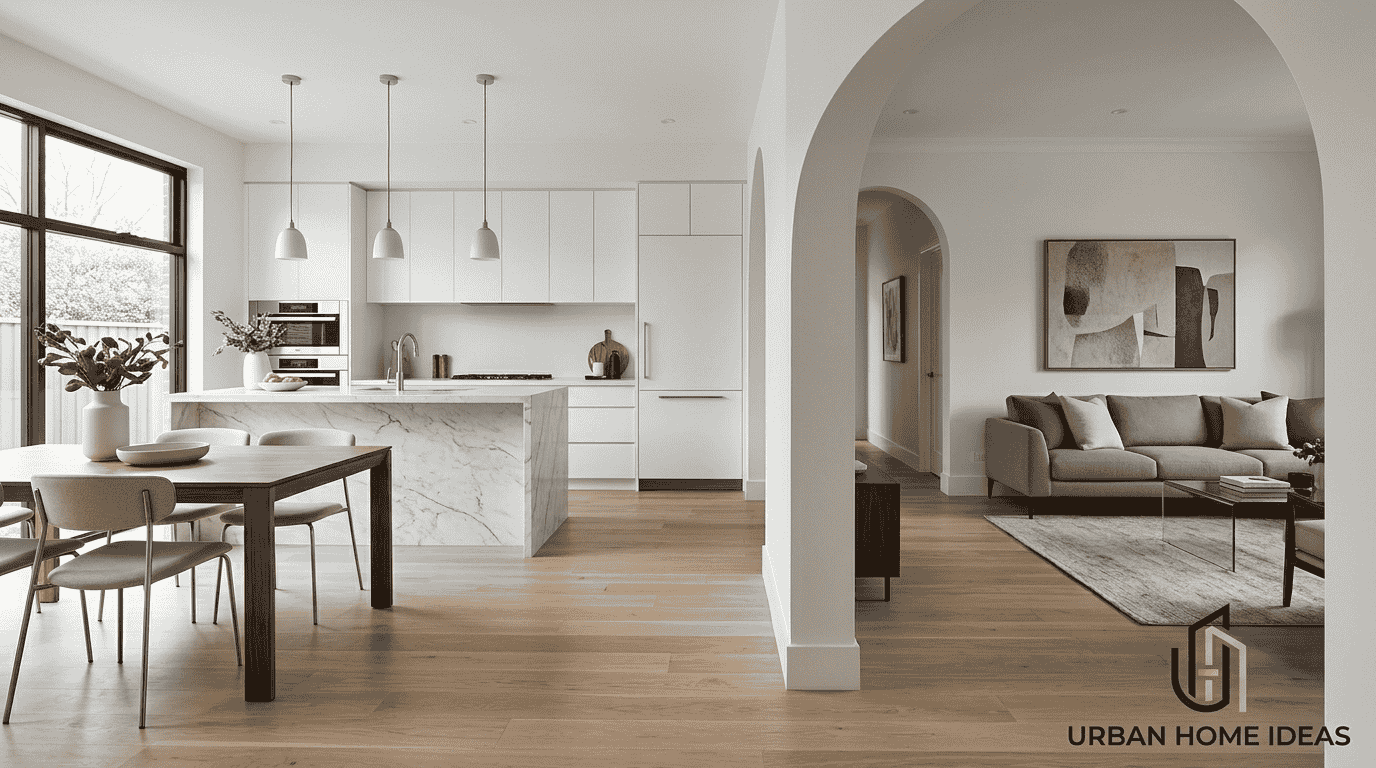
Creating seamless interiors requires a thoughtful approach toward interior design where every area feels connected. A well-planned home design uses visual flow, balanced elements, and purposeful arrangements to create comfortable environments that support modern lifestyles.
- How to Design Seamless Interiors That Feel Connected and Balanced
- Use A Consistent Colour Palette
- Plan Your Layout For Better Movement And Function
- Repeat Materials And Design Elements
- Create Harmony Through Furniture Selection
- Use Lighting To Connect Spaces
- Balance Function With Aesthetic Appeal
- Start With A Clear Vision
- Design For Quality Of Life
- Add Texture For Depth And Warmth
- Keep Flooring Consistent
- Use Styling Details To Complete The Space
- Consider Feng Shui And Natural Flow
- Final Thoughts
The foundation of successful interiors comes from combining connected spaces, harmonious home concepts, and practical decisions. Through careful selection of colours, materials, textures, and layout, designers create spaces that feel natural, organised, and visually appealing.
Every project reflects unique preferences through personalised interiors, creative design direction, and functional solutions. Whether designing large homes, apartments, condos, or small spaces, proper planning creates a unified style with lasting comfort and beauty.
How to Design Seamless Interiors That Feel Connected and Balanced
Designing seamless interiors begins with understanding how interior design choices influence the relationship between rooms. A strong design flow connects visual connection, connected spaces, and balanced arrangements to create a home environment that feels intentional.
Professional designers focus on harmony, balance, and comfort while developing practical solutions for everyday living. Through functionality, thoughtful planning, and careful selection of furniture lighting and materials, spaces achieve a stylish and cohesive appearance.
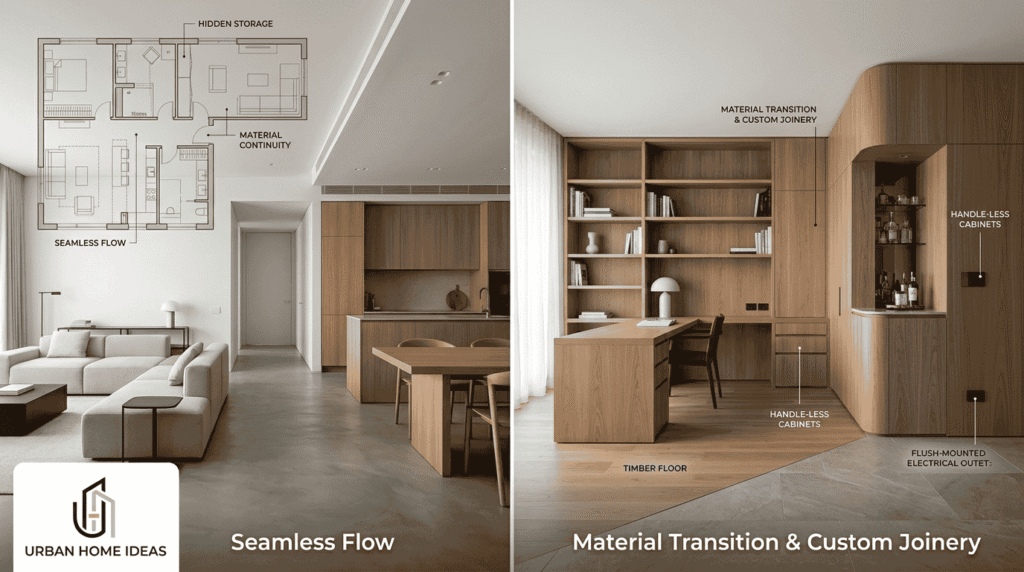
A successful interior combines home design, lifestyle requirements, and spatial awareness. From a large home to an apartment, condo, or small space, designers use interior elements and spatial connection to create unified environments with aesthetic appeal.
Use A Consistent Colour Palette
A carefully selected colour palette creates visual relationships throughout a home by connecting different areas. Designers use consistent colours, related shades, and balanced tones to develop spaces where every room feels naturally connected and visually comfortable.
The use of accents, furniture colours, artwork, fabrics, and accessories helps maintain room harmony without making every area identical. These elements create repetition while supporting a unified look and enhancing the overall interior atmosphere.
Experienced designers understand that colour repetition improves design continuity and visual balance. From wall colours to neutral tones and accent choices, thoughtful combinations strengthen home styling and create a peaceful environment with a consistent identity.
Plan Your Layout For Better Movement And Function
Effective layout planning shapes how people experience a home by improving movement flow and creating practical arrangements. Designers study furniture placement, walking paths, and open spaces to ensure rooms remain accessible, comfortable, and visually connected.
A functional interior requires clear organisation through clear zones, thoughtful room arrangement, and proper circulation. Different areas such as living areas, entertainment spaces, work areas, and relaxation zones need individual purposes while maintaining overall connection.
Professional planning combines functional design, space planning, and interior structure to improve usability. Through efficient layout decisions, homes achieve better movement, accessibility, and everyday comfort while supporting changing lifestyle needs and activities.
Repeat Materials And Design Elements
Using repeated materials and design elements helps establish continuity between different areas of a home. Designers combine finishes, textures, and surfaces to create connections that make spaces feel related while maintaining individual character.
Careful selection of flooring, wood tones, metals, and fabrics introduces consistency without creating repetition fatigue. Small details like handles, lighting finishes, and furniture details can strengthen the relationship between connected rooms.
A refined interior depends on material selection and thoughtful design repetition. Through subtle connection, surface finishes, and decorative details, professionals develop a cohesive style where every element contributes toward a unified appearance and balanced environment.
Create Harmony Through Furniture Selection
Thoughtful furniture selection plays an important role in creating balanced interiors that support daily activities. Designers evaluate furniture size, proportions, and room purpose to choose pieces that improve comfort while maintaining a connected visual experience.
A successful arrangement considers style matching, movement space, and practical needs without creating overcrowding. Comfortable furniture, seating areas, and storage furniture should work together while supporting the overall design direction and lifestyle requirements.
Professional designers create harmony by combining functional furniture, interior balance, and decorative pieces. A common style with carefully chosen elements builds a collected appearance where every item contributes toward practical choices and a comfortable living environment.
Use Lighting To Connect Spaces
Thoughtful lighting design creates emotional and visual links between different areas of a home. Designers use connected spaces, suitable lighting temperature, and layered solutions to develop a comfortable environment with improved atmosphere and balance.
A combination of ceiling lights, lamps, and accent lighting helps highlight important features while creating consistent illumination. Proper lighting choices enhance architectural features, improve interior mood, and support natural movement throughout the entire space.
Professional designers consider natural light, artificial lighting, and illumination techniques when planning interiors. Through visual warmth, space highlighting, and lighting consistency, every room gains a connected identity while maintaining comfort and practical usability.
Balance Function With Aesthetic Appeal
Successful interiors require a connection between functionality and aesthetic appeal where beauty supports practical living. Designers evaluate daily routines, lifestyle requirements, and spatial needs to create environments that feel organised, comfortable, and visually balanced.
A thoughtful approach includes storage solutions, suitable furniture placement, and improved accessibility throughout the home. Every decision should enhance usability while maintaining visual beauty, allowing functional spaces to support real-life activities without compromising design quality.
Professional designers focus on practicality, comfort, and personal requirements when developing interiors. By combining user experience, balanced interior planning, and efficient design methods, homes become meaningful environments that reflect individual lifestyles and provide lasting satisfaction.
Start With A Clear Vision
Every successful project begins with a clear vision that defines the direction of the interior. Designers study interior goals, lifestyle patterns, and daily activities to understand how spaces should function and represent personal preferences.
A strong plan considers entertaining habits, colour choices, and furniture decisions before implementation begins. Through creative direction and careful design planning, homeowners can develop an interior strategy that reflects their personality while maintaining practical value.
Professional experience shows that decision making becomes easier when the final result is guided by a clear purpose. Understanding home personality, design objectives, and creative priorities helps create spaces that feel intentional and thoughtfully developed.
Design For Quality Of Life
Interior spaces influence daily experiences by improving quality of life through thoughtful planning and intentional design choices. Professionals consider interior experience, comfort, and relaxation to create environments that support emotional and practical needs.
A well-designed home encourages productivity and everyday living by connecting personal environments with lifestyle requirements. Through lifestyle support and functional surroundings, interiors become more than decorative spaces and provide meaningful experiences for the people using them.
Experienced designers focus on human-centered design to develop peaceful spaces that improve living conditions. Combining emotional connection, comfortable home concepts, and meaningful interiors creates environments that support personal wellbeing while maintaining visual harmony and practical function.
Add Texture For Depth And Warmth
Adding texture creates visual layers that bring depth and warmth into interior spaces. Designers combine fabrics, wood, stone, and rugs to introduce contrast while maintaining harmony between different materials throughout the home.
Carefully selected decorative materials provide personality and improve visual interest without overwhelming the design. Through layered design approaches, professionals use soft textures and natural materials to create interiors with richness, comfort, and a welcoming atmosphere.
Experienced designers understand that tactile elements influence how spaces are perceived. By developing design dimension with cozy atmosphere, balanced contrast, and thoughtful material choices, interiors gain character while preserving a refined and connected appearance.
Keep Flooring Consistent
Consistent flooring creates a stronger relationship between different areas by improving visual continuity. Designers use similar surfaces across connected areas to achieve a larger appearance while maintaining a smooth and intentional interior flow.
A well-planned floor design considers materials, transitions, and room connection. Through consistent flooring, spaces can feel more open and organised while rugs help define specific areas without interrupting the overall design structure.
Professional designers focus on seamless transition methods that support home flow and balanced layouts. By selecting suitable floor materials and creating intentional transitions, interiors achieve better connection through surface design and open concept design.
Use Styling Details To Complete The Space
Thoughtful styling details help transform interiors by adding personality and creating a finished look. Designers use accessories, artwork, plants, and personal items to introduce character while keeping the overall design theme balanced.
Carefully arranged decorative objects improve visual appeal and support the home’s identity. Through balanced styling and meaningful details, spaces gain warmth and individuality without becoming crowded or losing their organised appearance.
Professional designers understand that final touches create lasting impressions. By combining organised accessories, home decoration, and interior character, every element contributes toward a complete space that reflects personality and maintains a refined visual connection.
Consider Feng Shui And Natural Flow
Some interior approaches consider Feng Shui principles to improve natural flow and create balanced environments. Designers focus on openness, arrangement, and surroundings to develop spaces that feel comfortable, peaceful, and naturally connected.
Thoughtful furniture placement influences how people move through rooms and experience the environment. By considering balance, energy movement, and spatial relationships, interiors can achieve better harmony while supporting relaxation and practical daily activities.
Professional designers explore interior harmony through calming design methods and environmental connection. Combining room balance, peaceful atmosphere, and spatial energy helps create comfortable spaces where the relationship between people and their surroundings feels intentional.
Final Thoughts
Creating a seamless home depends on applying thoughtful strategies where every design choice supports connection and balance. Professional designers combine interior design principles, colours, layout, furniture, and lighting to develop comfortable and practical environments.
A successful interior reflects personal style while maintaining connected spaces and functional design. Through careful selection of materials and visual balance, homeowners can create harmonious interiors that support lifestyle needs and improve everyday living experiences.
The best results come from understanding how individual elements work together. By combining thoughtful planning, beautiful spaces, and practical living concepts, interiors become meaningful reflections of personality with lasting comfort and a refined atmosphere.